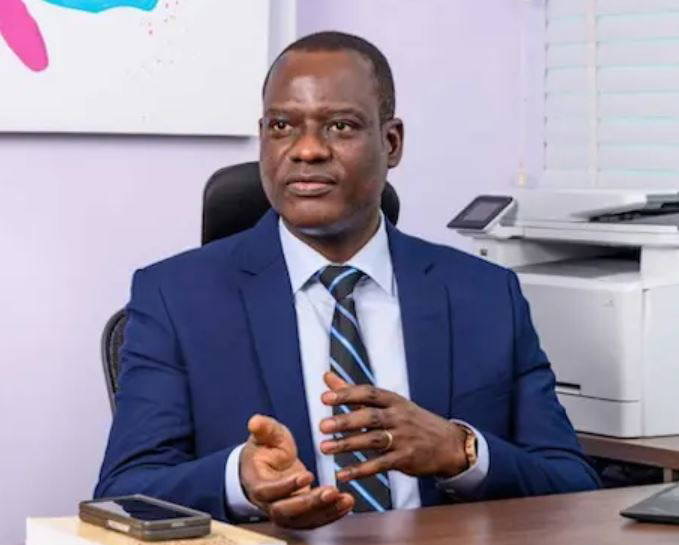






Chairman of the Presidential Committee on Fiscal Policy and Tax Reforms, Taiwo Oyedele, has explained why many Nigerians are yet to feel the full benefits of the economic reforms introduced by President Bola Tinubu’s administration, saying the country is still recovering from the economic reset triggered by the removal of fuel and foreign exchange subsidies.
Speaking at a public engagement organised by the National Orientation Agency (NOA), Oyedele said the reforms were designed to correct long-standing structural distortions in the economy rather than deliver immediate improvements in living standards.
Videos of his remarks were shared on Thursday by the Special Adviser to the President on Information and Strategy, Bayo Onanuga.
Addressing concerns over rising poverty and unemployment, Oyedele acknowledged that many Nigerians experienced economic hardship following the reforms but argued that the outcome was inevitable during the transition.
“The question that you raised that poverty has gone up and the unemployment rate is high—this is one area I tend to disagree with the World Bank. The World Bank would say that poverty has gone up despite the reforms.
“And I say, yes, poverty has gone up because you cannot remove subsidy and people become richer.
“The reform itself was a reset. We were living in fiscal illusions. We needed to stop deceiving ourselves so the country could move forward, and that reset meant that incomes would decline in the short term,” he said.
Despite the initial hardship, Oyedele said economic indicators for 2025 suggested that the country was beginning to recover.
“The good news is that the numbers for 2025, in dollar terms, show that real per capita growth was nearly 10 per cent. That makes Nigeria one of the fastest countries in lifting people out of poverty, and the Federal Government intends to sustain that growth,” he added.
Oyedele also addressed persistent questions over the utilisation of savings from the removal of fuel and foreign exchange subsidies, describing the concerns as legitimate.
“The whereabouts of the subsidy savings is a valid question,” he said, adding that the combined cost of fuel and foreign exchange subsidies had amounted to about five per cent of Nigeria’s Gross Domestic Product.
According to him, eliminating the subsidies was aimed primarily at removing economic distortions and corruption, rather than simply generating savings.
“Saving money was not the primary objective. It was eliminating the distortion and corruption in the system, which is more fundamental. But the savings are also important, and Nigerians deserve to know how they have been utilised,” he said.
Oyedele disclosed that the government would soon release a comprehensive breakdown of the subsidy savings and their utilisation in the interest of transparency.
He urged Nigerians to assess the reforms by considering what the economy might have looked like without them.
“Many Nigerians simply compare the past with the present and conclude that the reforms are not working for them. Some even say they are bad reforms.
“What we do not usually ask is: where would we have been if the reforms had not been carried out?” he said.
He argued that before the reforms, the government relied heavily on monetary financing, while borrowing costs and public sector wages have since increased significantly.
“Before the reforms, we were printing money to spend. Interest rates were about eight per cent and the minimum wage was N30,000.
“After the reforms, interest rates rose as high as 24 per cent, increasing the cost of servicing government debt. Those obligations must be met, and they consume a significant portion of public resources,” he said.
He also cited the increase in the national minimum wage from N30,000 to N70,000 as one of the major uses of government resources, alongside investments in the Nigerian Education Loan Fund (NELFUND).
According to Oyedele, more than 1.5 million students have benefited from NELFUND through tuition support and monthly stipends, easing the financial burden on their families.
“Over one million households no longer have to borrow or struggle to pay tuition fees. Instead, they can channel those resources into their businesses and other essential needs. That is significant,” he said.
Oyedele reiterated that the Federal Government would soon publish a detailed account of the subsidy savings and how they have been spent.
“What we need to do is provide the detailed explanation of how much we saved and how the money has been spent,” he added.