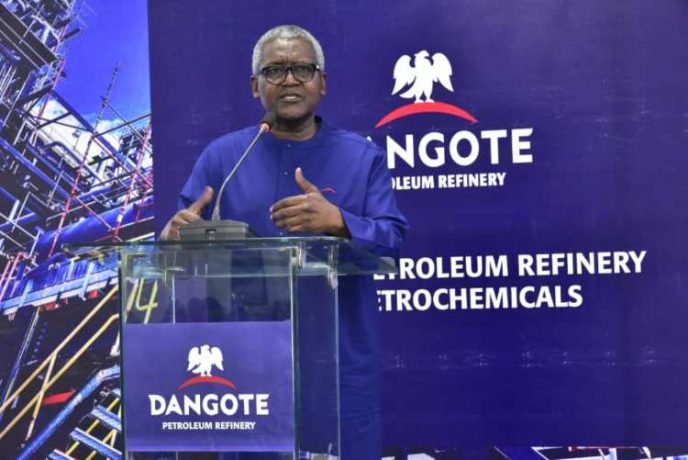








The President of Dangote Industries Limited, Aliko Dangote, has attributed the high cost of petrol in Nigeria partly to the continued smuggling of the commodity to neighbouring countries where it commands significantly higher prices.
Dangote said petrol prices in neighbouring countries were between 30 and 50 per cent higher than in Nigeria, creating a strong financial incentive for traders to move the product across the borders for resale.
He made the disclosure in an interview aired on Arise TV on Tuesday while discussing petrol prices and product availability amid the ongoing crisis in the Middle East.
Explaining why Nigerians may consider petrol expensive despite the country’s domestic production, Dangote said the price should be viewed in comparison with what obtains in neighbouring countries.
He said many Nigerians might not realise that a significant volume of locally produced petrol was still being smuggled across the borders because of the price differential.
“I don’t know if you know that there’s still a lot of smuggling of the same petrol we are producing to our neighbouring countries,” he said.
According to Dangote, petrol in some neighbouring countries costs between 30 and 50 per cent more than in Nigeria, making cross-border smuggling highly profitable.
He specifically cited Niger Republic, where he said petrol was selling for about 20 to 25 per cent more than in Nigeria.
Using a hypothetical Nigerian pump price of N1,350 per litre, Dangote said the price differential could provide smugglers with an immediate return of up to 25 per cent.
“So, what business are you going to do that will make you have an instant 25 per cent return?” he asked.
He explained that petrol destined for markets in northern Nigeria could instead be diverted to border communities such as Ilela in Sokoto State, where it could be sold at a higher price to buyers from neighbouring countries.
Dangote said the practice reduces the volume of petrol available to Nigerian consumers, as products intended for domestic distribution are diverted across the borders.
Meanwhile, he warned that the ongoing crisis in the Middle East could create a more serious challenge for Nigeria’s downstream petroleum sector.
According to him, the major concern may shift from the price of petrol to the availability of adequate supplies.
“And the problem now, going forward, I must also warn that this crisis in the Middle East is not even about price; it’s about availability,” Dangote said.