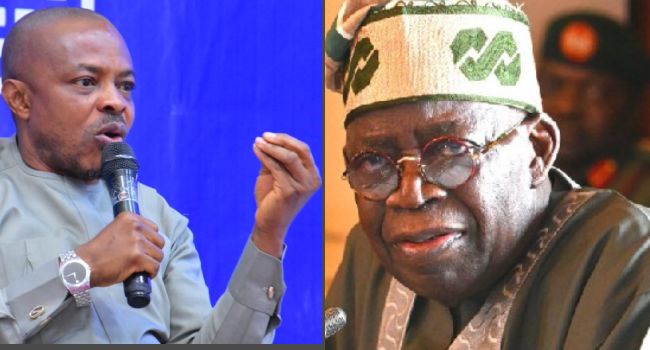

The President of the Nigeria Labour Congress (NLC), Comrade Joe Ajaero, has questioned the justification for President Bola Tinubu’s request to the National Assembly for approval to obtain fresh external loans totalling $20.5 billion and €1.45 billion.
Speaking on Channels Television’s The Morning Brief on Thursday, Ajaero said the rationale for the proposed borrowing was unclear to the labour movement, particularly following the removal of the petrol subsidy and increased allocations to state governments.
“If you come out to tell us that the subsidy is gone, that you are making more money and then you are giving more money to states, what is the justification for continually borrowing from the International Monetary Fund and the World Bank and other agencies when there is enough money?” he asked.
The labour leader also criticised international financial institutions for continuing to lend to Nigeria, arguing that the country’s growing debt burden was becoming a major concern.
According to Ajaero, the increase in crude oil prices amid the Middle East conflict raises further questions about the need for additional borrowing.
“If the 2026 budget was prepared with crude oil price benchmarked at $70 per barrel and now sells above $100 per barrel due to the US-Iran crisis, should this country still be collecting loans?” he asked.
Ajaero clarified that the NLC does not approve government loans and is not directly involved in decisions concerning the disbursement of borrowed funds.
He urged Nigerians and relevant institutions to demand explanations from the Federal Government regarding its latest borrowing request.
The NLC president also noted that the National Assembly had the authority to determine whether the proposed loans would receive approval, adding that the government could not proceed with the borrowing if lawmakers rejected the request.
The latest development comes amid growing debate over the Tinubu administration’s borrowing plans and Nigeria’s rising public debt.
In April, the Federal Government increased its planned borrowing for 2026 by ₦11.31 trillion to ₦29.20 trillion. It also projected a fiscal deficit of ₦31.46 trillion and debt-servicing costs of ₦15.81 trillion.
The government has faced criticism over its continued reliance on borrowing despite the removal of the petrol subsidy, a policy expected to free up resources for infrastructure and other development priorities.
In April, the presidential candidate of the Nigeria Democratic Congress (NDC), Peter Obi, warned that Nigeria risked a debt crisis, questioning why the government continued to borrow following the removal of the subsidy.
Obi also expressed concern over outstanding payments to contractors and the implementation of capital projects.
Similarly, the Emir of Kano, Muhammadu Sanusi II, questioned the continued borrowing by the Federal Government after the suspension of petrol subsidy payments, arguing that Nigerians should see tangible improvements in public finances.
However, the Federal Government has defended its borrowing strategy, maintaining that the funds are intended to finance critical infrastructure and other development priorities.