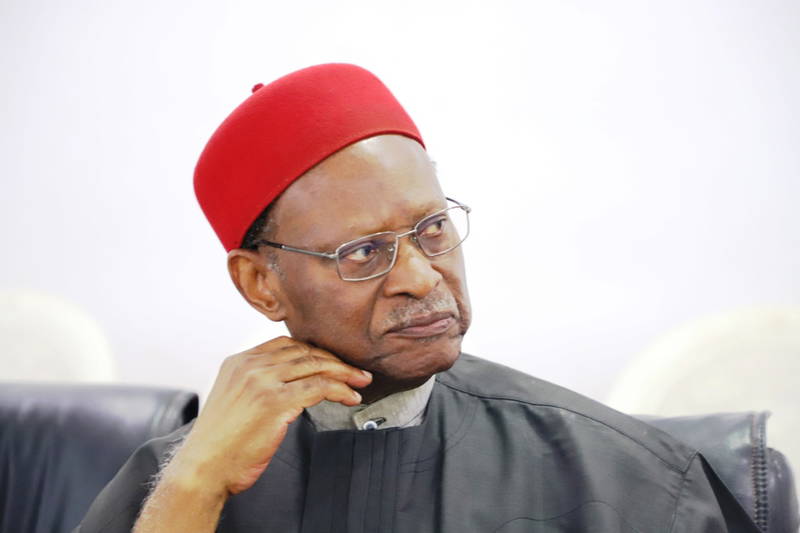


Former Commonwealth Secretary-General, Chief Emeka Anyaoku, has condemned reported xenophobic attacks against African nationals in South Africa, describing the incidents as distressing and regrettable.
Anyaoku expressed sadness that South Africans, who endured years of apartheid and received support from other African countries in their struggle for liberation, were now targeting fellow Africans from other nations.
The 94-year-old statesman spoke in an interview on the sidelines of a MasterClass on Penetrative Leadership in an Increasingly Chaotic World Order in Abuja.
Reflecting on his involvement in efforts to end apartheid, Anyaoku recalled his role in facilitating negotiations between South Africa’s former white-minority government and the black majority, describing the reported attacks as particularly painful in view of the sacrifices made by other African countries.
“The attacks are regrettable,” he said, recalling his efforts to secure the support of Commonwealth leaders for negotiations in South Africa following the release of Nelson Mandela in 1990.
Anyaoku recounted that Mandela visited Abuja in May 1990 to attend a meeting of Commonwealth foreign ministers responsible for South Africa. During the visit, Mandela also attended Anyaoku’s first official dinner as Commonwealth secretary-general.
He said the encounter marked the beginning of a friendship with Mandela and his then-wife, Winnie Mandela.
According to Anyaoku, he secured a mandate from Commonwealth Heads of Government in 1991 to visit South Africa and explore ways to assist the country’s then-president, F.W. de Klerk, in organising negotiations to end apartheid.
He said his meeting with de Klerk on November 1, 1991, centred on rebuilding confidence among South Africa’s major ethnic communities.
Anyaoku explained that de Klerk initially questioned how the Commonwealth could contribute to the process, given the organisation’s support for sanctions against the apartheid government.
However, he said he explained that the Commonwealth could help restore confidence among the country’s black, white and Asian communities, pointing to the diversity of his delegation as evidence of its capacity to facilitate dialogue.
Anyaoku further recalled intervening when the negotiations faced the threat of collapse, helping to keep the process on track.
He said the agreement concluding the negotiations was eventually signed at 3:30 a.m. on November 17, 1993, in his presence.