













President Bola Tinubu has transmitted a bill to the House of Representatives seeking to amend the 1999 Constitution to establish the legal framework for the creation of state police services across Nigeria.
The proposed legislation represents the administration’s most significant push to reform the country’s policing system since the return to democratic rule in 1999.
In a letter dated June 15, 2026, and addressed to Speaker Tajudeen Abbas, the President urged lawmakers to expedite consideration of the Constitution of the Federal Republic of Nigeria (Alteration) (State Police) Bill, 2026, describing it as a critical pillar of his administration’s security reform agenda.
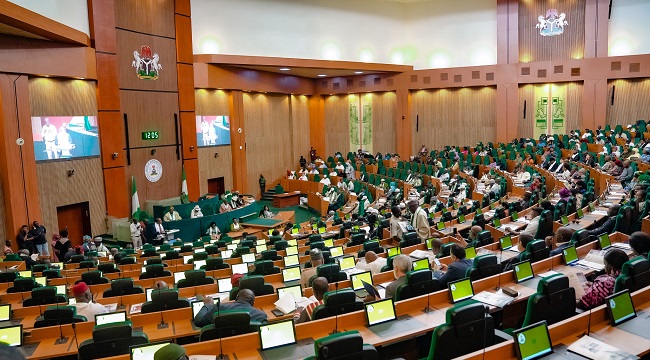
The letter, read during Tuesday’s plenary by the Speaker, stated that the bill seeks to create “a constitutional pathway for the establishment of State Police Services” to strengthen Nigeria’s response to its evolving security challenges.
Tinubu noted that the proposal builds on previous legislative efforts by the House of Representatives while introducing additional safeguards to ensure the effective operation of a dual policing system involving both federal and state law enforcement agencies.
“This Bill builds on the significant work already done in this regard by the House of Representatives and incorporates additional safeguards to ensure that the creation of a dual policing structure to address our nation’s evolving national security challenges can be achieved quickly and effectively to the benefit of all Nigerians,” the President stated.
He described the legislation as a key component of his administration’s plan to reorganise Nigeria’s security architecture and improve the protection of lives and property.
“The proposed legislation is a critical component of our administration’s strategy to reorganise Nigeria’s security architecture to better protect our citizens, and I am confident that the House of Representatives will act quickly to consider and pass this Bill,” Tinubu added.
The President also expressed confidence that the National Assembly would give the proposal speedy consideration.
If enacted, the bill would introduce constitutional recognition for state police, one of Nigeria’s most debated constitutional reform proposals for more than two decades.
Nigeria currently operates a centralised policing system under the Nigeria Police Force as provided by the 1999 Constitution. However, persistent security threats—including terrorism, banditry, kidnapping, communal clashes and other violent crimes—have intensified calls for a decentralised policing structure.
In recent years, state governments have increasingly relied on regional security outfits such as Amotekun in the South-West, Ebube Agu in parts of the South-East and other community-based vigilante groups to complement federal security agencies.
Proponents of state police argue that decentralising policing will improve intelligence gathering, response time and community policing, while critics warn that governors could misuse state-controlled police for political purposes.
Although the House of Representatives has previously considered several constitutional amendment bills on state policing through its Constitution Review Committee, none has successfully completed the amendment process, which requires the approval of two-thirds of both chambers of the National Assembly and at least 24 of the 36 State Houses of Assembly.
If approved by the National Assembly and ratified by no fewer than 24 state legislatures, the bill will amend the Constitution to establish a dual policing system, empowering both the Federal Government and state governments to operate constitutionally recognised police services.
The proposal is expected to generate fresh debate among lawmakers, state governments and other stakeholders over the structure, funding, oversight, powers and operational safeguards of state police.