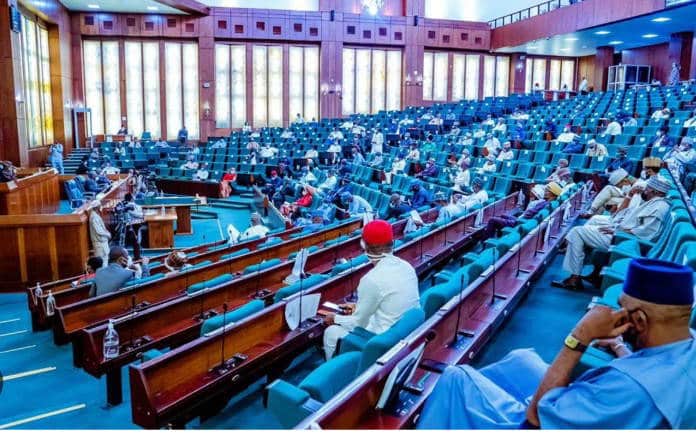




The House of Representatives has resolved to summon the heads of the National Agency for Food and Drug Administration and Control (NAFDAC), Department of State Services (DSS) and Nigeria Police Force to explain measures being taken to tackle the growing circulation of fake drugs, unregistered herbal medicines and adulterated drinks across the country.
The resolution followed the adoption of a motion of urgent public importance moved on Wednesday by the member representing Obi/Oju Federal Constituency of Benue State, David Agada.
The motion was prompted by reports that four people had died after allegedly consuming a suspected poisonous herbal medicine distributed in the constituency.
Titled, “Urgent Need to Investigate the Alleged Distribution and Administration of Suspected Poisonous, Unregistered/Substandard Herbal Medicinal Products in Obi/Oju Federal Constituency, Benue State to Prevent Further Loss of Lives,” the motion called for an urgent investigation into the incident and measures to prevent further casualties.
Moving the motion, Agada reminded lawmakers of their constitutional responsibility to protect the lives and welfare of their constituents.
He noted that the NAFDAC Act empowers the agency to regulate the manufacture, distribution, sale and use of drugs, herbal medicines and other regulated health products in Nigeria.
He also cited the Food and Drugs Act and the Counterfeit and Fake Drugs and Unwholesome Processed Foods (Miscellaneous Provisions) Act, which prohibit the production, distribution and sale of unsafe, adulterated, counterfeit and unwholesome products.
Agada told the House that on October 31, 2026, three individuals identified as Muhammad Sani Adamu, Musa Alhaji Kala, reportedly from Sokoto State, and Alhaji Muhammad Sule, from Bauchi State, allegedly introduced and distributed a herbal medicinal product in the constituency.
According to him, the individuals claimed that the product could cure typhoid fever, waist pain and other ailments.
He said several residents purchased and consumed the product but developed severe symptoms within hours and were rushed to different hospitals for emergency treatment.
The lawmaker identified the four deceased persons as Awugo Joseph Oyije, who died on November 2; James Ogah Onma, who died on November 4 after being referred for further treatment; Ode Friday Ogah, who died on November 5; and Agi Edugbeke, who died on November 11.
He added that 11 other residents were affected and receiving medical attention, with two referred to hospitals in Makurdi, the Benue State capital.
The affected persons were identified as Otumala Ochele, Binta Sule, Onu Oboh, Adoga Onu, Upa James, Igbo Pius, Ochele Genesis, Otumala Amos, Uwa Baku, Ate Vivian Okpune and Roman Ehile.
Agada warned that other residents might have consumed the suspected product without being identified or could be receiving treatment outside recognised health facilities, increasing the risk of further casualties.
He expressed concern that the product’s composition, source, manufacturing conditions, NAFDAC registration status, safety, dosage and possible adverse effects remained unknown.
According to him, the incident represents a serious public health threat requiring immediate intervention by relevant federal and state authorities to establish the circumstances surrounding the deaths, prevent further exposure and ensure that anyone found culpable is brought to justice.
Contributing to the debate, the House Leader, Prof. Julius Ihonvbere, described the proliferation of fake drugs and adulterated drinks as a national challenge requiring a comprehensive response beyond NAFDAC’s current capacity.
He said the agency was constrained by inadequate manpower, noting that its workforce of about 2,000 employees was insufficient to effectively monitor the country’s drug distribution network.
“This issue has gone beyond NAFDAC, which has only a staff strength of about 2,000 people. The agency requires at least 10,000 staff members to be able to execute its mandate. NAFDAC does not have a presence everywhere; it is not in my village in Edo State,” he said.
Ihonvbere called for a broader national discussion on the problem, warning that more Nigerians could die if urgent measures were not taken.
He also urged the House to recommend tougher penalties for manufacturers and distributors of counterfeit and contaminated products.
“Mr Speaker, I think we can suggest life imprisonment or even the death penalty for those involved in this criminal enterprise and may bring the DG of NAFDAC to come and tell us where they are on this matter,” he added.
Similarly, Ali Shettima (APC, Yobe) urged lawmakers to address the nationwide implications of fake drugs rather than limit their attention to the Benue incident.
He called on NAFDAC to strengthen its regulation of herbal medicine producers and advocated legislation prescribing appropriate penalties for those found guilty of selling counterfeit drugs and drinks.
However, another Yobe lawmaker, Fatima Talba, urged caution, arguing that many Nigerians patronised unregulated herbal medicine vendors because they lacked access to affordable and reliable healthcare alternatives.
She said some consumers turned to such products because they had limited options, adding that the government must provide accessible alternatives before expecting them to abandon unregulated vendors.
Peter Uzoekwe (NDC, Anambra) proposed holding market leaders accountable for the manufacture and sale of counterfeit drugs, suggesting that executives of markets where such activities occurred should be removed.
He argued that the threat of sanctions would compel market leadership to monitor activities within their respective markets and help curb the distribution of fake products.
Also contributing, Ismaila Haruna, representing Toro Federal Constituency of Bauchi State, called for an investigation into reported deaths allegedly linked to sexual performance-enhancing drugs.
He maintained that although laws regulating herbal medicines already existed, enforcement remained the major challenge.
Haruna also questioned NAFDAC’s effectiveness in carrying out its regulatory responsibilities.
At the end of the debate, the House resolved to invite the leadership of NAFDAC, the Nigeria Police Force and the DSS to brief its relevant committees on measures being implemented to combat the circulation of fake herbal medicines and adulterated drinks across the country.