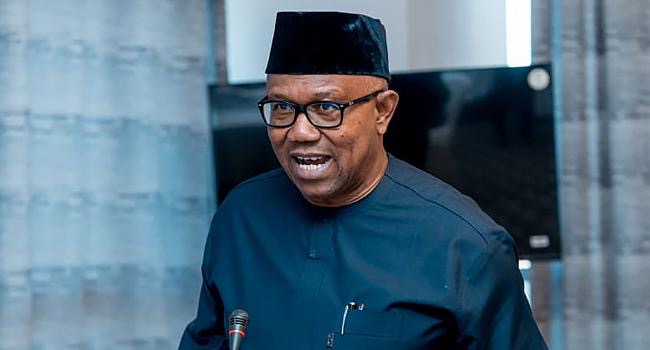

Former Labour Party presidential candidate, Peter Obi, has welcomed the Federal Government’s decision to suspend the proposed increase in registration fees for the 2027 West African Senior School Certificate Examination (WASSCE) and the National Examinations Council (NECO) Senior School Certificate Examination, describing the move as a victory for Nigerians.
The Federal Government on Monday announced the suspension of the planned fee adjustment and withdrew its June 18, 2026 circular on the proposal, saying further consultations with relevant stakeholders would be conducted before any decision is reached.
The Ministry of Education had earlier explained that the proposed increase was necessitated by rising operational costs but later put the plan on hold following widespread public criticism and the government’s commitment to broader stakeholder engagement.
Reacting in a statement posted on his X account, Obi described the government’s decision as a welcome relief for millions of Nigerian families grappling with economic hardship.
According to him, the reversal demonstrates that constructive public engagement can influence government policies when citizens raise legitimate concerns.
“I received the welcome news of the suspension of the newly introduced examination fees with relief. This is a victory for the Nigerian people,” Obi said.
While commending the Federal Government for reversing the decision, the former Anambra State governor maintained that the proposed fee increase should never have been considered given the country’s current economic realities.
“While I commend the authorities for listening to the widespread public outcry and suspending the policy, it must be said that the fee was an unnecessary burden that should never have been introduced at this time of great hardship, when we should be doing everything possible to invest in basic education and reduce the millions of out-of-school children in Nigeria,” he said.
Obi argued that access to education should be expanded rather than restricted, especially at a time when many households are struggling to meet their basic needs.
“At a time when many families are struggling to make ends meet, access to education should be expanded, not restricted,” he added.
He further stressed that education should be treated as a social investment rather than a source of government revenue.
“Education is a fundamental right and a public good, not a source of government revenue,” Obi stated.
According to him, imposing additional financial obligations on students and their families could discourage school enrolment and undermine efforts to address Nigeria’s growing out-of-school children crisis.
“Imposing multiple fees at the basic education level risks denying many children their right to education. At that stage, the State has a duty to invest in educating and preparing its citizens for productive lives, not to erect financial barriers that keep them out of school,” he said.
Obi also urged the government to review other policies that have increased the burden on citizens, saying effective leadership requires not only making difficult decisions but also reversing policies that prove detrimental to the public.
“True leadership is demonstrated not only by making decisions but also by having the humility to reverse policies that impose unnecessary hardship on the people. Many other anti-people policies deserve similar reconsideration,” he said.
He concluded by commending parents, civil society organisations, advocacy groups and other Nigerians whose opposition to the proposed fee increase contributed to the government’s decision.
“I thank the citizens, parents and advocacy groups whose voices made this reversal possible,” Obi added.