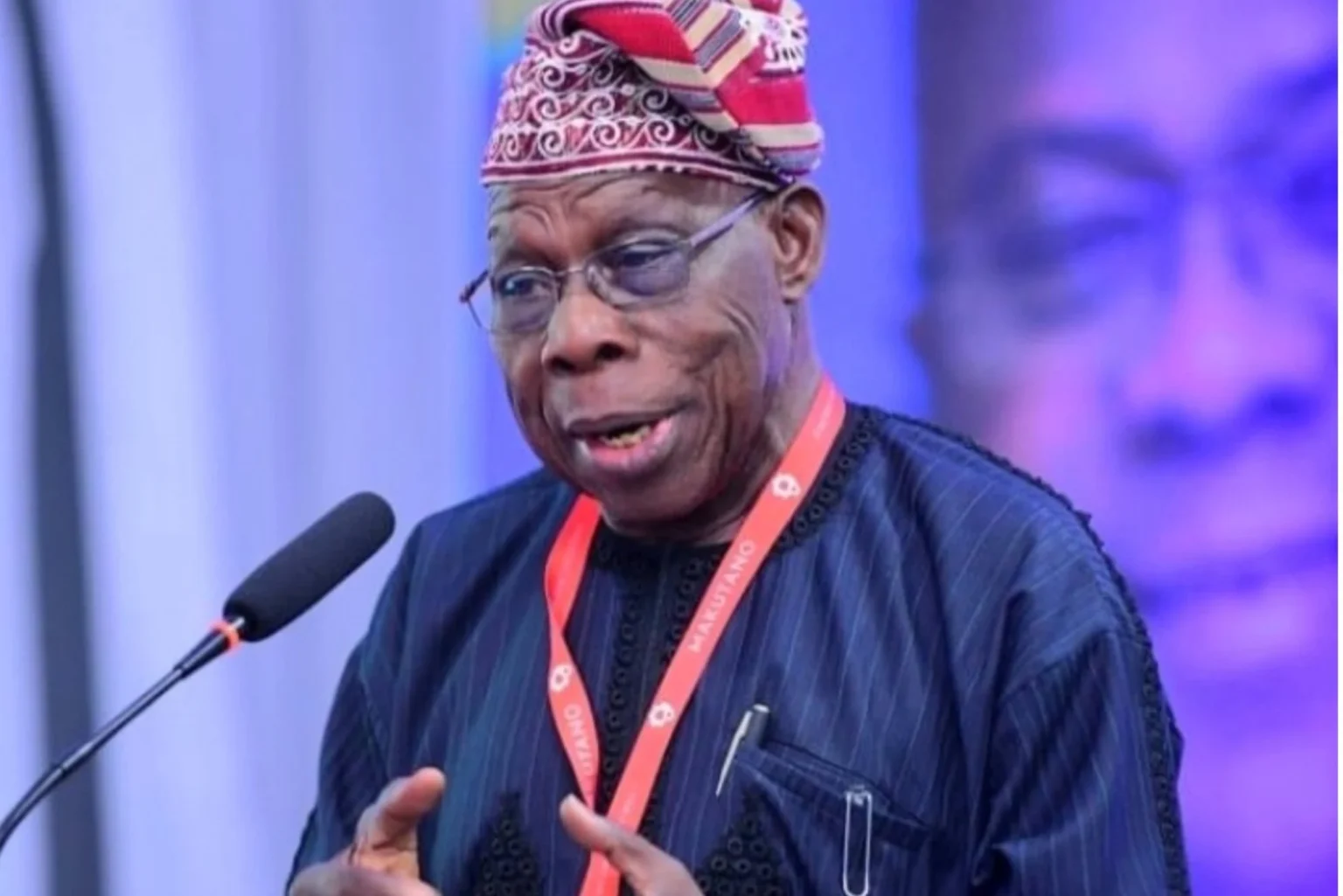


Former President Olusegun Obasanjo has criticised President Bola Tinubu’s economic reforms, accusing his administration of impoverishing Nigerians by 300 per cent through the devaluation of the naira.
Obasanjo, who spoke at the Financial Times Africa Summit 2026 in London, United Kingdom, said the sharp depreciation of the national currency had significantly weakened Nigerians’ purchasing power and contributed to the country’s poverty crisis.
He argued that the naira’s decline from about ₦500 to the dollar to approximately ₦1,500 had substantially reduced the value of Nigerians’ incomes.
“We do not live in isolation as a country. We interact with the rest of the world. And overnight, you devalue the currency by 300 per cent. The naira went from N500 to a dollar to N1,500 to a dollar. What that meant was that every Nigerian is made poor by 300 per cent,” Obasanjo said.
The former president described Nigeria as “the poverty capital of the world”, arguing that the country had a large population of people living in poverty.
“You cannot say to me that that is good for Nigeria. You cannot say to me that that is good for us in any sense,” he added.
Obasanjo also dismissed suggestions that Tinubu should be given more time to complete his economic reforms, insisting that he had yet to see sufficient evidence of improvement in the economy.
“For the economy, I don’t see anything getting better. What policies are you seeing through? You impoverish your people, and you want to see impoverishment through?” he asked.
He maintained that the policies introduced by the Tinubu administration were not serving the best interests of Nigerians.
“The programmes that he has put in place are not in the best interest of Nigerians. Nobody can deny that,” he said.
On the removal of the petrol subsidy, Obasanjo acknowledged that fuel costs affected virtually every aspect of the economy but argued that corruption had accounted for a significant portion of what Nigeria described as subsidy payments.
He maintained that the government should have prioritised tackling corruption before implementing measures that placed additional financial pressure on citizens.
According to him, countries facing severe economic challenges must focus on curbing corruption, reducing wasteful expenditure and unnecessary luxury, while boosting domestic production.
The former president’s comments come amid continued debate over the impact of Tinubu’s economic reforms, particularly the removal of the petrol subsidy and the unification of foreign exchange rates.
Before the Central Bank of Nigeria unified the exchange-rate windows on June 14, 2023, the official exchange rate stood at approximately ₦460.80 to the dollar.
The naira subsequently depreciated significantly, with the official rate reaching about ₦1,333.54 to the dollar on October 19, according to the figures cited in the report. It had also fallen to a low of approximately ₦1,607.05 in early May 2025.
Despite the currency depreciation, recent economic indicators have shown some improvement in selected areas.
The National Bureau of Statistics reported that headline inflation declined to 14.63 per cent in September from 20.98 per cent in the corresponding period of the previous year.
However, food inflation remained elevated at 19.59 per cent, even as Nigeria’s real Gross Domestic Product grew by 4.43 per cent in the second quarter.
Obasanjo’s remarks have renewed attention on the social costs of the government’s economic policies and the debate over whether the reforms are delivering sufficient benefits to ordinary Nigerians.