The Federal Government has approved the commencement of procurement for the proposed East and West Super Grids, targeting an increase in electricity transmission capacity from about 5,000 megawatts (MW) to 19,000MW within two years.
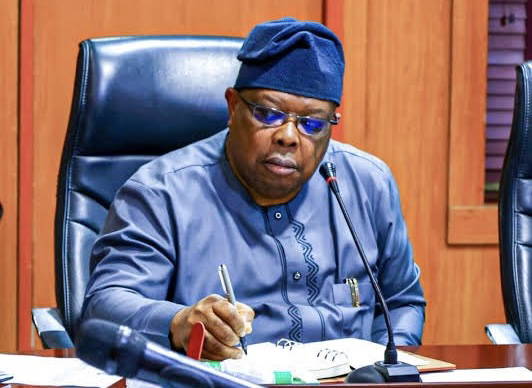
The Minister of Power, Joseph Tegbe, disclosed this on Wednesday while briefing State House correspondents after the Federal Executive Council (FEC) meeting presided over by President Bola Tinubu at the Presidential Villa, Abuja.
Tegbe said the projects were designed to strengthen the national electricity grid, improve its resilience and enable the transmission network to deliver more power to homes, businesses and industries.
He explained that the super grids would connect major electricity transmission corridors across the country, improving the movement of electricity from generation plants to areas of high demand.
According to the minister, Nigeria currently has more than 13,000MW of available generation capacity but can reliably transmit only about 5,000MW due to limitations in the transmission network.
He said the proposed projects would address this gap by expanding transmission capacity, reducing grid instability and ensuring that more of the electricity generated could reach consumers.
Tegbe stressed that the East and West Super Grids were national projects that would serve both northern and southern Nigeria rather than specific regions.
He added that the transmission corridors would strengthen connections from Sokoto through Abuja and other locations to parts of southern Nigeria.
Beyond the super grid initiative, the FEC approved three immediate interventions targeting Abuja and the Lagos axis, two of the country’s major electricity demand centres.
The first involves the construction of a 33-kilovolt (kV) double-circuit line, comprising underground and overhead sections, connected to the Katampe Transmission Substation.
The second project covers the design, manufacture and supply of three 300MVA, 330/132/33kV transformers for the Ikeja West Transmission Substation, a critical facility serving Lagos.
The third entails the reconstruction and upgrade of the 35.6-kilometre Itumola–Mapasin–Shagamu 132kV single-circuit transmission line into a double-circuit line to accommodate rising electricity demand along the Lagos–Shagamu corridor.
The minister described the projects as essential interventions that would improve the delivery of electricity to consumers.
He noted that the high-capacity transformers would have to be manufactured abroad because Nigeria currently lacks the domestic manufacturing capacity required to produce equipment of that specification.
Although some companies have begun assembling transformers locally, Tegbe said the production of larger units required specialised facilities and could take between three and six months.
He added that global demand for such equipment had increased due to the expansion of artificial intelligence infrastructure and data centres.
FG Begins Nationwide Electricity Infrastructure Audit
Tegbe also disclosed that the Federal Government had commenced a nationwide technical audit of electricity infrastructure to identify ageing, weak and obsolete assets requiring rehabilitation or replacement.
The exercise, which had been ongoing for four weeks, covers three major energy zones: Lagos and its industrial corridor; Abuja–Kaduna–Kano; and Enugu–Onitsha–Benin.
According to him, the findings would guide investment decisions and help ensure that funds are directed towards projects capable of delivering measurable improvements to the electricity network.
He identified the Lagos–Ogun, Benin–Edo–Port Harcourt and Abuja–Kaduna–Kano corridors as priority areas for intervention.
The minister said the Lagos–Ogun corridor alone accounted for approximately half of Nigeria’s national electricity demand, underscoring the need to strengthen infrastructure serving the industrial region.
FG Pays N1.23tn in Power Sector Debts
On the financial challenges confronting the electricity sector, Tegbe announced that the Federal Government had paid N1.23 trillion out of the N3.3 trillion owed to gas suppliers and other stakeholders in the power sector.
He said the outstanding liabilities had constrained gas supplies to electricity generation companies and weakened confidence across the sector’s value chain.
The payment, he explained, was made through bonds under the Presidential Power Sector Debt Reduction Programme, which seeks to improve liquidity for generation companies, support gas supply and restore investor confidence.
Tegbe said the government intended to settle the outstanding liabilities while introducing measures to prevent the accumulation of new debts.
He added that the government was reviewing the electricity market structure to strengthen payment discipline and address the recurring problem of unpaid obligations.
The minister maintained that the combination of expanded transmission infrastructure, targeted upgrades, technical audits and improved sector liquidity would help address longstanding challenges in Nigeria’s electricity industry.