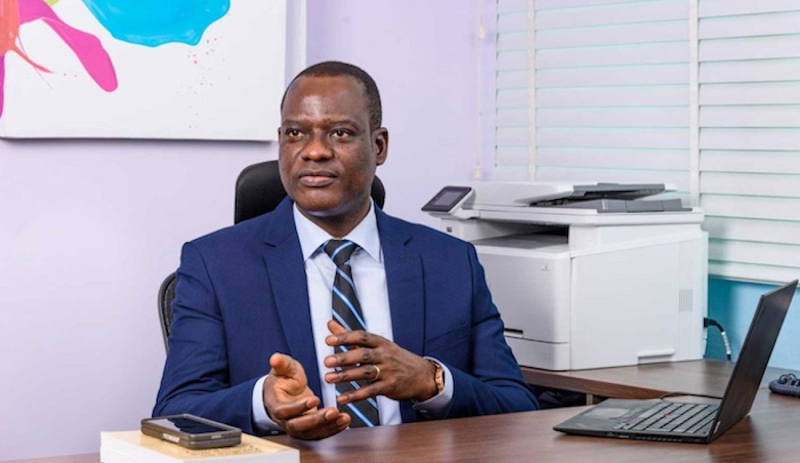
The Federal Government has defended its proposed $21.7 billion external borrowing plan, describing it as a long-term investment in infrastructure, human capital development and economic growth rather than an additional debt burden.
The Minister of Finance and Coordinating Minister of the Economy, Taiwo Oyedele, stated this while briefing State House correspondents after Wednesday’s Federal Executive Council (FEC) meeting, presided over by President Bola Tinubu at the Presidential Villa, Abuja.
Oyedele explained that the five-year financing plan was designed to fund productive assets capable of generating long-term economic benefits that would outweigh the cost of borrowing.
He said the proposed investments covered critical sectors, including transportation, defence and security, healthcare, agriculture, energy, digital infrastructure, small businesses, social protection, environmental protection and education.
According to the minister, approximately $10.6 billion had been earmarked for transportation infrastructure, including major projects such as the Sokoto-Badagry and Lagos-Calabar coastal highways, as well as the Kano-Kaduna Metro Rail project.
He clarified that the proposal, which had been submitted to the National Assembly, was a financing framework and did not mean the entire amount had already been borrowed or would necessarily be accessed in full.
Oyedele explained that the Federal Government was coordinating external financing for projects involving federal and state governments, as well as other public-sector institutions.
He disclosed that approximately $4.8 billion of the proposed financing was allocated to projects involving state governments, the Federal Capital Territory, other subnational entities, government agencies and development finance institutions.
On the sources of funding, the minister said about $7.9 billion would come from multilateral and bilateral development partners, including $5 billion from the World Bank at concessional interest rates averaging 2.1 per cent.
He added that the indicative average interest rate on the commercial component was 7.8 per cent, which he said was lower than the rate on Nigeria’s November 2025 Eurobond.
Defending the borrowing strategy, Oyedele argued that external financing could strengthen the country’s balance sheet when the resulting investments generated economic value exceeding their financing costs.
Using the Dangote Refinery as an example, he noted that large-scale projects often required external funding to be completed within a reasonable timeframe.
He maintained that Nigeria needed to adopt a similar approach to financing transformative infrastructure projects capable of supporting long-term economic development.
Economic Indicators Improve, Says Minister
On the state of the economy, Oyedele said key economic indicators had improved since President Tinubu introduced major reforms in May 2023, although he acknowledged that significant challenges remained.
He recalled that inflation stood at 22.41 per cent when the reforms began, while Nigeria’s net foreign reserves were estimated at $859 million, an amount insufficient to cover one month of imports.
He also cited the existence of multiple foreign exchange rates, a premium exceeding 60 per cent between the official and parallel markets, and debt-service costs consuming approximately 97 per cent of government revenue as evidence of the economic pressures at the time.
According to him, the government had to address longstanding structural weaknesses threatening economic stability, arguing that failure to implement the reforms could have triggered runaway inflation and further depreciation of the naira.
Oyedele said economic growth increased from 2.74 per cent in 2023 to 4.43 per cent in the second quarter of 2026.
He added that inflation declined to 14.63 per cent in September 2026 from 20.98 per cent in the corresponding period of the previous year.
The minister also reported that Nigeria’s foreign reserves had risen to more than $55 billion, while net reserves exceeded $45 billion, compared with less than $1 billion three years earlier.
On the foreign exchange market, he said the naira had stabilised within the range of N1,330 to N1,350 per dollar.
He further cited an International Monetary Fund assessment indicating that the naira was undervalued by approximately 25 per cent.
Oyedele disclosed that Nigeria’s tax-to-GDP ratio had increased from about seven per cent in 2023 to 12.5 per cent by the end of 2025.
He added that the debt-service-to-revenue ratio had declined from approximately 97 per cent to below 60 per cent.
Federation Account revenue, according to the minister, rose by 44 per cent between 2024 and 2025, while the government projected an increase of at least 50 per cent in 2026.
Nigeria Records Improved International Confidence
Oyedele said international confidence in Nigeria’s economy had improved, pointing to credit-rating upgrades and positive outlooks from rating agencies.
He also cited Nigeria’s removal from the Financial Action Task Force’s grey list and the European Union’s list of high-risk jurisdictions as indications of progress in the country’s financial and regulatory environment.
The minister maintained that the government’s economic programme had also provided direct support to households, students and businesses.
He disclosed that more than N372.6 billion had been disbursed through the Nigerian Education Loan Fund (NELFUND) to over 1.5 million students.
In addition, he said more than 10 million households had benefited from cash transfers valued at over N600 billion.
Oyedele said the government would continue to pursue policies aimed at strengthening economic stability, expanding infrastructure and improving living conditions, while insisting that the proposed external borrowing should be assessed in terms of the productive assets and long-term economic benefits it was expected to deliver.