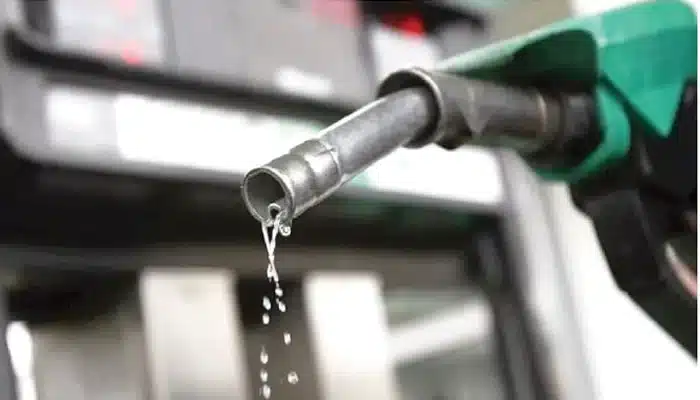













The Nigerian Midstream and Downstream Petroleum Regulatory Authority (NMDPRA) has attributed the continued volatility in fuel pump prices to several factors, including crude oil sourcing, domestic refining capacity, logistics and transportation costs.
The Head of Public Affairs at the NMDPRA, George Ene-Ita, disclosed this in an interview with the News Agency of Nigeria (NAN) in Abuja on Sunday.
Ene-Ita described the factors influencing fuel price increases as complex, stressing that petrol prices had been fully deregulated and were therefore subject to fluctuations in the market.
According to him, the cost of sourcing crude oil as feedstock, as well as the time between crude procurement and its arrival at refineries, is reflected in the final price of petroleum products.
He added that marine and inland taxes associated with the transportation and distribution of petroleum products also contribute to pump prices.
“This issue is knotty in the sense that there are various factors involved.
“Pump price of petrol has been completely deregulated. And if this is the case, it also means that all volatilities associated with supply have to be factored in.
“These factors include single-source domestic refining, sourcing of crude oil as feedstock, time lag between when crude is sourced offshore and when it eventually arrives at the refinery.
“They also include time lag between when PMS cargoes are ordered and when they eventually arrive our ports for subsequent inland distribution and supply in the case of imported fuel.
“There are also transportation and landing costs, as well as marine and inland taxes.
“Perhaps when the domestic refining ecosystem becomes more robust, competitive and sustainable, the issues regarding pricing will become clearer and more beneficial to consumers,” he said.
Ene-Ita explained that refinery pricing templates and ex-depot prices were not regulated under the current deregulated framework.
He, however, said the NMDPRA was working with relevant stakeholders and agencies, including the Federal Competition and Consumer Protection Commission (FCCPC), to promote price equilibrium and ensure parity in the final-mile market.
NAN reports that Brent crude was trading at $96.28 per barrel, with geopolitical tensions and the ongoing conflict in the Middle East contributing to the rise in international crude prices.
In the Federal Capital Territory, petrol currently sells for between N1,299 and N1,350 per litre following an upward adjustment in the gantry, or ex-depot, price by Dangote Refinery. The refinery’s ex-depot price currently ranges between N1,265 and N1,290 per litre.
The continued increase in fuel prices has sparked concern among motorists and consumers, who say the rising cost of petrol is worsening economic hardship, inflation and the overall cost of living.
In response, the Independent Petroleum Marketers Association of Nigeria (IPMAN) called on the Federal Government to intervene in the pricing of crude supplied to domestic refineries as a way of moderating petrol prices and easing pressure on consumers.
IPMAN President, Maigandi Garima, told NAN that fluctuations in the international crude oil market were creating challenges for domestic petrol pricing because local refiners were required to purchase crude at prevailing market prices.
He explained that higher crude oil prices increase production costs for refiners, who ultimately pass the additional costs on to consumers.
Garima urged the government to consider measures to reduce the cost of crude supplied to domestic refineries during periods of sharp volatility in the international market.
He stressed that such intervention should not be viewed as a return to fuel subsidy, but rather as a temporary measure to support domestic refining and cushion consumers from the impact of global crude price fluctuations.
“What we are saying is that if Nigerians can make this huge investment, we should support them. Government can intervene by reducing the cost of crude oil to the refinery.
“When the refinery refines the product at a lower cost, it can also reduce the price for Nigerians, and this will help the economy,” he said.
Garima also advocated a more predictable crude oil pricing framework for domestic refineries, noting that frequent price fluctuations make it difficult for refiners and marketers to maintain stable petrol prices.
He urged the government and other stakeholders to develop mechanisms that would guarantee a more stable supply and pricing structure for crude supplied to domestic refineries.
According to him, a predictable pricing arrangement would enable domestic refiners to plan more effectively and could ultimately contribute to greater stability in petroleum product prices.