The President of the Trade Union Congress (TUC), Festus Osifo, has challenged the President of the Nigeria Labour Congress (NLC), Joe Ajaero, over the authority of either labour organisation to negotiate workers’ salaries and allowances on behalf of the other.
The disagreement follows the controversy surrounding the N70,000 transportation allowance recently approved for Nigerian workers by President Bola Tinubu, with the TUC insisting that it was excluded from the negotiations.
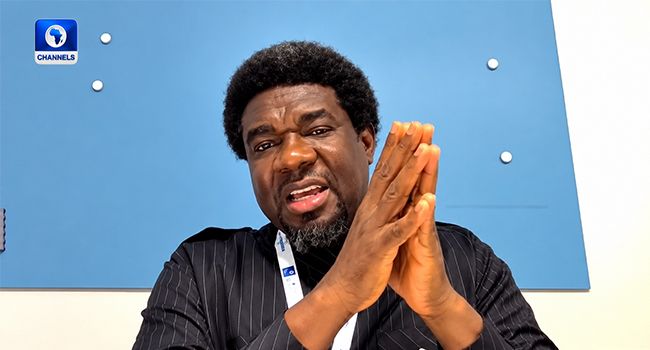
Speaking on Channels Television’s The Morning Brief on Monday, Osifo described the agreement reached by the NLC leadership as an aberration, arguing that the TUC should have been involved in the discussions.
He faulted Ajaero’s position on the matter, expressing concern over the state of leadership within the labour movement.
Osifo maintained that there was nothing in the regulations of the International Labour Organisation (ILO) authorising one labour centre to negotiate on behalf of another without consultation or participation.
According to him, although the NLC has more affiliated unions than the TUC, with approximately 60 affiliates against the TUC’s 40, the numerical advantage does not give either organisation the authority to represent the other in negotiations.
He explained that the ILO operates a tripartite arrangement involving labour, government and employers, stressing that both labour centres must work together when representing Nigerian workers at the international level.
Osifo challenged Ajaero to produce any ILO regulation that permits one labour organisation to negotiate on behalf of another without its involvement.
He also questioned Ajaero’s interpretation of the Joint Public Sector Negotiating Council (JNC), arguing that the NLC President had misrepresented the council’s mandate.
According to Osifo, the JNC is responsible for examining issues affecting public-sector workers and facilitating appropriate negotiations.
He insisted that the meeting at which the N70,000 transportation allowance was agreed upon was not a formal JNC meeting, adding that neither the Minister of Labour nor Ajaero was a member of the council.
He further argued that the meeting did not satisfy the council’s constitutional requirements, including the prescribed quorum and participation of its members.
Osifo also criticised the manner in which the consequential salary adjustments following the increase in the national minimum wage from N30,000 to N70,000 were handled.
He explained that workers were entitled to appropriate consequential adjustments to reflect the new minimum wage structure, rather than a uniform N40,000 addition across the board.
According to him, Ajaero had sent a questionnaire to the JNC, requesting that N40,000 be added to the salaries of Nigerian workers across all levels.
Osifo argued that the approach was fundamentally flawed and contributed to what he described as the poor earnings of some federal government workers.
He disclosed that he had personally confronted Ajaero at his office over the matter, insisting that the process adopted in implementing the adjustments was wrong.
The TUC President maintained that negotiations affecting workers must be inclusive and conducted through the appropriate structures, rather than decisions being reached by one labour organisation on behalf of others.