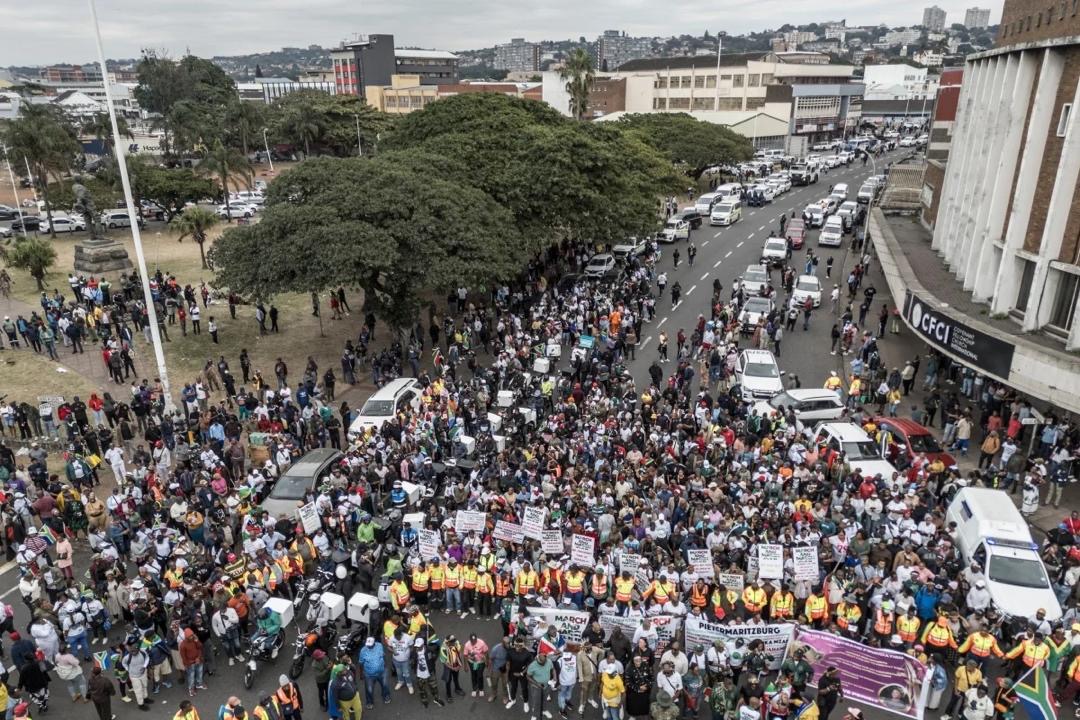


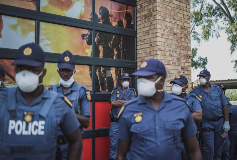

An aerial view of protesters marching during a demonstration by the “March and March” movement marking an unofficial deadline set by citizen-led groups for undocumented foreign nationals to leave South Africa, in Durban, on June 30, 2026. Photo by MARCO LONGARI / AFP
The Ghanaian government says an additional 1,000 of its citizens will begin returning from South Africa on Sunday and Monday as violent anti-migrant protests continue to spread across the country.
The latest evacuation follows the successful repatriation of 926 Ghanaians, with authorities describing the new operation as the final phase of the country’s evacuation exercise.
In a statement issued late Saturday, Ghana’s Foreign Ministry said special flights carrying the returnees would arrive on Sunday and Monday.
President John Mahama has strongly condemned the attacks, urging the African Union to place what he described as xenophobic violence in South Africa on its agenda. He also accused the South African government of not doing enough to protect foreign nationals.
The latest evacuation comes days after reports indicated that more than 160,000 foreign nationals had left South Africa over the past two months as hostility towards undocumented migrants intensified.
According to an AFP tally based on figures released by governments conducting evacuations, those who have returned to their home countries include citizens of Zimbabwe, Malawi, Mozambique, Nigeria, Ghana, Kenya, Lesotho and Uganda.
South African authorities say at least four migrants have been killed during the unrest, although some affected countries have reported higher death tolls among their nationals.
South Africa has experienced weeks of anti-migrant protests, with vigilante groups accusing undocumented foreigners of taking jobs and contributing to crime. However, analysts argue that migrants are being scapegoated for broader economic and governance challenges, including high unemployment and poor public service delivery.
Ghana had earlier postponed a planned visit by South African President Cyril Ramaphosa and joined Nigeria in calling for the issue, which both countries have described as “Afrophobia,” to be discussed at the next African Union summit.