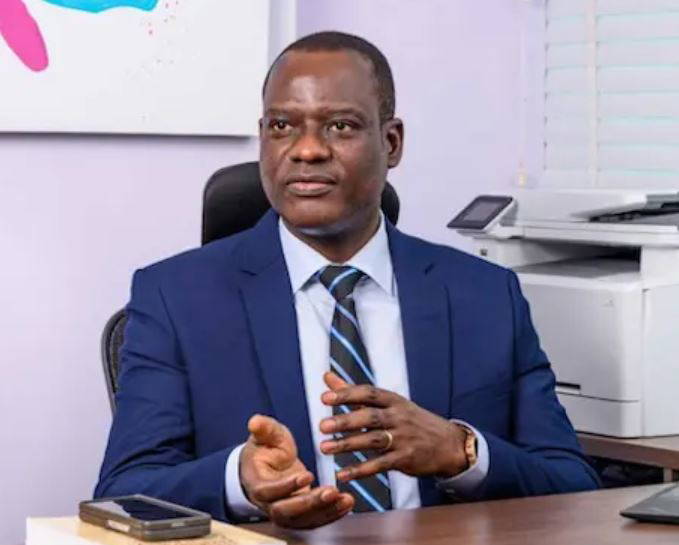
The Minister of Finance and Coordinating Minister of the Economy, Taiwo Oyedele, has warned that reinstating petrol subsidy could trigger capital flight, weaken investor confidence and send the naira plunging to between N3,000 and N4,000 per dollar.
Oyedele issued the warning on Monday during a press briefing at the ongoing International Monetary Fund (IMF) and World Bank Annual Meetings in Bangkok, Thailand.
However, the Presidential Campaign Council (PCC) of the African Democratic Congress (ADC) challenged the minister to present economic models supporting his claim that reinstating petrol subsidy would weaken the naira.
The council accused the Federal Government of discouraging debate over subsidy removal through what it described as fear-mongering.
The ADC’s presidential candidate, Atiku Abubakar, has promised to restore petrol subsidy if elected, arguing that the move would help cushion the economic hardship facing Nigerians.
Why Subsidy Could Weaken the Naira — Oyedele
Oyedele said investors had repeatedly expressed concerns over whether the Federal Government would sustain its economic reforms ahead of the next election cycle.
The minister ruled out reversing the reforms introduced by President Bola Tinubu’s administration, warning that even the suggestion of a possible return to petrol subsidy could unsettle financial markets, increase borrowing costs and worsen economic pressures on households.
According to him, investors in both domestic and international markets have largely discounted the possibility of the opposition reversing the government’s policies.
He warned that any indication that the President was considering reinstating petrol subsidy could trigger an immediate reaction in the foreign exchange and capital markets.
“In all the meetings I have had, I came to a conclusion that the markets, including the domestic market, which you can read from the capital market, and the international market, have largely written off the opposition in Nigeria as being unserious.
“If, for any reason, the President were to say we are merely considering the return of fuel subsidy, capital would react immediately. Air fares would struggle, the naira would come under severe pressure, potentially moving towards N3,000, N3,500 or even N4,000. The very fuel people want subsidised would become far more expensive in naira terms,” he said.
Oyedele added that capital flight would not be limited to foreign investors, as wealthy Nigerians, business owners and middle-class investors could also move their funds into dollars.
Such a development, he explained, would increase demand for foreign exchange and intensify pressure on the naira.
The minister warned that ordinary Nigerians would ultimately bear the consequences through higher import costs, rising prices and increased economic hardship.
NNPC’s Margin Reduction Not a Subsidy — Minister
Oyedele also rejected suggestions that the Nigerian National Petroleum Company Limited’s temporary reduction in petrol retail margins amounted to a return to subsidy.
He explained that the decision was a commercial arrangement rather than a government-funded intervention.
According to him, a company choosing to reduce its profit margin to make a product more affordable should not automatically be regarded as receiving or providing a subsidy.
President Tinubu announced the removal of petrol subsidy on May 29, 2023, during his inauguration in Abuja.
The administration subsequently adopted a more market-driven exchange-rate regime, arguing that the government could no longer sustain the financial burden associated with the subsidy.
Tinubu also maintained that the national budget made no provision for petrol subsidy from June 2023.
Tinubu Defends Subsidy Removal, Says Nigeria Cannot Return to ‘Egypt’
Meanwhile, President Tinubu has reiterated that he has no regrets about removing petrol subsidy, insisting that Nigeria cannot return to what he described as “Egypt.”
The President spoke on Monday at a forum titled “Together till 2027: An Evening with Original City Boy,” organised by the City Boy Movement in conjunction with the “Relax, Tinubu Is Fixing Nigeria” movement.
The event was held at the Old Banquet Hall of the Presidential Villa, Abuja.
Tinubu also commended his son, Seyi Tinubu, who serves as patron of the City Boy Movement, a political campaign organisation supporting his re-election bid.
The President’s remarks reinforce his administration’s position that reversing the subsidy removal would undermine its economic reform agenda, despite continuing calls from opposition figures for measures to ease the financial burden on Nigerians.