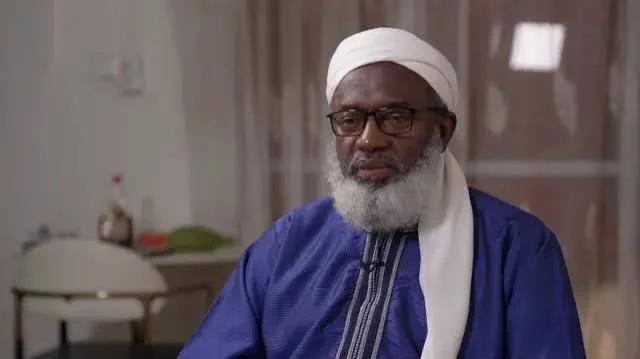








Controversial Islamic cleric, Sheikh Ahmad Gumi, has questioned why no government official has sought dialogue with Boko Haram insurgents and armed bandits in the same way previous administrations engaged Niger Delta militants to end violence in the region.
In a Facebook post on Saturday, Gumi referenced the efforts of former President Goodluck Jonathan and former Vice President Yemi Osinbajo, who separately visited Niger Delta communities to meet militant leaders and promote peace initiatives.
According to the cleric, both leaders returned from the engagements with programmes that helped curb militancy in the oil-rich region.
“The former President Jonathan visited delta militants in the creeks, so also the former vice president Osinbajo. They all came up with a program to tame the militants,” he wrote.
Gumi then questioned who would be willing to initiate similar dialogue with Boko Haram fighters and bandits operating across northern Nigeria without attracting criticism.
“Who is going to visit BH and Bandits to tame them without fools castigating them?” he asked.
For years, Gumi has advocated negotiations with armed groups in Nigeria’s North-West and North-East, making several visits to bandit camps in states such as Zamfara in an effort to facilitate dialogue and understand their grievances.
He has consistently maintained that the strategy used to resolve the Niger Delta militancy through negotiation and rehabilitation should be considered in tackling insecurity in northern Nigeria.
His approach, however, has remained controversial. Critics argue that engaging armed groups legitimises those responsible for kidnappings, killings and other violent crimes, while supporters contend that his interventions have contributed to the release of abducted victims.
Gumi has repeatedly denied supporting terrorism or banditry, insisting that his advocacy is solely aimed at ending violence through dialogue and rehabilitation.
The Presidential Amnesty Programme, introduced in 2009 under the late President Umaru Musa Yar’Adua and sustained by Jonathan’s administration, led to the disarmament of thousands of Niger Delta militants in exchange for training, monthly stipends and reintegration support, significantly reducing attacks on oil installations.
Jonathan had earlier engaged militant leaders in 2007 while serving as vice president, travelling into the creeks of Warri, Delta State, to meet former militant leader Government Ekpemupolo, popularly known as Tompolo. He later said the meeting laid the foundation for the amnesty programme.
Similarly, Osinbajo, while serving as acting president in 2017, toured several Niger Delta communities where he met with militant groups, traditional rulers and other stakeholders, arguing that many of those in the creeks were citizens with legitimate grievances that required engagement rather than force alone.