











The United Nations Office on Drugs and Crime (UNODC) has called for stronger collaboration with the Nigeria Security and Civil Defence Corps (NSCDC) Mining Marshals amid growing concerns over the links between illegal mining, organised crime and terrorism in Nigeria, West Africa and the Sahel.
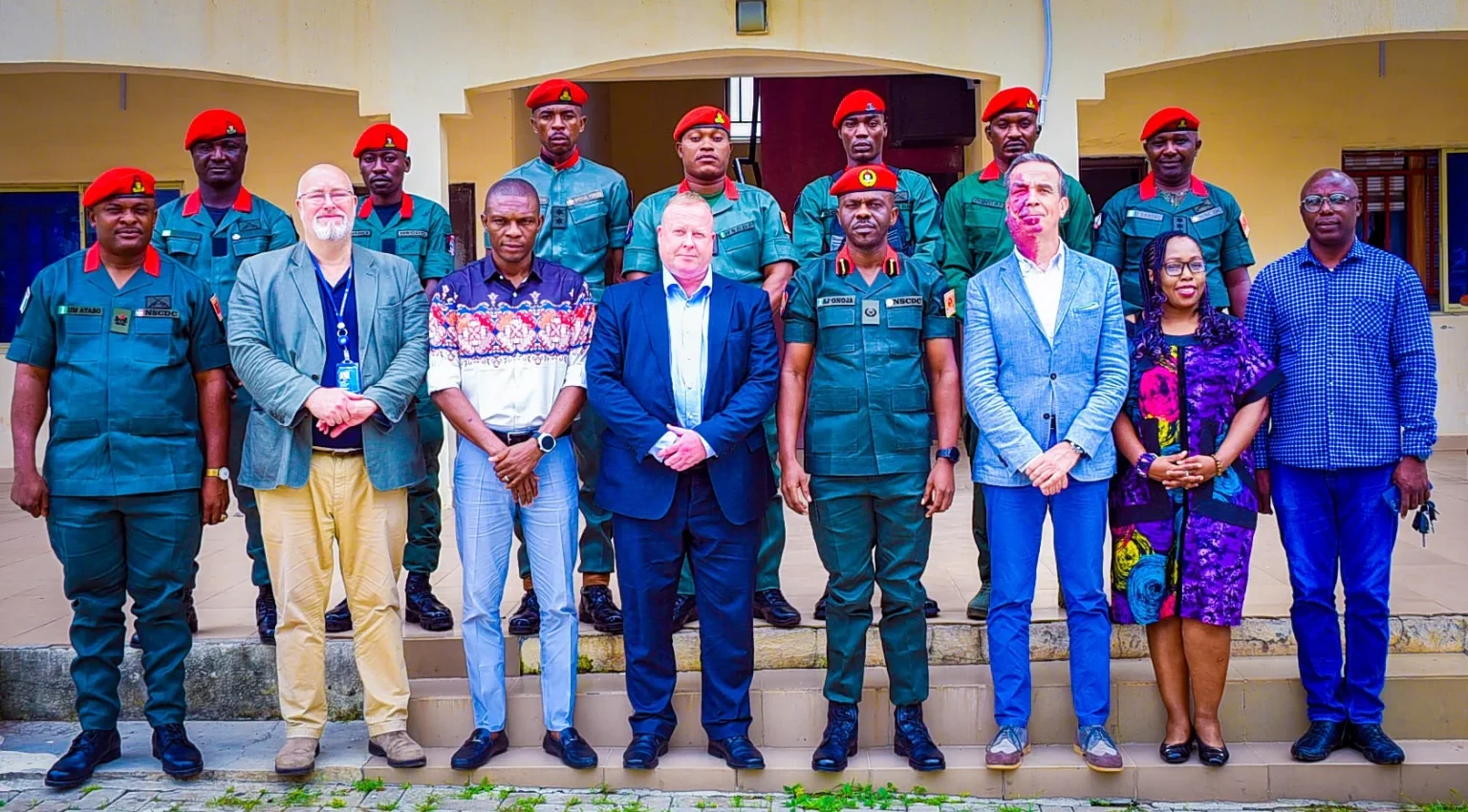
The call was made during a strategic visit by a UNODC delegation to the Mining Marshals Corps, where the international organisation commended the specialised unit for its expanding role in combating illegal mining and related criminal activities.
The Commander of the Mining Marshals, Assistant Commandant of Corps John Attah, disclosed this in a statement issued in Abuja on Monday.
The UNODC delegation was led by the Chief of the Africa Section of the Terrorism Prevention Branch, Tullio Santini, who commended the Mining Marshals for their enforcement efforts.
“The rising number of arrests and prosecutions is evidence of Nigeria’s commitment to tackling the illicit trade,” Santini said.
The visit formed part of a broader UNODC mission to strengthen partnerships in Nigeria, engage development partners and assess ongoing field operations.
A key focus of the meeting was the introduction of the UNODC’s Coordination through Operational Networks against the Crime-Terrorism Nexus (CONNECT) Initiative by Swedish Police law enforcement expert Robert Haslinger.
The initiative is aimed at strengthening cooperation among governments and law enforcement agencies to disrupt the financial and operational links between organised criminal networks and terrorist groups.
Nigeria is among the countries invited to participate in the initiative, which is scheduled to be launched in November 2026.
Responding, Attah, who represented the NSCDC Commandant-General, Prof. Ahmed Audi, welcomed the delegation and described UNODC as an important partner in enhancing the operational capabilities of the Mining Marshals.
He said previous UNODC-supported training programmes had improved cooperation between the Mining Marshals and the Nigerian Financial Intelligence Unit, particularly in coordinating investigations and intelligence-led operations against illegal mining syndicates.
“The Mining Marshals occupy a unique position within Nigeria’s security architecture, reporting to the Ministry of Interior, the Ministry of Solid Minerals Development, and the NSCDC. While their primary mandate remains the suppression of illegal mining activities, the officers—drawn from the NSCDC—also support broader national security operations when required,” Attah said.
He also advocated the formal inclusion of the Mining Marshals in the CONNECT Initiative, arguing that efforts to disrupt terrorist financing should pay greater attention to the illicit exploitation of mineral resources.
Attah said the growing connection between illegal mining and terrorism had become increasingly important to Nigeria’s national security considerations.
According to him, the development partly informed the Federal Government’s ongoing reforms in the mining sector, with the Mining Marshals emerging as a key enforcement mechanism against the illegal exploitation of Nigeria’s mineral resources.
The commander further called for expanded capacity-building programmes covering terrorism-related concepts, regional intelligence sharing and peer-learning opportunities to strengthen the unit’s ability to respond to emerging threats associated with illicit mining.
Illegal mining has become an increasing security concern in Nigeria, with authorities warning that proceeds from the illicit exploitation of mineral resources could finance organised crime and other forms of insecurity.
The UNODC delegation commended the institutional structure of the Mining Marshals, describing it as a notable model within Nigeria’s law-enforcement framework.
The officials noted that the unit has a broad operational mandate covering intelligence gathering, prevention, arrest, investigation and prosecution of illegal mining-related offences.
They also highlighted the Mining Marshals’ use of non-kinetic approaches, including stakeholder engagement and community outreach, in tackling illegal mining.
The meeting concluded with an exchange of publications, a commemorative photograph session and renewed commitments to deepen cooperation against the growing convergence of resource-related crime and terrorism in Nigeria and the wider region.