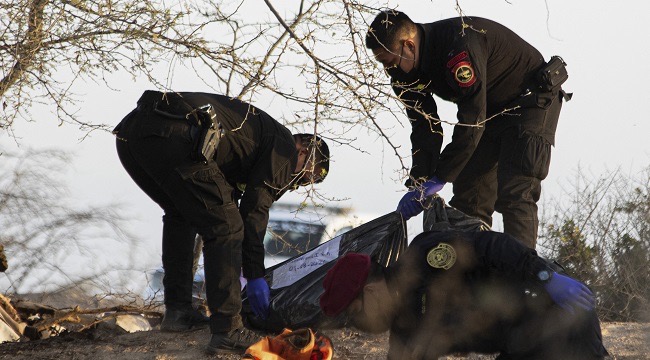













Police officers inspect the scene of a small plane crash in the Vista Alegre district of Nazca, Peru, on August 1, 2026. (Photo by Mariajulia Vareman/AFP)
A small aircraft carrying foreign tourists to view Peru’s famous Nazca Lines crashed on Saturday, killing all 13 people on board, authorities said.
According to Peru’s transport ministry, the victims included seven Italians, two Germans, two Spaniards and two crew members. Those on board ranged in age from 24 to 78.
The Cessna 208 Caravan aircraft went down shortly after taking off from Pisco Airport at about 1:00 p.m. local time (1800 GMT). The airport is located roughly 240 kilometres south of the capital, Lima.
Police Major Jorge Andrade confirmed there were no survivors.
“We have information that 11 passengers and two crew members have died,” Andrade told reporters at the crash site.
“Given the severity of the accident, there are no survivors. We have recovered four bodies so far.”
Authorities did not immediately identify the victims or disclose the cause of the crash.
Overnight, emergency responders recovered the charred remains of those on board and transported them to the regional morgue. Firefighters and police officers, some wearing protective face masks, searched through the twisted, smouldering wreckage, where one of the aircraft’s detached wheels lay near the debris.
Peru’s civil aviation authority and the country’s air accident investigation agency have launched an investigation into the crash.
President Keiko Fujimori said the government was considering the possible closure of Pisco Airport pending the outcome of investigations.
Preliminary Reports Point to In-Flight Emergency
The aircraft was operated by AeroDiana, a company that offers sightseeing flights lasting between 30 minutes and one hour over the Nazca Lines, one of Peru’s most famous tourist attractions.
The Nazca Lines are a vast collection of ancient geoglyphs etched into the desert between 500 BC and 500 AD. The giant geometric patterns and animal figures are best viewed from the air, and their purpose remains uncertain, although some researchers believe they may have served ritual or astronomical functions. UNESCO designated the site a World Heritage Site in 1994.
AeroDiana said it would release further information on the accident in due course.
Municipal authorities in Vista Alegre, where the aircraft crashed, said preliminary findings suggested the plane suffered an “in-flight emergency,” although they provided no additional details.
A resident of Vista Alegre told local authorities that the aircraft exploded on impact.
Pisco Airport serves dozens of small aircraft that operate daily sightseeing flights for tourists visiting the Nazca Lines, making it one of the busiest hubs for aerial tours in Peru.
The latest tragedy is not the first involving tourist flights in the area. In 2022, seven people, including two Chileans and three Dutch nationals, died in a similar crash. Earlier, in October 2010, four British tourists and two Peruvian crew members were killed when an AirNasca aircraft crashed after a sightseeing flight over the Nazca Lines.