






Lagos State Governor Babajide Sanwo-Olu on Wednesday visited flood-affected communities in Eti-Osa Local Government Area to assess the impact of recent flooding and engage with residents.
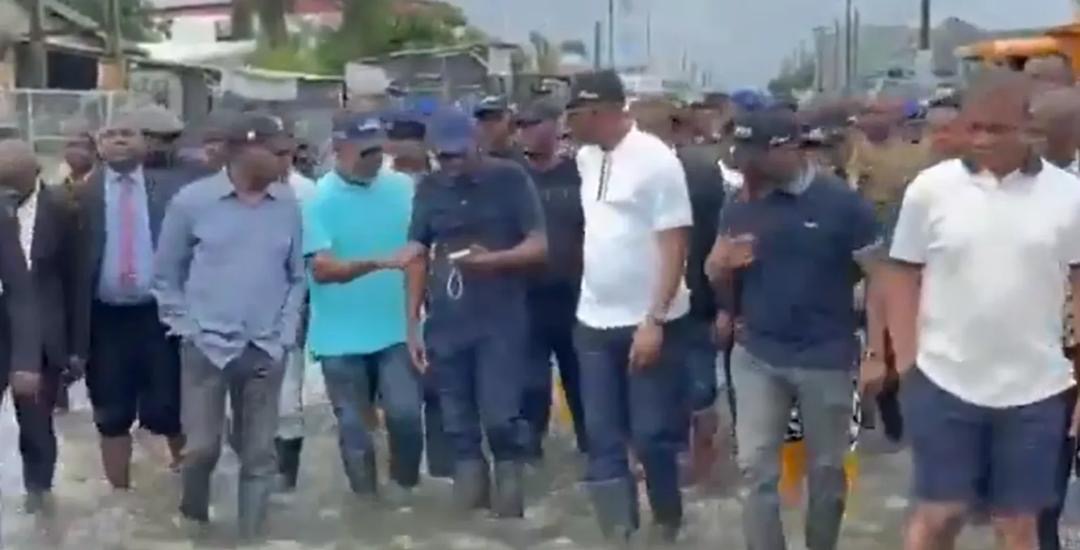
The governor, accompanied by Deputy Governor Obafemi Hamzat, the Commissioner for the Environment and Water Resources, Tokunbo Wahab, and other members of the Lagos State Executive Council, inspected the worst-hit areas, including Ogombo, Monastery Road–Sangotedo, Gbetu, Iwerekun and other communities within Eti-Osa East Local Council Development Area.
Videos shared on social media showed Sanwo-Olu and members of his entourage wading through knee-deep floodwaters as they inspected affected neighbourhoods and interacted with residents and community leaders.
The visit comes as Lagos continues to contend with seasonal flooding following days of heavy rainfall that submerged roads and disrupted normal activities in several parts of the state.
In some of the affected communities, residents have resorted to using canoes to move across flooded streets, while many homes and businesses remain inaccessible.
During the visit, residents appealed to the state government to implement both immediate and long-term flood control measures to mitigate future flooding and enable them to return to their homes, businesses and daily activities.
The Lagos State Government has already initiated emergency dredging and drainage maintenance across major channels to improve water flow and reduce the risk of future flooding.
In a statement issued in June, Commissioner for the Environment and Water Resources, Tokunbo Wahab, described the recent downpours as an extreme weather event that overwhelmed drainage infrastructure in several parts of the state.
According to him, the heavy rainfall caused temporary flooding in communities including Victoria Island, Lekki, Ikeja, Gbagada, Mushin and Mafoluku.
He said Governor Sanwo-Olu had approved the immediate dredging and maintenance of 28 additional primary drainage channels across the state as part of efforts to improve flood management.
Wahab noted that the flooding was triggered by an unusually large volume of rainfall within a short period, stressing that similar extreme weather conditions had also affected other African countries and parts of North America.
He added that previous interventions in flood-prone communities such as Ajiran and Agungi had led to noticeable improvements in stormwater discharge following the removal of drainage obstructions and the restoration of natural waterways.