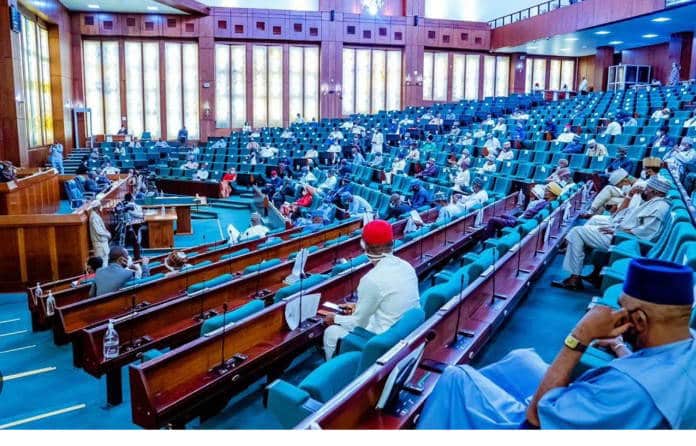
The House of Representatives has resolved to investigate the rising incidence of human trafficking in Nigeria, directing its Committees on Human Rights, Interior and Police Affairs to examine the activities of trafficking syndicates and assess the effectiveness of existing measures to combat the crime.
The resolution followed the adoption of a motion sponsored by Rep. Dominic Okafor, titled “Need to Investigate the Alarming Increase in Human Trafficking in Nigeria,” during Wednesday’s plenary.
The lawmakers expressed concern over the growing threat of human trafficking, particularly to women, children and other vulnerable groups, describing the crime as a serious violation of human rights and human dignity.
The House noted that trafficking involved the recruitment, transportation, transfer, harbouring or receipt of persons through force, coercion, deception, abuse of vulnerability or other prohibited means for the purpose of exploitation.
It observed that victims were increasingly subjected to commercial sexual exploitation, forced labour, domestic servitude, forced begging, organ harvesting and other forms of degrading treatment.
The lawmakers identified poverty, unemployment, insecurity, displacement, irregular migration and the activities of organised criminal networks as major factors increasing Nigerians’ vulnerability to trafficking.
They further noted that many victims were deceived with promises of employment, education, marriage and better opportunities abroad but eventually found themselves trapped in exploitative conditions involving physical abuse, psychological trauma and, in some cases, death.
The House also raised concerns over the operations of trafficking syndicates across state and international borders, noting that they exploited porous borders, inadequate public awareness, poor inter-agency coordination and difficulties in identifying and prosecuting offenders.
While acknowledging the efforts of the National Agency for the Prohibition of Trafficking in Persons (NAPTIP), the Nigeria Police Force, the Nigeria Immigration Service and other relevant agencies, the lawmakers stressed the need to strengthen their operational capacity, funding, intelligence-sharing and victim-support mechanisms.
They recalled the provisions of the Trafficking in Persons (Prohibition) Enforcement and Administration Act, 2015, and other relevant laws designed to prevent human trafficking, prosecute offenders and protect victims.
Consequently, the House urged the Federal Government to intensify nationwide efforts to combat the crime through effective enforcement of existing laws, intelligence-led investigations and the prosecution of traffickers and their collaborators.
The lawmakers also called for improved identification and rescue of victims, alongside stronger rehabilitation, psychosocial support, legal assistance and reintegration programmes, particularly for women, children and other vulnerable persons.
They further urged the government to address the underlying factors exposing Nigerians to trafficking, including poverty, unemployment, limited access to education and the exploitation of displaced persons.
NAPTIP and other security and law enforcement agencies were also urged to strengthen surveillance, intelligence-sharing and coordinated operations against trafficking networks, particularly those operating across state and international borders.
The House called on the Federal Ministry of Education, relevant state ministries, local government authorities, civil society organisations and community leaders to intensify public awareness campaigns on the tactics used by traffickers and the dangers of deceptive recruitment and irregular migration.
To facilitate the investigation, the lawmakers mandated the Committees on Human Rights, Interior and Police Affairs to examine the scale and patterns of human trafficking across the country, investigate the activities of trafficking syndicates and assess the adequacy of existing enforcement measures.
The committees are also expected to identify operational and institutional challenges confronting agencies responsible for combating human trafficking and submit their findings to the House within four weeks for further legislative action.