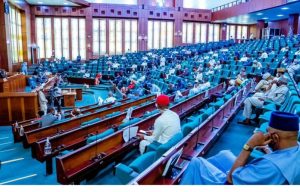
The House of Representatives has called for greater accountability in the management of Nigeria’s petroleum resources, insisting that the Petroleum Industry Act (PIA) must translate into increased oil production, higher government revenue, improved energy security, job creation and tangible economic benefits for Nigerians.
The House said five years after the enactment of the legislation, the Federal Government and relevant institutions must demonstrate measurable results from the reforms introduced in the oil and gas industry.
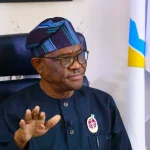
Speaker of the House, Tajudeen Abbas, stated this on Monday at the opening of a three-day retreat on Petroleum Industry Act Implementation: The PIA, Corporate Governance and Legislative Oversight, organised by the Nigerian National Petroleum Company Limited (NNPC Ltd) in collaboration with the Office of the Speaker in Abuja.
Abbas, who was represented by the House Leader, Julius Ihonvbere, said the success of the PIA should not be judged merely by the establishment of regulatory institutions or the restructuring of the national oil company, but by the extent to which it delivers value from Nigeria’s petroleum resources.
He described the legislation as one of the country’s most significant economic reforms, designed to create a transparent, commercially viable, accountable and investment-friendly petroleum industry.
“Five years down the line, the central question is how much of that promise we have translated into practice,” he said.
The Speaker noted that the transformation of the Nigerian National Petroleum Corporation into NNPC Ltd, the establishment of regulatory institutions and the introduction of a framework for host community development were intended to address longstanding challenges in the petroleum sector.
He, however, stressed that enacting the legislation was only the beginning, adding that effective implementation remained critical to achieving its objectives.
“The passage of a reform law is not the same as the successful implementation of that reform,” Abbas said.
He identified crude oil theft, pipeline vandalism, production constraints, inadequate infrastructure, investment uncertainty and regulatory bottlenecks as some of the major challenges requiring urgent intervention.
According to him, protecting critical petroleum infrastructure is essential to safeguarding government revenue and advancing Nigeria’s economic and national security interests.
“We recognise that the protection of national petroleum assets is not merely an industry concern; it is an economic and national security imperative,” he said.
Abbas also emphasised the need to ensure adequate crude oil supplies to domestic refineries without compromising the commercial viability of upstream operations.
He said strengthening domestic refining capacity was necessary to improve energy security and reduce the country’s dependence on imported petroleum products.
On natural gas development, the Speaker said unlocking Nigeria’s vast gas resources would require sustained investment in infrastructure, appropriate commercial arrangements and a predictable regulatory environment.
He further maintained that the commercial independence granted to NNPC Ltd must be matched with transparency and accountability, considering the strategic importance of the national assets under its management.
“But commercial autonomy must be accompanied by corporate accountability. The freedom to make commercial decisions must go hand in hand with responsibility for their consequences,” he said.
He assured that the legislature would continue to ensure that national petroleum assets remained subject to constitutional and statutory oversight without unnecessarily interfering in legitimate business operations.
Abbas disclosed that the 10th House of Representatives had sustained its oversight activities in the petroleum sector through committee engagements, investigations and consultations with industry stakeholders.
He recalled a two-day retreat organised by the House in April 2024 on economic transformation and development, which examined the implementation of the PIA and tax reforms.
He also cited engagements by the House Committee on Petroleum Resources (Midstream) in Port Harcourt and Lagos in June 2026, where stakeholders examined operational challenges, regulatory performance, domestic gas utilisation and the protection of energy infrastructure.
The Speaker urged participants at the retreat to identify implementation gaps, strengthen collaboration between NNPC Ltd and relevant House committees, and establish a framework for monitoring agreed actions.
He cautioned against the assumption that every challenge associated with the implementation of the PIA required fresh legislation.
“Where existing provisions are adequate but poorly implemented, our priority should be enforcement and institutional compliance. Where genuine legislative gaps or unintended consequences have emerged, the National Assembly must be prepared to consider appropriate amendments,” he said.
Abbas maintained that the ultimate measure of the PIA’s success would be its contribution to increased oil production, greater investment, improved government revenue, domestic refining capacity, employment opportunities and better living conditions for Nigerians, particularly communities hosting petroleum operations.
“Ultimately, the petroleum industry must work for the Nigerian people. That is the larger public purpose that must guide our collective efforts,” he added.
Stakeholders Seek Stronger Institutional Collaboration
Earlier, the Chief Executive Officer of 3 Streams Synergy Ltd, Doyin Adelabu, called for stronger institutional collaboration and accountability to ensure that the PIA achieved its intended objectives.
Adelabu said the fifth anniversary of the legislation provided an opportunity to assess the transformation of NNPC Ltd into a commercially driven, transparent and accountable company.
“The Act sets out to turn NNPC into a commercially driven, transparent and accountable company, and to give the industry a governance framework that attracts investment and serves the Nigerian people,” she said.
She explained that the retreat was designed to examine NNPC Ltd’s corporate governance and accountability framework while exploring ways to strengthen legislative oversight and cooperation among relevant institutions.
Adelabu urged participants to engage constructively and develop practical solutions to challenges affecting the implementation of the petroleum sector reforms.
“At 3 Streams Synergy, we believe reforms succeed when institutions and the people who run them have the capacity and the collaboration to deliver,” she said.
Also speaking, Chairman of the House Committee on Public Accounts, Bamidele Salam, called for a comprehensive assessment of the PIA’s implementation to identify achievements, shortcomings and areas requiring improvement.
Salam recalled the challenges that preceded the passage of the legislation by the Ninth National Assembly, noting that five years of implementation provided sufficient grounds for stakeholders to evaluate its impact.
He said the review should establish what had worked, what had failed and the measures required to improve the effectiveness of the law.
“It is proper that after five years of implementation, that we have an opportunity to sit back and see what has worked, what hasn’t worked, and what do we need to do to make sure that we think out with the law in a manner that will make it more productive,” he said.
He urged stakeholders to identify successful practices and recommendations that could strengthen the performance, transparency and accountability of Nigeria’s petroleum industry.