








The Kimpact Development Initiative (KDI), an election observer organisation, has reported 17 election-related violence incidents involving more than 44 victims across 10 Local Government Areas of Osun State during the August 15, 2026 governorship election.
KDI disclosed this at its post-election analysis conference in Abuja on Thursday, saying the incidents were documented through its Election Day Data Room, which coordinated reports from accredited observers deployed across the state.
The organisation said the incidents included gunshots, physical assaults, intimidation and harassment. Gunshots, physical assaults and intimidation each accounted for five incidents, representing 29.4 per cent, while harassment accounted for two incidents, or 11.8 per cent.
According to KDI Executive Director, Bukola Idowu, the violence disrupted voting at Iroyin Ayo Open Space, Ward Elejigbo D/Ejemu, in Ejigbo Local Government Area, resulting in the cancellation of the election at the affected location.
The incidents were recorded in Ejigbo, Osogbo, Ife East, Ilesa East, Irewole, Odo-Otin, Boripe, Ifelodun, Ila and Ola-Oluwa LGAs. Ejigbo and Osogbo recorded the highest number, with 17.6 per cent each, while Ife East, Ilesa East and Irewole accounted for 11.8 per cent each.
KDI, however, said the violence remained largely localised and did not cause widespread disruption across the state.
“The election-day figures therefore suggest that pre-election tensions did not translate into widespread election-day violence across the state,” the organisation said.
Despite the relatively limited incidents on election day, KDI said the broader security situation remained a concern. It recorded 81 election-related violence incidents resulting in 15 fatalities across Osun between October 2025 and August 2026.
The organisation also documented post-election violence and property destruction in Ilesa, Iperindo, Atakumosa East, Modakeke and Ikire.
“These reports underscore that election-related security risks do not necessarily end when polling closes, and that the immediate post-election period requires continued monitoring,” KDI said.
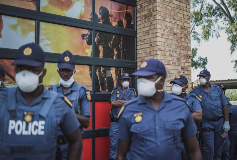
It called on security and law enforcement authorities to investigate the reported incidents, identify those responsible and prosecute anyone found culpable.
KDI also urged the Nigeria Police Force to ensure the prompt prosecution of the 295 people arrested for various election-related offences during the election. It requested appropriate updates on the cases, subject to legal and investigative requirements, saying greater transparency would allow civil society organisations and other stakeholders to monitor the prosecution of electoral offences.
“Timely and visible prosecution of electoral offences is essential to strengthening accountability and addressing the persistence of electoral impunity,” it said.
Despite the reported incidents, KDI commended security agencies for their deployment and professionalism during the election.
It said security personnel were present at all polling units observed by its monitors, with the Nigeria Police Force and Nigeria Security and Civil Defence Corps being the most prominent agencies. Observers generally reported that security personnel acted professionally and helped maintain order.
However, seven per cent of processed reports from the Election Day Data Room indicated alleged interference in the electoral process by security personnel. The reports came from Odo-Otin, Ifedayo, Ede South, Ifelodun, Atakumosa West, Oriade, Ife North, Obokun and Ilesa West.
KDI also received reports linking some security personnel to vote trading but stressed that such reports represented a minority of observations and should not be generalised to the overall conduct of security agencies in Osun.
BVAS Performance
The organisation raised concerns over the performance of the Bimodal Voter Accreditation System (BVAS), saying the system successfully processed accreditation in 84.9 per cent of observed cases, while 15.1 per cent experienced failures.
KDI said the figure represented a marginal improvement over the 82.6 per cent functionality recorded during the 2026 Ekiti governorship election but remained below the 96 per cent recorded during the 2025 Anambra governorship election.
Observers reported widespread difficulties with fingerprint recognition, resulting in extensive reliance on facial recognition for voter accreditation at many polling locations.
KDI urged the Independent National Electoral Commission (INEC) to assess BVAS performance across different categories of voters, authentication methods and device conditions ahead of the 2027 general elections.
Result Discrepancies
KDI also raised concerns about discrepancies identified in polling-unit results uploaded to the INEC Result Viewing Portal.
Its preliminary analysis identified arithmetic inconsistencies in 260 polling units, instances where the number of accredited voters exceeded total votes cast in 82 polling units, and registered-voter mismatches in 11 polling units.
The organisation said the findings required further technical review, particularly given INEC’s electronic result validation process.
“The continued identification of inconsistencies and other reconciliation anomalies in KDI’s independent analysis, therefore, raises an important operational question: how effective is the e-EC8A?” it asked.
KDI called for greater legal clarity on the status of the e-EC8A under the Electoral Act 2026 and the Constitution, saying the relationship between electronic and physical EC8A records should be clearly established.
Vote Trading and Inducement
The observer group also identified vote trading and voter inducement as continuing threats to electoral integrity.
KDI said it received reports of inducement across all 30 LGAs. Party supporters accounted for 46.8 per cent of reported actors involved, followed by party agents at 29.8 per cent. Voters accounted for 10.6 per cent, while community leaders represented 9.6 per cent.
The alleged inducements included food, drinks and cash payments ranging from N5,000 to N50,000.
Some payments were reportedly facilitated outside polling units, including through vehicles and small businesses such as food vendors and provision shops.
KDI warned that monitoring limited to polling-unit environments might not capture the wider networks used to facilitate voter inducement.
KDI Commends Voters
Despite the challenges, KDI said the election demonstrated that Nigeria’s electoral institutions, stakeholders and citizens could conduct a competitive off-cycle election without widespread disruption.
It commended Osun voters for their resilience and commitment to protecting their votes and preserving the democratic process.
“Their resolve reinforces an important lesson: democracy is sustained not only by institutions, but also by citizens who are willing to defend their rights and insist that electoral rules are respected,” the organisation said.
KDI urged INEC, security agencies, political parties, civil society organisations, development partners and the media to address the vulnerabilities identified during the election ahead of the 2027 general elections.
For the election, the organisation deployed 370 trained and accredited observers across all 30 LGAs, 332 wards and 1,660 polling units in Osun State.
At the close of voting, INEC declared Ademola Adeleke of the Accord Party the winner with 511,067 votes, ahead of his closest challenger, Bola Oyebamiji of the All Progressives Congress, who polled 444,815 votes.