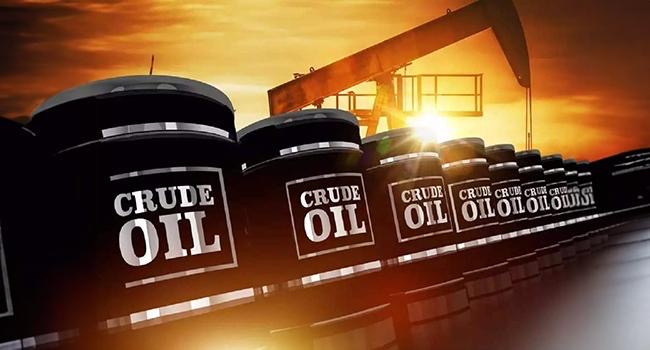











Global oil prices surged more than five per cent on Wednesday after US President Donald Trump declared that the ceasefire with Iran was over, following renewed military strikes in the Middle East that heightened fears of further disruptions to global energy supplies.
International benchmark Brent crude climbed 5.3 per cent to $78.09 per barrel, while US benchmark West Texas Intermediate (WTI) gained 5.4 per cent to $74.23 per barrel.
The rally came after the United States launched extensive strikes on Iran in response to attacks on commercial vessels in the Strait of Hormuz, prompting retaliatory strikes by Iranian forces against US military installations in the Gulf.
The renewed hostilities have raised concerns over the future of diplomatic efforts aimed at ending the conflict and ensuring the full reopening of the strategically important Strait of Hormuz, a vital route for global oil shipments.
The escalation also weighed on broader financial markets, with Asian equities remaining under pressure. Seoul’s stock market extended losses amid concerns over elevated technology valuations and uncertainty about when companies will begin generating meaningful returns from massive artificial intelligence investments.
US and Iranian forces exchanged fresh attacks on multiple targets, placing additional strain on an interim agreement intended to de-escalate tensions in the region. Washington also revoked a temporary sanctions waiver for Iranian oil as part of its response.
The US military described its latest strikes on Iranian military facilities as retaliation for Tehran’s attacks on three commercial vessels near the Strait of Hormuz.
Iranian state media reported explosions around the strategic waterway, while the Islamic Revolutionary Guard Corps claimed responsibility for strikes on dozens of US military facilities in Bahrain and Kuwait.
The three commercial ships were attacked near Oman, which had proposed a temporary shipping corridor along its coastline to maintain safe passage through the strait. Tehran has opposed the initiative, insisting on imposing transit fees on vessels using the waterway.
Iran’s Foreign Ministry accused the United States of repeatedly violating a memorandum of understanding reached between the two countries.
Both Brent and WTI crude futures extended gains after rising more than two per cent on Tuesday, reaching their highest levels in two weeks.
Andreas Krieg, a security expert at King’s College London, said Iran appeared determined to enforce its demand for transit fees in the Strait of Hormuz despite international opposition.
“We are now in a sensitive period where potential alternatives to an Iranian toll or fee system are being explored,” Krieg told AFP.
“Iran is sending a clear signal that no alternative will be accepted.”