










President Bola Tinubu on Tuesday declared that Nigeria has positioned itself as Africa’s leader in renewable energy capacity development following the inauguration of the continent’s first renewable energy college.
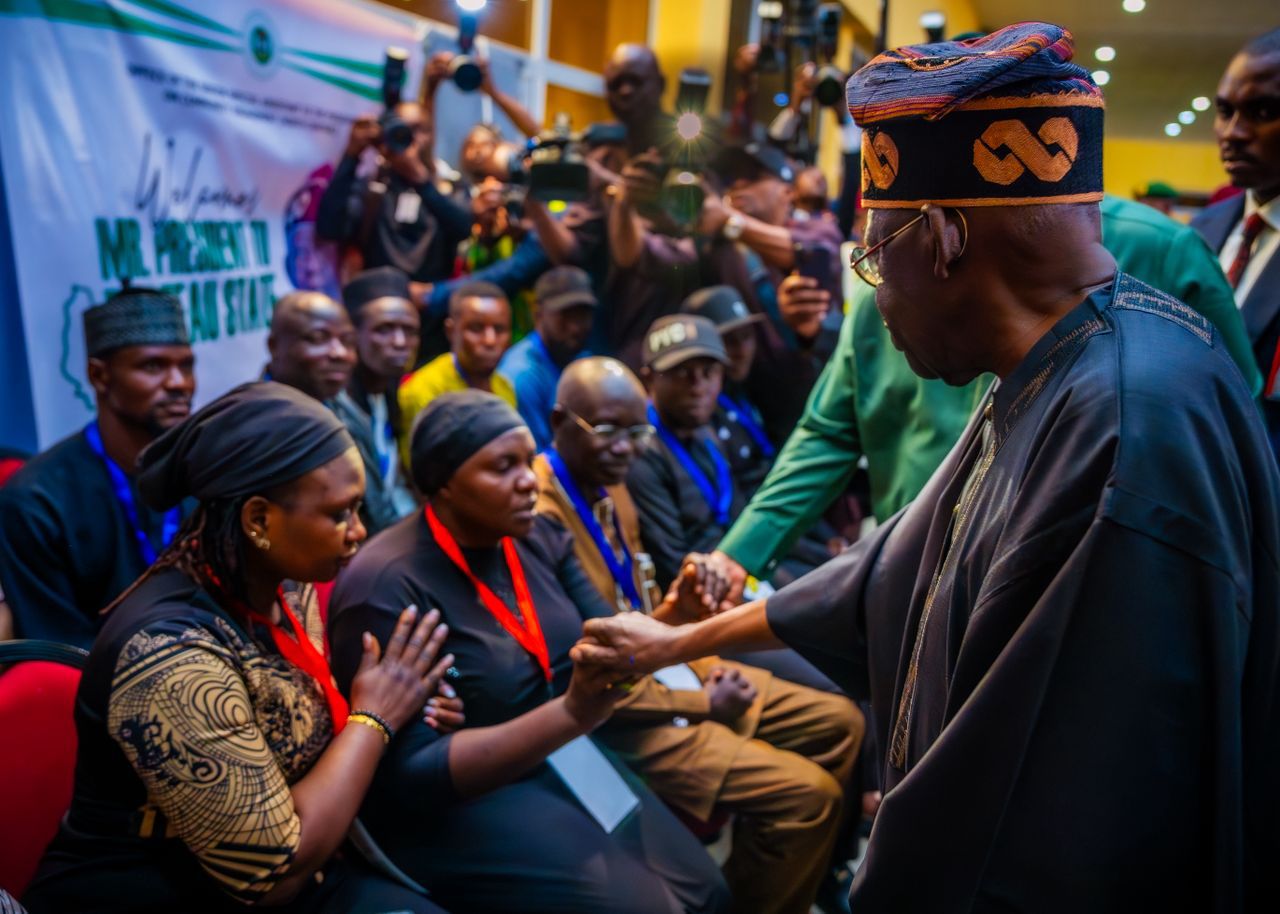
The President made the declaration during the commissioning of the Barefoot Renewable Energy College and the Green Hydrogen Research and Demonstration Pilot Plant at the Confluence University of Science and Technology, Osara, in Kogi State.
Represented by Vice President Kashim Shettima, Tinubu said the new institution was designed to tackle one of Nigeria’s long-standing structural challenges by transforming the country’s vast renewable resources—including solar, wind, biomass and water—into sustainable energy and employment opportunities.
Details of the event were contained in a statement issued on Tuesday by the Senior Special Assistant to the President on Media and Communications in the Office of the Vice President, Stanley Nkwocha, titled ‘President Tinubu Commissions Africa’s First Renewable Energy College in Kogi.’
According to the President, the college is the first of its kind in Africa and is modelled after India’s renowned Barefoot College initiative, which trained rural women with little or no formal education to become solar engineers.
“If that model could electrify villages in Rajasthan, it can illuminate communities in Kogi, Ondo and Cross River. From today, Nigeria assumes the role of pacesetter in renewable energy capacity development across Africa,” Tinubu said.
Shettima said the President viewed the project as a demonstration of his administration’s commitment to delivering impactful infrastructure, noting that governments should be judged by the industries they establish and the livelihoods they create.
Reflecting on the project’s completion, Tinubu contrasted it with Nigeria’s history of abandoned public projects.
“Two years ago, we gathered here for the groundbreaking ceremony with nothing but a vision and determination. Today, we stand before a world-class institution completed to international standards,” he said.
The President described the college as a practical response to Africa’s greatest challenge in the clean energy transition—not a lack of ambition, but a shortage of skilled manpower.
He said the institution would train technicians, installers, operators and maintenance professionals equipped with practical expertise in renewable energy technologies.
Tinubu added that graduates would receive internationally recognised certifications, enabling them to secure employment or establish businesses anywhere in the world.
“A certificate earned in Osara should one day command respect in Nairobi and Frankfurt,” he said.
He also called on development partners, the private sector, international organisations and research institutions to collaborate with the college, assuring them that Nigeria is ready to lead partnerships aimed at advancing renewable energy development across the continent.