








Nigeria requires about $23 billion in additional investment to address its electricity deficit and improve the reliability of power supply, the Rural Electrification Agency has said.
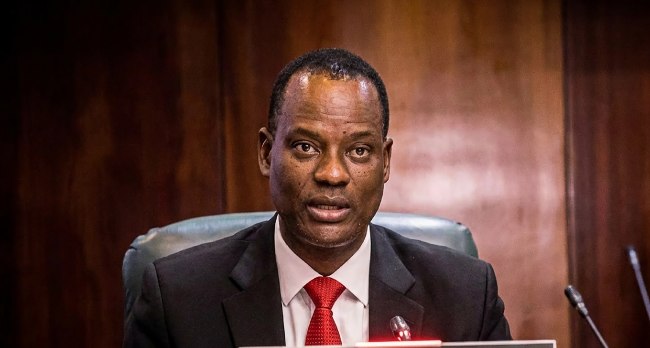
The Managing Director of the REA, Abba Aliyu, disclosed this on Friday in Abuja during the signing of a collaboration agreement between the agency and Alpha Morgan Bank, which pledged up to N50 billion in financing for renewable energy developers.
Aliyu said the partnership was aimed at addressing part of the financing gap in the power sector, particularly in rural and underserved communities where millions of Nigerians still lack reliable access to electricity.
Under the agreement, eligible developers participating in REA programmes, including the Distributed Access through Renewable Energy Scale-up project, will be able to access revolving loans of up to N10 billion each, subject to the bank’s credit assessment and approval.
Alpha Morgan Bank will provide up to 70 per cent counterpart financing for qualifying projects, with loan tenures expected to range between 12 and 24 months.
However, Aliyu stressed that the N50 billion facility was only a fraction of the investment required to transform Nigeria’s electricity sector.
He said the demand for electricity would continue to rise rapidly as population growth, digitalisation, artificial intelligence, data centres and the electrification of transportation, agriculture, healthcare and other sectors gather pace.
“Electricity is going to drive almost every single thing that we are going to do. Electricity will drive transportation, electricity will drive agriculture, electricity will drive health, education and everything we do,” Aliyu said.
According to him, population growth, the electrification of economic activities and the expansion of digital technologies such as AI and data centres will be major drivers of electricity demand in the coming years.
The REA boss warned that Nigeria’s population was growing faster than the expansion of electricity infrastructure, further widening the country’s power access gap.
He also noted that the growing demand from AI and data centres would place additional pressure on power systems, making reliable and affordable electricity increasingly important to economic competitiveness.
Aliyu said the global transition towards renewable energy was being supported by falling costs of solar power generation and battery storage.
“One of the things that keeps making renewable energy continue to grow and remain the fastest-growing source of electricity generation is that the cost of using solar to generate electricity has kept going down,” he said.
He added that advances in photovoltaic technology and battery storage would continue to strengthen the role of solar energy in global electricity generation.
Aliyu said several countries were already making substantial investments in electricity infrastructure to support AI, manufacturing and data centres, stressing that Nigeria must similarly treat electricity as a strategic component of its economic development plans.
He disclosed that President Bola Tinubu had approved a $750 million renewable energy intervention aimed at deploying 1,350 mini-grids and extending electricity access to about 2.5 million Nigerians.
The programme, he said, is currently in its second year of implementation.
Despite the intervention, Aliyu said the sector remained significantly underfunded.
“But still, what is required to address the electricity challenge in Nigeria and to enhance reliability of supply is about $23bn. What we currently have is less than $2.5bn,” he stated.
He added that the REA was expecting an additional $119 million from the Japan International Cooperation Agency to support the deployment of interconnected and isolated mini-grids.
According to Aliyu, the agency has adopted a performance-based approach for several of its interventions, requiring private developers to meet specified project milestones before receiving catalytic grants.
He said the model was creating opportunities for Nigerian financial institutions to provide bridge financing that would allow developers to complete projects and subsequently unlock grant funding.
“We have seen how Nigerian local financing has moved from not knowing or not seeing renewable energy as an infrastructure project to now becoming active members of the financing ecosystem,” he said.
Aliyu also announced that the REA would launch the Renewable Energy Asset Management Company the following week.
He described the proposed company as a platform that could become Africa’s largest renewable energy asset holder, supporting the sustainability, operation and maintenance of renewable energy projects while helping to unlock additional private-sector investment.
“We currently have assets worth over $300m in various universities. We want to leverage those assets to raise more financing,” he said.
The REA boss further disclosed that Nigeria had developed a pipeline of about 3.7 gigawatts of local renewable energy manufacturing capacity, backed by investments estimated at $225 million.