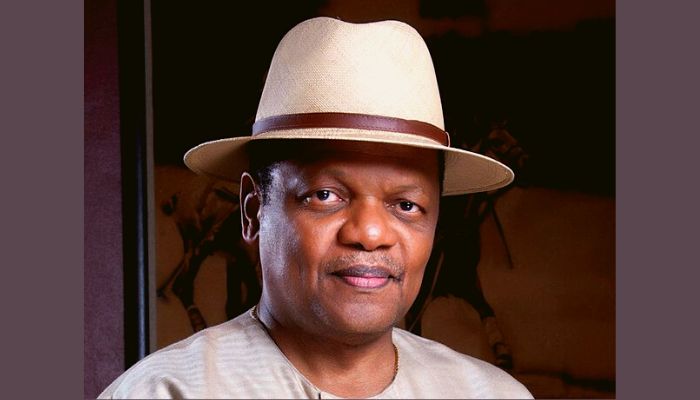
Businessman and former Nigerian Stock Exchange chairman, Atedo Peterside, has said Nigeria must achieve an annual economic growth rate of 10 per cent to generate sufficient jobs, attract investment and significantly reduce poverty.
Peterside made the call on Tuesday at the second Oxford Global Think Tank Leadership Conference in Abuja, where he identified declining investments, corruption, political patronage and the mismanagement of public resources as major constraints to economic development.
He argued that the country’s current growth rate of about four per cent was insufficient to deliver the level of economic transformation required to improve citizens’ living conditions.
According to him, Nigeria’s investment-to-Gross Domestic Product (GDP) ratio has consistently declined since 1999, despite the optimism and renewed interest shown by local and foreign investors following the return to democratic government.
Peterside attributed the declining investment trend partly to an unfavourable business environment in which access to economic opportunities is often influenced by political connections, while small and medium-sized enterprises face harassment from regulatory authorities.
He called for an economic system that allows investors to operate and succeed based on their capacity and competitiveness rather than political affiliations.
The businessman also stressed the need to channel public resources into productive investments, warning that modest economic growth should not be celebrated while corruption and the diversion of government funds remain widespread.
He particularly criticised the manipulation of public procurement processes, which he said often results in inflated contracts and the award of projects to politically connected individuals.
“Procurement can become legalised theft,” Peterside said, warning that such practices undermine development and prevent public funds from delivering meaningful economic benefits.
He maintained that Nigeria could not move from four per cent to 10 per cent economic growth without addressing corruption and ensuring that government resources were deployed productively.
Also speaking at the conference, the Emir of Kano, Muhammadu Sanusi II, acknowledged improvements in some economic indicators but cautioned against using headline GDP growth figures as the sole measure of economic performance.
Sanusi described the country’s growth rate of approximately 4.5 per cent as an improvement on previous years but insisted that economic progress must be assessed by its impact on the welfare and purchasing power of ordinary Nigerians.
The former Governor of the Central Bank of Nigeria noted that the depreciation of the naira had affected GDP per capita, making it important to examine the relationship between economic growth, exchange rate movements and household incomes.
He said other critical indicators, including access to education, healthcare, adequate nutrition, employment and the distribution of economic opportunities, should form part of any assessment of the country’s economic performance.
Sanusi questioned the value of impressive economic statistics if poverty, unemployment and widespread hardship continued to affect citizens.
He also expressed concern that some of the country’s economic gains remained vulnerable because of the volatility of foreign portfolio investments, which he said were partly attracted by high interest rates and could quickly leave when market conditions changed.
The Emir called for a broader reform agenda beyond the removal of fuel subsidies and changes to the foreign exchange regime, emphasising the importance of infrastructure development, structural reforms, transparency and accountability.
He further criticised the tendency of some government officials to dismiss public complaints about economic hardship, arguing that citizens’ concerns should be taken seriously rather than interpreted as opposition to government policies.
On national cohesion, Sanusi raised concerns about perceived regional imbalances in political and security appointments, warning that the concentration of important positions in certain parts of the country could undermine national unity and public confidence in the fairness of government institutions.
He urged the government to promote inclusiveness and ensure that national institutions and opportunities reflected Nigeria’s diversity.
Meanwhile, former President of the African Development Bank, Dr Akinwumi Adesina, called for greater investment in young people, describing Africa’s youthful population as a major opportunity for economic transformation.
Adesina said young Africans needed access to quality education, healthcare, nutrition, technical skills, finance and digital technology to enable them to establish businesses, create jobs and contribute meaningfully to economic development.
He argued that young people should be equipped to become job creators rather than depend exclusively on paid employment.
Also addressing the conference, the Minister of Communications, Innovation and Digital Economy, Dr Bosun Tijani, said national prosperity depended largely on the ability of countries to apply knowledge and technology to their available resources.
Tijani cited the liberalisation of Nigeria’s telecommunications sector in 2001 as an example of how policy reforms, competition and private sector participation could transform an important segment of the economy.
He identified artificial intelligence as another major opportunity for improving productivity but stressed that countries must develop adequate connectivity, computing and data infrastructure, technical skills, research capacity and supportive institutions to benefit from the emerging technology.
The minister also highlighted the Federal Government’s proposed 90,000-kilometre open-access fibre-optic network, alongside investments in technical talent development and the implementation of Nigeria’s National Artificial Intelligence Strategy, as key initiatives aimed at strengthening the country’s digital economy.