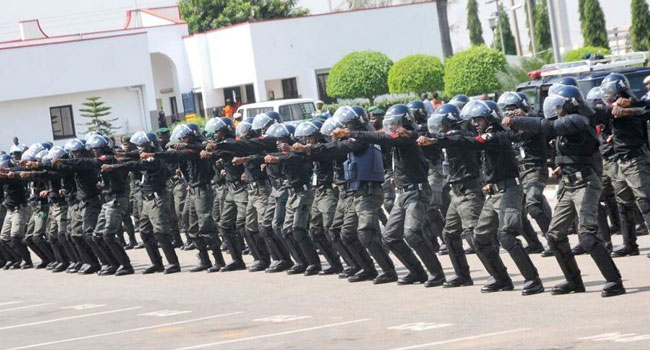
The National Economic Council (NEC) has approved an additional ₦130 billion for the rehabilitation of police training institutions across the country and endorsed two major World Bank-backed development projects valued at $850 million.
The decisions were reached on Monday during the council’s 162nd meeting, held virtually and presided over by Vice-President Kashim Shettima.
The latest approval brings the total funding committed to the police training institutions rehabilitation programme to ₦230 billion. The meeting also deliberated on Nigeria’s economic outlook, pension reforms and national identity management.
The additional ₦130 billion follows an initial ₦100 billion allocation approved after President Bola Tinubu recommended the establishment of an ad hoc intervention committee in October 2025.
Enugu State Governor Peter Mbah, who chairs the NEC Ad-Hoc Committee on the Rehabilitation of Police Training Institutions, informed the council that construction work was ongoing at 13 locations nationwide, with about 30 per cent completion recorded.
The committee said the additional funding would accelerate infrastructure upgrades in preparation for the planned recruitment and training of 50,000 police personnel ahead of the anticipated introduction of state policing.
World Bank Approves $850m Development Projects
In a separate resolution, the council endorsed two memoranda presented by the Minister of Budget and Economic Planning, Senator Atiku Bagudu, involving proposed World Bank financing of $850 million.
The first is the $350 million Accelerating Resilience through Investment Systems and Engagement (ARISE-Nigeria) Project, a six-year initiative designed to strengthen federal and state governments’ capacity to manage natural disasters, including floods, droughts and fires.
Between five and 10 states will participate in the initial phase, based on their exposure to disaster risks and institutional readiness.
The second is the State-Led Early Childhood Development Programme, which is backed by proposed World Bank financing of $500 million, alongside a potential $30 million grant from the Global Financing Facility.
The programme aims to integrate primary healthcare, childcare and preschool services across all 36 states and the Federal Capital Territory.
Economic Indicators Show Improvement
Presenting an update on the economy, the Minister of Finance and Coordinating Minister of the Economy, Taiwo Oyedele, reported improvements in several key macroeconomic indicators.
He disclosed that Nigeria’s real Gross Domestic Product (GDP) grew by 4.43 per cent in the second quarter of 2026, compared with 4.23 per cent recorded in the corresponding period of 2025.
Headline inflation also declined for the fifth consecutive month to 14.06 per cent in October 2026, its lowest level since September 2020, while the country’s external reserves stood at $54.87 billion as of November 12.
Oyedele further revealed that Nigeria’s trade surplus nearly doubled from ₦10.2 trillion in the first half of 2025 to ₦20.1 trillion in the corresponding period of 2026.
He added that net revenue distributed through the Federation Account Allocation Committee (FAAC) increased by 44 per cent, rising from ₦15.2 trillion in 2024 to ₦21.9 trillion in 2025.
However, the minister cautioned that the improving economic indicators had yet to translate into sufficient relief for households and businesses.
He identified persistent food inflation, which stood at 19.13 per cent in October, alongside high lending rates and energy costs, as major challenges still confronting Nigerians.
NEC Seeks Stronger Identity and Pension Systems
The council also considered issues relating to national identity management and pension administration.
Members urged state governments to work closely with the National Identity Management Commission (NIMC) under the proposed NIMC Act 2026 to accelerate citizens’ registration and integrate the National Identification Number (NIN) into public service delivery.
The initiative is expected to strengthen identity verification and help curb payroll and pension fraud.
Similarly, following a presentation by the Director-General of the National Pension Commission (PenCom), Omolola Oloworaran, the council urged state governors to establish clear timelines for the full implementation of the Contributory Pension Scheme.
Shettima Calls for Stronger Institutions
Earlier, in his opening remarks, Vice-President Shettima urged federal ministries and state governors to build strong and sustainable institutions capable of supporting and sustaining the economic reforms of President Bola Tinubu’s administration.
He emphasised the importance of cooperation between different levels of government and the inclusion of citizens in development initiatives.
Shettima noted that investments such as the ARISE-Nigeria Project were essential to protecting vulnerable households and businesses against economic shocks.
“The capacity to recover should never depend entirely on the resources a person already possesses,” the Vice-President said.
He added that people affected by government interventions should have an opportunity to contribute to decisions shaping those initiatives, noting that their experiences could help identify gaps in proposed policies and programmes.
According to him, the success and sustainability of development projects depend not only on government institutions but also on the active participation of the citizens they are designed to serve.