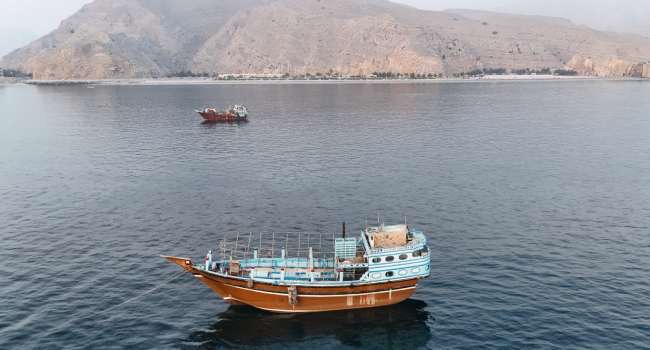









This aerial photograph shows boats anchored off Oman’s northern Musandam Peninsula near the Strait of Hormuz on June 27, 2026. (Photo by – / AFP)
Iran says it is close to reaching an agreement with Oman on a new shipping route through the Strait of Hormuz, following the United States’ decision to suspend planned military strikes to allow diplomatic efforts to continue.
US President Donald Trump announced on Saturday that Washington and Israel had agreed to postpone further attacks on Iran, claiming the framework of a potential deal was beginning to take shape.
“We have just been asked by Iran, and other Middle Eastern countries, to hold off any attack in that the parameters of a deal have been agreed to,” Trump wrote on his Truth Social platform. He added that he had agreed to cancel the planned strikes “for the future benefit of the world” and to give diplomacy a chance, while stressing that any agreement must be reached quickly.
However, Iranian state media denied that Tehran had requested the US to halt military action.
The conflict between Iran and the US-Israeli alliance has continued since February 28, when coordinated strikes targeted Iranian facilities. Although intermittent diplomatic engagements have brought periods of relative calm, renewed attacks last month reignited fears of a wider regional escalation.
Trump had earlier threatened to strike Iran “very hard,” with reports indicating that energy infrastructure was among potential targets. The apparent shift in Washington’s position followed intensive diplomatic contacts, including discussions with Saudi Crown Prince Mohammed bin Salman.
Speaking on Sunday, Hassan Ghashghavi, spokesperson for Iran’s parliamentary National Security Commission, said efforts were underway to revive the Islamabad Memorandum of Understanding reached in June. While not a final peace agreement, the memorandum was designed to pave the way for broader negotiations and included provisions relating to the Strait of Hormuz.
“The main issue at the moment is the Strait of Hormuz, and there is an exchange of views on the matter,” Ghashghavi said.
The strategic waterway, through which a significant share of global oil and gas supplies passes, remains the biggest obstacle in ongoing negotiations. Before the conflict, vessels enjoyed unrestricted passage, but Iran closed the strait during the war and has since insisted on maintaining control over shipping routes and collecting transit fees—a position rejected by Washington.
Trump has maintained that any future agreement must guarantee the “immediate, complete and total opening of the Hormuz Strait” while also addressing concerns over Iran’s nuclear programme.
Western governments accuse Tehran of pursuing nuclear weapons, an allegation Iran has consistently denied, insisting its nuclear activities are solely for peaceful purposes.
Iranian Foreign Ministry spokesman Esmaeil Baqaei said on Sunday that Tehran and Muscat were close to agreeing on a new shipping corridor through the strait.
“We are now going to reach an understanding on a route acceptable to both sides—neither the northern route nor the southern route—but one that respects the sovereign rights of both sides and safeguards our national interests and security,” Baqaei said.
He emphasized, however, that such an agreement would not amount to the full reopening of the Strait of Hormuz.
Meanwhile, maritime analytics firm Kpler reported that commercial traffic through the strategic waterway has declined sharply in recent days, reflecting continued uncertainty over regional security.