








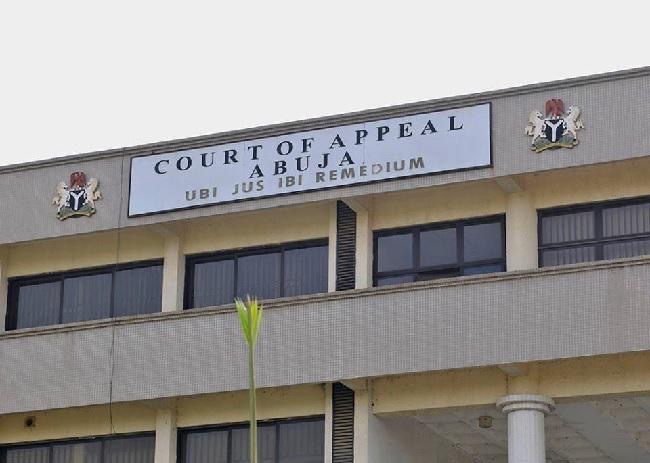



The Federal Government says it has secured 1,721 convictions for terrorism and related offences since the launch of its Mass Trial Programme in October 2017, describing the initiative as a major step towards strengthening Nigeria’s criminal justice system while upholding due process and the rule of law.
The Director of Legal Services at the Office of the National Security Adviser, Zakari Mijinyawa, disclosed this on Thursday during a joint security briefing by spokespersons of security, defence and law enforcement agencies in Abuja.
Mijinyawa said the programme, coordinated by the ONSA in partnership with the Federal Ministry of Justice, the Judiciary, security and law enforcement agencies, and international partners, has completed 10 phases of terrorism trials.
He noted that the initiative has become a critical tool in the prosecution of terrorism-related offences across the country.
“Since the commencement of the programme in October 2017, 10 phases of mass trials have been successfully conducted, resulting in 1,721 convictions for terrorism and related offences,” he said.
According to him, the programme is not solely aimed at securing convictions but also ensures justice for defendants where the prosecution fails to establish guilt beyond reasonable doubt.
He said defendants against whom sufficient evidence was not presented were either discharged or acquitted, reflecting the government’s commitment to fair trial standards and the rule of law.
Providing a breakdown of the exercise, Mijinyawa said the first three phases, conducted between 2017 and 2018 at Wawa Cantonment in Kainji, recorded 366 convictions, 882 discharges, five acquittals and 61 adjourned cases.
He explained that the programme resumed in 2023 with Phase Four, which produced 14 convictions, while Phases Five and Six, conducted in 2024, resulted in 351 convictions, including cases involving terrorism financing, international crimes, and sexual and gender-based violence.
During the same period, he said, eight defendants were discharged, while three others were referred for medical or mental health evaluation.
Mijinyawa added that Phases Seven and Eight, conducted in 2025, recorded an additional 125 convictions.
He said the most significant progress was achieved in 2026 during Phases Nine and Ten, held at the Federal High Court in Maitama, Abuja, where 865 convictions were secured.
According to him, Phase Nine recorded 386 convictions, while Phase Ten produced 479 convictions. The two phases also resulted in 28 discharges, one acquittal and 224 adjourned cases.
He noted that the 865 convictions recorded in 2026 account for more than half—50.3 per cent—of all terrorism-related convictions secured since the programme began in 2017.
Mijinyawa added that the figure also surpassed the combined total of 856 convictions recorded during the previous phases conducted between 2017 and 2025.
He reaffirmed the Federal Government’s commitment to ensuring accountability for terrorism offences while protecting the constitutional rights of all defendants.
“The discharge or acquittal of defendants where the prosecution failed to satisfy the required legal standard underscores our commitment to fair trial standards and the rule of law,” he said.