








The Federal Government has developed a set of Standard Operating Procedures (SOPs) to guide the implementation of its Disarmament, Demobilisation and Reintegration (DDR) programme as part of efforts to strengthen Nigeria’s response to terrorism, violent extremism and other forms of armed conflict.
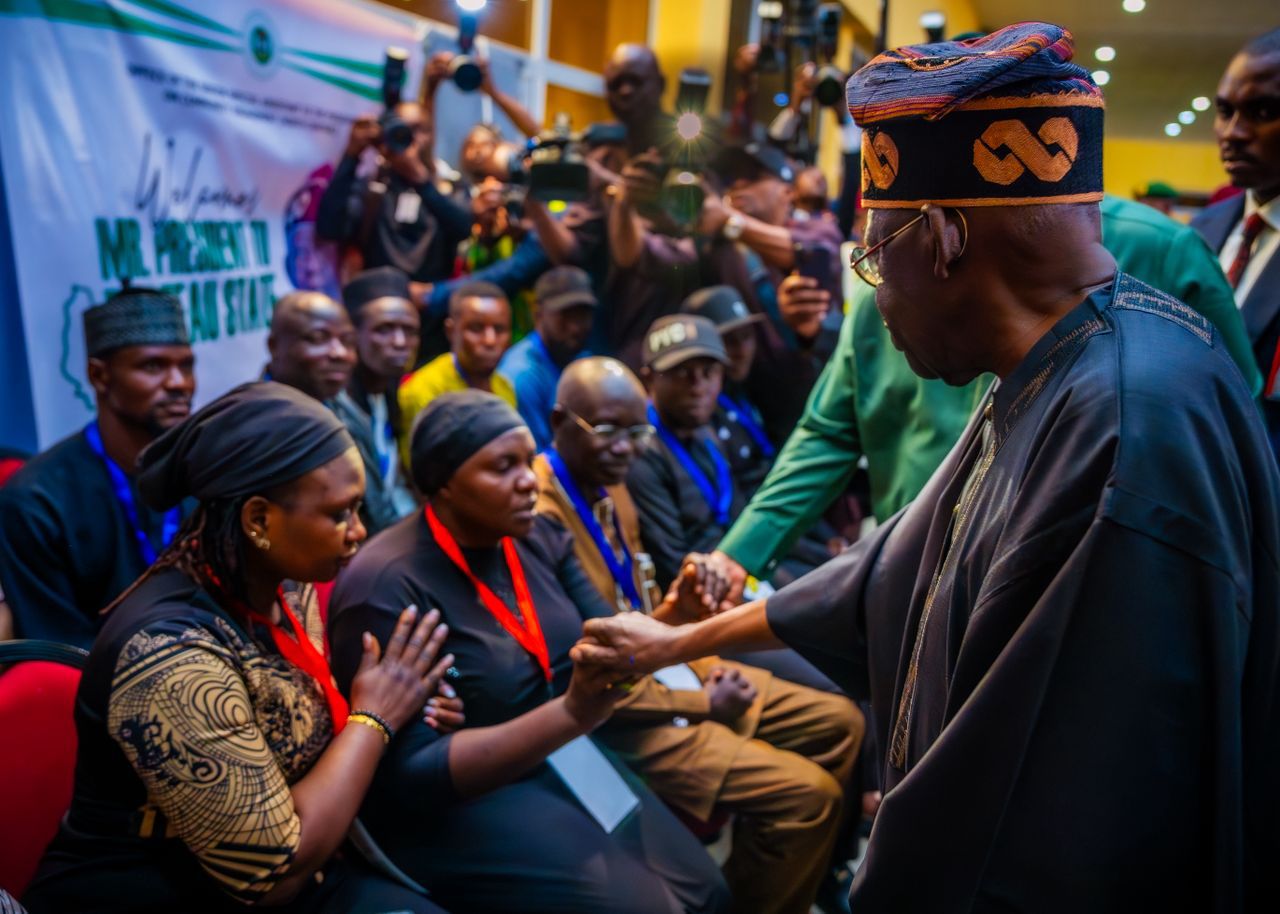
The National Coordinator of the National Counter Terrorism Centre (NCTC), Office of the National Security Adviser, Maj.-Gen. Adamu Laka, disclosed this on Monday during the National Validation Workshop on the Standard Operating Procedures for DDR at the federal level and in the pilot states of Kaduna, Katsina and Zamfara, held in Abuja.
Laka said the SOPs were developed to translate the strategic objectives of the National DDR Framework into practical guidance for implementing institutions while promoting transparency, accountability and effective coordination.
“Recognising that a policy framework alone is insufficient to guide implementation, the National Counter Terrorism Centre and its partners developed a comprehensive set of Standard Operating Procedures to translate the strategic objectives of the National DDR Framework into practical guidance for implementing institutions,” he said.
According to him, the procedures were formulated through extensive consultations, drawing on Nigeria’s experiences, international best practices and the country’s unique security realities.
He explained that the SOPs would clearly define institutional responsibilities, strengthen inter-agency collaboration, standardise operational processes and ensure that DDR programmes are implemented in line with human rights principles and the rule of law.
“These Standard Operating Procedures have been developed through extensive consultations and draw upon national experiences, international best practices and the unique realities of the Nigerian context.
“They are intended to clarify institutional mandates and responsibilities, strengthen inter-agency coordination, standardise operational procedures and ensure that DDR programmes are implemented professionally, effectively and in full compliance with human rights principles and the rule of law,” Laka said.
He described disarmament, demobilisation and reintegration as a critical pillar of Nigeria’s non-kinetic strategy for tackling insecurity, stressing that while military operations remain vital in weakening terrorist and criminal groups, lasting peace requires complementary measures that provide eligible individuals with opportunities to renounce violence and reintegrate into society.
“While kinetic operations remain indispensable in degrading terrorist and criminal networks, lasting peace can only be achieved when complemented by credible pathways that facilitate the transition of eligible individuals away from violence and support their safe reintegration into society,” he said.
Laka noted that consultations conducted across the six geopolitical zones showed broad support for a nationally coordinated DDR framework that is locally owned, grounded in human rights principles and responsive to the needs of affected communities.
He added that the consultations also underscored Nigeria’s evolving security threats, including terrorism, violent extremism, armed banditry, communal conflicts, farmer-herder clashes, organised crime and separatist violence, all of which require coordinated and comprehensive responses.
Describing the validation workshop as a significant milestone, Laka said it marked another step towards institutionalising a transparent, coordinated and sustainable DDR architecture across the country.
“The inclusion of state-specific Standard Operating Procedures is particularly significant. These states continue to face distinct and evolving security challenges that require locally driven and well-coordinated responses,” he added.
Also speaking, the Director of Preventing and Countering Violent Extremism at the NCTC, Ambassador Abimbola Wońosikou, said the SOPs were developed to provide a coordinated national framework for addressing terrorism, violent extremism, banditry and other forms of armed violence.
She explained that although rehabilitation and reintegration initiatives already exist in different parts of the country, there was a need for a harmonised approach to improve consistency and effectiveness.
“These efforts culminated in the development of the draft National DDR Framework and Strategy, and subsequently the Standard Operating Procedures, which have been prepared by a multidisciplinary team of experts and are before us today for review and validation,” she said.
Wońosikou disclosed that the NCTC had established State DDR Committees, beginning with Kaduna, Katsina and Zamfara, to coordinate implementation at the sub-national level.
According to her, the committees comprise representatives of state governments, security agencies, justice institutions, traditional and religious leaders, women and youth groups, civil society organisations and relevant technical institutions.
She added that the SOPs clearly define institutional responsibilities, referral pathways, case management processes, information-sharing protocols, human rights safeguards, community engagement mechanisms, monitoring and evaluation frameworks, as well as coordination structures to ensure effective implementation.