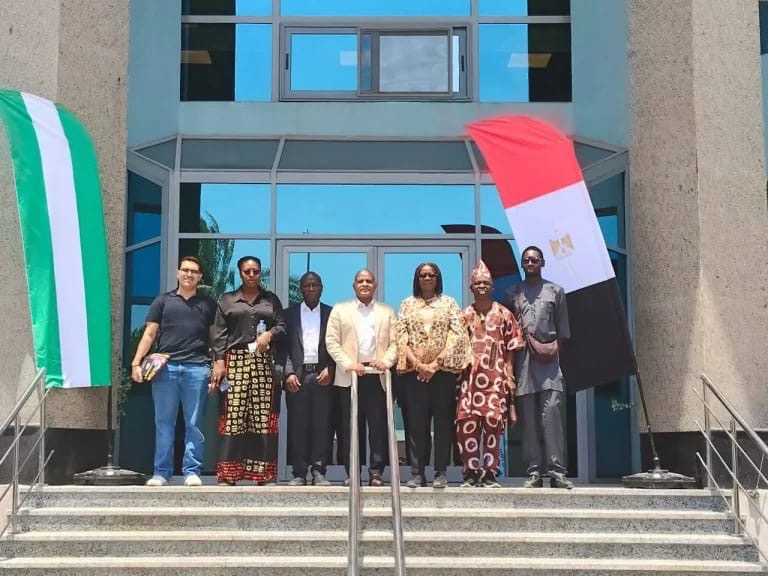









The Ekiti State Government is seeking up to $500 million in industrial and trade investments from Egypt as part of efforts to accelerate industrialisation, strengthen value chains and create direct and indirect employment opportunities.
The Commissioner for Agriculture and Food Security, Ebenezer Boluwade, disclosed that the Ekiti–Egypt Industrial Investment Mission had generated a pipeline of opportunities capable of attracting up to $500 million in industrial and trade investments to the state.
Boluwade made this known in a statement issued in Ado Ekiti on Sunday, following the five-day investment mission to Egypt last month.
He said the mission provided the Ekiti delegation with an opportunity to engage more than 40 Egyptian industrialists, manufacturers, processors, agribusiness operators, mining companies and investors.
According to him, the engagements resulted in eight Expressions of Interest, with further commercial discussions spanning agriculture, agro-processing, commercial farming, seed production, textiles, manufacturing and solid minerals.
Boluwade said the state was focused on developing agricultural value chains that would guarantee markets for farmers, provide processors with access to the required volume and quality of raw materials, and ensure that more value generated from Ekiti’s agricultural resources remained within the state.
“We want to build agricultural value chains where farmers have reliable markets, processors have access to the volumes and quality they require, and more of the value created from our agricultural resources remains within Ekiti,” he said.
He added that linking agricultural production with industrial development was central to the state’s food security, employment and broader economic development agenda.
Meanwhile, the Commissioner for Investment, Trade and Industry, Omotayo Adeola, said the state was determined to move beyond Expressions of Interest and attract actual investments into Ekiti.
“Our focus now is conversion – moving from Expressions of Interest to site visits, commercial agreements, capital deployment, factories and jobs,” Adeola said.