








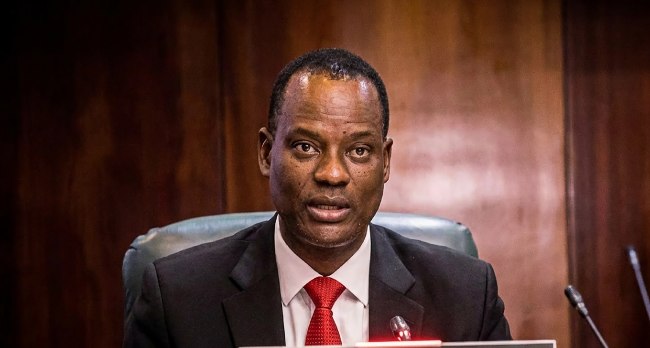




The Economic and Financial Crimes Commission (EFCC) has called for stronger collaboration among governments, regulators and civil society organisations (CSOs) across Africa to combat terrorist financing while safeguarding legitimate non-profit organisations from unnecessary regulatory burdens.
Speaking at the 3rd Africa High-Level Civil Society Anti-Money Laundering and Counter-Terrorist Financing (AML/CFT) Conference in Abuja, EFCC Chairman, Mr Olanipekun Olukoyede, said effective implementation of the Financial Action Task Force (FATF) Recommendation 8 requires a targeted, risk-based approach rather than blanket regulation of all non-profit organisations.
Represented by the Director of the Special Control Unit against Money Laundering (SCUML), Mr Harry Erin, Olukoyede noted that terrorist financing, violent extremism, transnational organised crime and illicit financial flows remain significant threats to peace, democratic institutions and economic development across Africa.
He explained that FATF Recommendation 8 is designed to identify non-profit organisations vulnerable to terrorist financing abuse without restricting the activities of the vast majority engaged in legitimate humanitarian and development work.
“Effective implementation of FATF Recommendation 8 depends on trust — trust between regulators and civil society, and trust between governments and development partners. That trust is built through transparency, consultation, information sharing and mutual respect,” he said.
Olukoyede highlighted Nigeria’s inter-agency collaboration involving the EFCC, SCUML, the Nigerian Financial Intelligence Unit (NFIU), the Office of the National Security Adviser, the Corporate Affairs Commission and civil society organisations, which led to a comprehensive terrorist financing risk assessment of the country’s non-profit sector.
According to him, the assessment has enabled regulators to adopt a more targeted approach to identifying vulnerabilities while allowing legitimate charities to continue their humanitarian activities without undue compliance burdens.
He added that Nigeria’s reforms demonstrate that compliance with international standards should strengthen institutions, promote transparency and boost public confidence, rather than simply fulfil global assessment requirements.
Also speaking, the Executive Director of Spaces for Change (S4C), Mrs Victoria Ibezim-Ohaeri, said the conference marked a decade of the organisation’s advocacy for the effective implementation of FATF Recommendation 8 in Nigeria.
She said sustained engagement between civil society organisations and regulators had transformed what was once a strained relationship into a productive partnership, resulting in key reforms. These include Nigeria’s standalone terrorist financing risk assessment for the non-profit sector and the removal of non-profit organisations from the list of reporting entities under the Money Laundering (Prevention and Prohibition) Act.