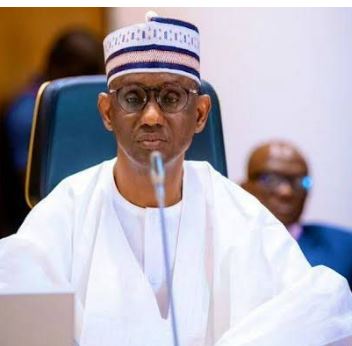
National Security Adviser (NSA), Mallam Nuhu Ribadu, has called on African countries to take the lead in developing and implementing homegrown solutions to terrorism, stressing the need for stronger intelligence sharing, technological innovation and regional cooperation.
Ribadu said the transnational nature of terrorist networks made it imperative for African countries to work together, noting that terrorist groups operate across borders, communicate through multiple platforms and finance their activities through international channels.
He spoke on Monday while delivering the keynote address at the High-Level African Lessons Learned Forum on Counter-Terrorism Cooperation, Intelligence Sharing and Emerging Technologies.
According to the NSA, no country can effectively tackle terrorism in isolation, making timely intelligence exchange and coordinated security responses essential.
“No country can address such threats in isolation. We must strengthen mechanisms that allow for timely, trusted and actionable intelligence exchange, while respecting national sovereignty and legal frameworks,” he said.
Ribadu emphasised that although international partnerships remained important, sustainable counter-terrorism strategies must be driven by African priorities, institutions and local realities.
“Our partners remain important, and we value their continued support. However, sustainable solutions must be rooted in African ownership, African priorities, African institutions and the lived experiences of our communities,” he stated.
He identified emerging technologies, including artificial intelligence, encrypted digital communications, drones and synthetic media, as tools reshaping the security landscape and presenting both opportunities and challenges for counter-terrorism operations.
While warning that terrorist groups could exploit these technologies to advance their activities, Ribadu said they could also strengthen early-warning systems, threat analysis, digital investigations, border security and the protection of vulnerable communities.
He stressed that technology must be deployed responsibly and within the law to support peace and security across the continent.
The NSA also highlighted the importance of strategic partnerships involving national governments, regional organisations, international institutions, security agencies, financial intelligence units, civil society, academia, communities and private technology companies.
He noted that effective counter-terrorism cooperation required trust, consistency and practical collaboration beyond formal agreements and declarations.
Addressing participants from across the world, Ribadu described terrorism and violent extremism as some of the most serious threats to Africa’s peace, stability and development.
He observed that terrorist groups were increasingly exploiting porous borders, local grievances, illicit financial networks, misinformation, online radicalisation and emerging technologies to expand their operations.
According to him, the evolving tactics of these groups require stronger intelligence sharing, coordinated national and regional responses, and a sustained commitment to exchanging practical lessons among African countries.
Nigeria Advocates Comprehensive Counter-Terrorism Strategy
Reflecting on Nigeria’s experience in combating terrorism over the past 15 years, Ribadu maintained that military operations alone could not deliver sustainable security.
He said kinetic operations must be complemented by intelligence coordination, law enforcement, financial investigations, justice, strategic communications, rehabilitation, reintegration, reconciliation and community-based interventions.
Other essential measures, he added, include education, youth engagement, research, professional training and technology-driven security analysis.
Ribadu said Nigeria had continued to pursue a Whole-of-Government and Whole-of-Society approach to counter-terrorism and preventing and countering violent extremism.
He called on African countries to strengthen real-time intelligence sharing, improve institutional coordination, exchange operational experiences and establish trusted professional networks to address common security threats.
The NSA said the forum’s theme, “Strengthening Africa-Led Counter-Terrorism Cooperation through Intelligence Sharing, Technological Innovation and Strategic Partnerships,” reflected the need for a coordinated, continent-driven response to terrorism.
He commended the African Union, Regional Economic Communities, the United Nations, the European Union and other international partners for supporting practical counter-terrorism cooperation.
Ribadu reaffirmed Nigeria’s commitment to African-led initiatives that promote national ownership, regional solidarity and institutional learning in addressing security challenges.
NCTC Positioned to Support Continental Cooperation
The NSA described Nigeria’s hosting of the forum at the National Counter Terrorism Centre under the Office of the National Security Adviser (NCTC-ONSA) as significant, noting that the centre played an important role in the country’s counter-terrorism coordination framework.
He said the centre had developed into a platform for strategic threat assessment, intelligence fusion, research, training, policy coordination, technology-enabled analysis and non-kinetic security programmes.
According to him, the NCTC is also increasingly positioned to support peer learning and capacity development across Africa.
Ribadu said participants would have the opportunity to examine Nigeria’s experiences in counter-terrorism coordination, preventing and countering violent extremism, strategic communications, combating terrorism financing, rehabilitation and reintegration.
He specifically cited Operation SAFE CORRIDOR and the European Union-supported Disarmament, Demobilisation, Rehabilitation and Reintegration (DDRR) initiative for persons formerly associated with non-state armed groups in North-East Nigeria as examples of efforts to link security operations with accountability, reconciliation and community recovery.
He, however, cautioned against treating Nigeria’s experiences as perfect models, describing them instead as practical lessons that other countries could examine and adapt to their respective circumstances.
“These experiences are not presented as perfect models. Rather, they are offered as practical lessons from which we can all learn,” Ribadu said.
He added that every participating country had valuable experiences to share, having confronted different security challenges, developed institutional responses, recorded successes and encountered setbacks.
The NSA expressed confidence that sustained cooperation, intelligence sharing and the responsible application of technology would strengthen Africa’s collective capacity to prevent and combat terrorism.