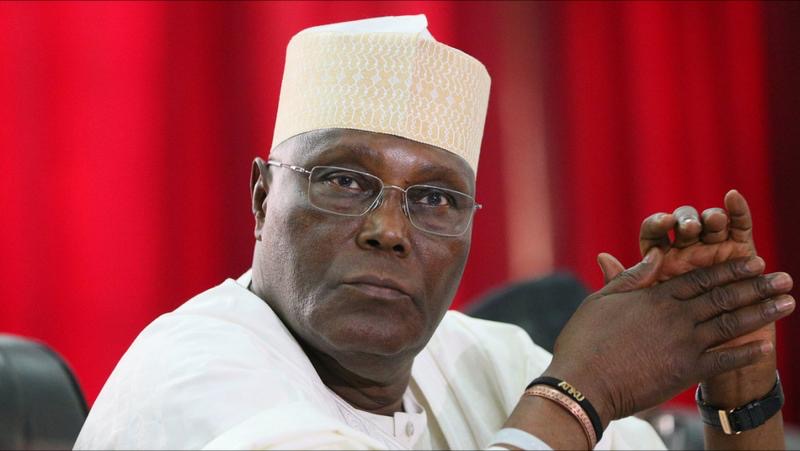


Former Vice President Atiku Abubakar has called for an immediate investigation into what he described as alleged off-budget public expenditure amounting to about ₦8.8 trillion, citing findings from the latest International Monetary Fund (IMF) Article IV Consultation on Nigeria.
In a statement shared on his verified Facebook page on Saturday, Atiku referenced a Reuters report published on July 1, 2026, which quoted the IMF as saying that public expenditures equivalent to about two per cent of Nigeria’s Gross Domestic Product (GDP) were not reflected in recent official budgets.
According to the former vice president, the reported expenditure translates to approximately ₦8.8 trillion allegedly spent outside the country’s statutory budgetary framework.
Describing the development as “the most consequential act of fiscal impunity in Nigeria’s recent democratic history,” Atiku urged Nigerians, the media, civil society organisations, the National Assembly and other democratic institutions to demand accountability and transparency.
He alleged that the unrecorded expenditures were linked to large-scale government projects executed outside the approved budget, arguing that such spending bypassed legislative oversight, procurement procedures and scrutiny by the Office of the Auditor-General.
Atiku further claimed that the alleged practice mirrored an off-budget revenue management model previously implemented in Lagos State and had now been replicated at the federal level.
The former presidential candidate also alleged that about ₦800 billion had been deducted from statutory allocations due to state governments without constitutional or legislative approval.
According to him, the combined value of the alleged off-budget expenditure and deductions from state allocations suggested the creation of a political war chest ahead of the 2027 general elections.
He also linked the allegations to the recent controversy surrounding the Presidential Foreign Intervention Promotion Council (PFIPC), describing both developments as evidence of what he termed a pattern of fiscal opacity.
Atiku argued that while Nigerians have borne the burden of economic reforms, including the removal of fuel subsidy, exchange rate liberalisation and rising interest rates, significant public funds were allegedly expended outside the country’s established budgetary process.
The Federal Government has not officially responded to Atiku’s allegations.