


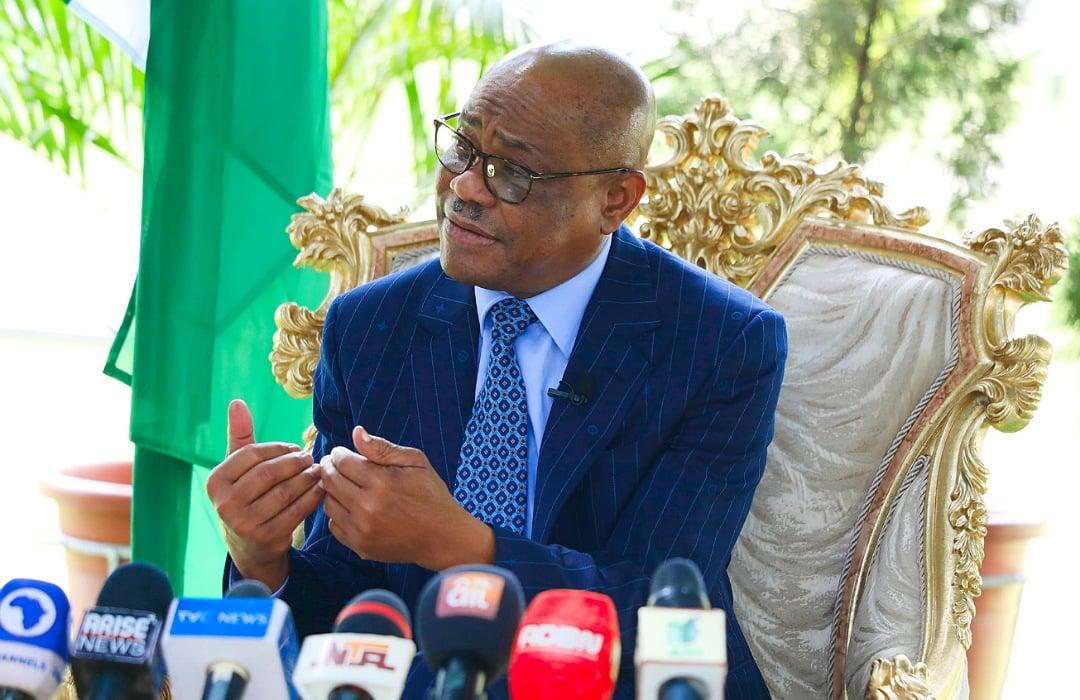



President and Chairman of the Board of Directors of the African Export-Import Bank (Afreximbank), George Elombi, has said the Dangote Petroleum Refinery has played a significant role in stabilising the naira by reducing Nigeria’s reliance on imported petroleum products.
Speaking at a mid-year media roundtable in Abuja on Wednesday, Elombi revealed that Afreximbank approved $2.5 billion of the $4 billion requested by the Dangote Group to support the refinery’s expansion. He also defended the bank’s development financing strategy across Africa.
According to Elombi, the refinery demonstrated its strategic importance during the recent Middle East tensions, when disruptions in the Gulf did not lead to shortages of refined petroleum products across Africa.
“The crisis in the Gulf has happened; oil prices flew, but Africa didn’t lack in its refined petroleum products,” he said.
He added that the refinery had eased pressure on Nigeria’s foreign exchange market by reducing fuel imports and supporting crude-for-naira transactions.
“It wasn’t believed, but the currency stabilised because of that,” Elombi said.
Describing the refinery as a project with continent-wide benefits, Elombi said it should serve as a model for other African countries. He disclosed that Afreximbank is also financing refinery and storage infrastructure projects in Ethiopia, Kenya, Tanzania, Uganda, Angola, Chad, the Republic of Congo and Namibia to strengthen Africa’s energy security.
Elombi further noted that the Dangote Group’s fertiliser business has become a major export platform, supplying products to countries including Germany and Brazil. However, he said the bank wants a larger share of those exports directed to African markets to promote intra-African trade.
He described Nigeria as Afreximbank’s largest and most strategic market.
“It’s the heartbeat of the African continent, and Dangote is demonstrating that it is indeed the heartbeat of the continent. When you stop the energy, everything comes to an end. The heart stops beating,” he said.
On regional trade, Elombi highlighted the impact of the Pan-African Payment and Settlement System (PAPSS), explaining that it allows businesses to settle cross-border transactions in local currencies, reducing dependence on scarce foreign exchange.
He cited a transaction in which the Dangote Group exchanged Ethiopian birr holdings with Ethiopian Airlines’ naira balances, eliminating the need for either party to source dollars.
According to him, PAPSS now connects more than 190 commercial banks and fintechs across 28 African countries and is expected to launch a payment card that will allow Africans to spend their local currencies across participating countries without converting them into dollars.
Elombi acknowledged that adoption had initially been slow because some central banks misunderstood the system but said momentum was growing, with increasing interest from global payment companies.
He also said Afreximbank sees stablecoins as complementary to PAPSS, maintaining that payment systems will remain essential as long as African countries operate different currencies.
Reaffirming the bank’s development strategy, Elombi said Afreximbank is prioritising investments that promote value addition within Africa rather than the export of raw materials.
Drawing from a recent visit to China, he urged African countries to capitalise on opportunities in electric vehicle battery production by processing the continent’s abundant mineral resources locally.
“We’re no longer interested in anyone who is going to just mine Africa. We only want people who will mine and process at home,” he said.