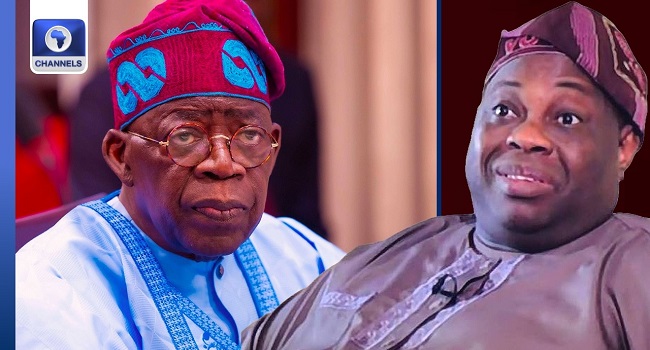

A chieftain of the African Democratic Congress (ADC), Dele Momodu, has said Nigerians are rejecting President Bola Tinubu because they are experiencing the adverse effects of his administration’s economic policies.
Momodu, who serves as Deputy Director-General of Media and Communications of the ADC Presidential Campaign Council, attributed the growing public dissatisfaction to the economic hardship Nigerians have faced since the removal of the petrol subsidy.
The former Peoples Democratic Party (PDP) presidential aspirant made the remarks on Thursday during an appearance on Channels Television’s Politics Today.
He argued that the government ought to have carefully considered the potential benefits and consequences of the subsidy removal before implementing the policy.
Using an analogy, Momodu compared Nigeria’s economic situation to that of a patient who had received an injection but remained in a coma for almost four years.
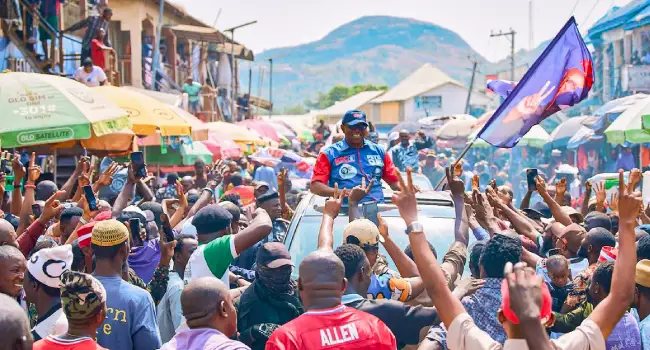
“That’s what is happening in Nigeria. And that is why you can see that everywhere Tinubu goes now, he is being rejected by the people. The people are not stupid; they are rejecting him because they can feel the pain,” he said.
The ADC chieftain also accused the President of being insensitive to the economic difficulties facing Nigerians, pointing to what he described as excessive government spending, inadequate funding of critical sectors and the hardship resulting from subsidy removal.
“We’ve since discovered that this subsidy issue could have been better handled because, if you look at it, the people who are at fault are probably less than 1,000 people, and now you are punishing over 200 million Nigerians because of the sins of a few people.
“If he were sharing in the pain of the people, he would not be doing what he is doing, donating one billion, doing a budget to individuals, a budget in trillions, more than what you are paying the military, more than what you are using to service the health sector, more than what you are spending on the education of our children,” Momodu said.
He further accused the Tinubu administration of secretly reinstating fuel subsidies and questioned the positive economic assessments of Nigeria by the World Bank and the International Monetary Fund (IMF).
According to him, the favourable reports from international financial institutions have not translated into improved living conditions for ordinary Nigerians.
“The world is praising us; the World Bank is praising us; the IMF is saying we are doing well. Whenever the IMF or World Bank is interested in your case, then something is wrong. You can see clearly that everything you can say is not affecting our people positively. Nigerians are suffering, and that’s just the truth,” he said.
Tinubu announced the removal of the petrol subsidy during his inauguration on May 29, 2023, citing its increasing cost to government finances.
The policy, alongside the subsequent unification of the foreign exchange market, has contributed to higher petrol prices and increased living costs across the country.
However, the President and some of his allies, including Imo State Governor Hope Uzodimma and former Minister of Works and Housing Babatunde Fashola, have defended the decision.
They have argued that subsidy removal was necessary to ease pressure on public finances, increase revenue available to the three tiers of government and strengthen investor confidence.