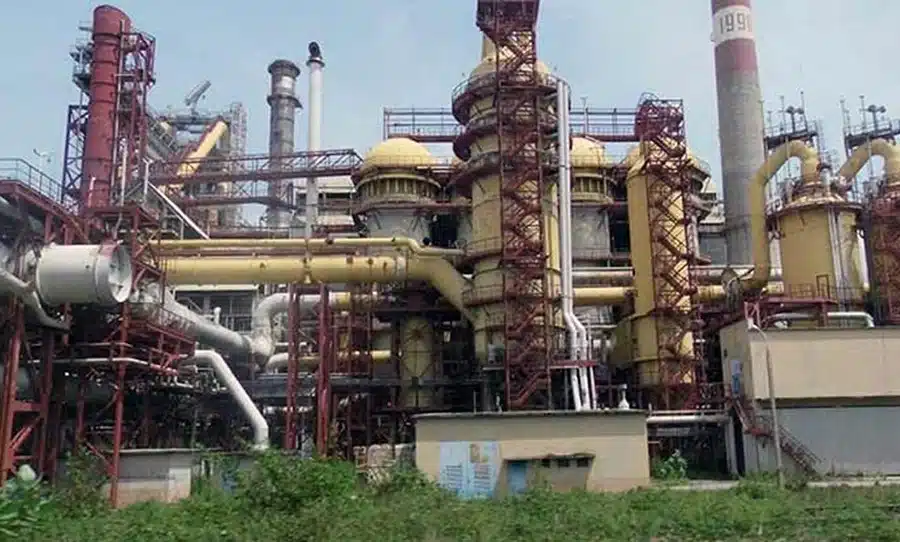


The Federal Government spent approximately N7.21bn on Ajaokuta Steel Company Limited between 2020 and 2025, even as the nearly five-decade-old steel complex in Kogi State remained largely inactive.
The expenditure covered 501 transactions, including taxes and other statutory obligations, pension and housing fund contributions, maintenance, road rehabilitation and other infrastructure-related payments, according to spending records obtained from GovSpend, which tracks and analyses Federal Government expenditure.
The spending came against the backdrop of Nigeria’s continued dependence on imported steel. Data from the National Bureau of Statistics showed that the country’s iron and steel imports exceeded N1tn in 2025.
Over the past six years, Nigeria imported an average of about N526bn worth of iron and steel annually, according to the NBS data. The figures represent officially recorded trade and may exclude unrecorded or under-reported imports.
Conceived in 1979 and developed with Soviet backing, Ajaokuta Steel was established as a key component of Nigeria’s industrialisation programme.
The complex was designed to produce up to five million tonnes of steel annually, leveraging the country’s iron ore resources to reduce import dependence and drive industrial development.
However, despite its limited operational output, Ajaokuta continued to incur significant expenditure over the six-year period, with government spending increasing in several years.
In 2020, expenditure linked to the company stood at about N795.4m across 57 transactions. It rose to N1.19bn in 2021, when 119 transactions were recorded, before declining slightly to N1.01bn in 2022.
Spending climbed to N1.36bn in 2023 and peaked at approximately N1.66bn in 2024, based on 107 transactions. It subsequently fell to about N1.20bn in 2025.
The figures indicate that the government’s expenditure on Ajaokuta was not a one-off intervention but a recurring financial commitment to the state-owned steel company.
Some of the payments were routine statutory obligations, including taxes, value-added tax, pension contributions, National Housing Fund payments and other mandatory charges.
Other expenditures were related to maintenance and infrastructure, including road rehabilitation, access-road repairs and the installation of solar-powered street lights.
The records also reveal payments for infrastructure projects in Lagos, including works around Obalende, Okofaji, Olowogbowo and Isale Eko, as well as the rehabilitation of a 250-metre access road on Idoluwo Street, Lagos Island.
The expenditure raises questions about the scope of Ajaokuta’s responsibilities and why a steel company whose primary industrial facility is located in Kogi State was involved in certain infrastructure projects in Lagos.