

President Bola Tinubu has said the economic reforms introduced by his administration have placed Nigeria on the path to becoming a $1 trillion economy by 2030, despite the economic hardship and challenges facing citizens.
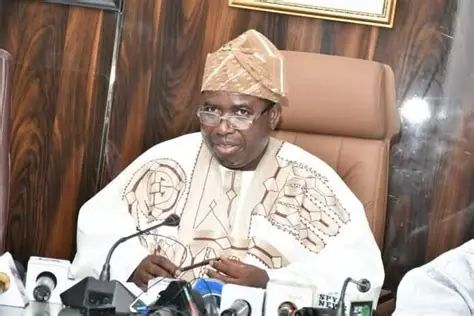
Tinubu stated this on Tuesday while represented by the National Chairman of the All Progressives Congress (APC), Prof. Nentawe Yilwatda, at the second edition of the Asiwaju Scorecard Series and Policy Roundtable in Abuja.
The president said his administration’s reforms had strengthened the foundation for economic stability, growth and long-term prosperity.
Tinubu began implementing major economic reforms immediately after assuming office on May 29, 2023. The measures, including the removal of the petrol subsidy and reforms to the foreign exchange market, triggered mixed reactions because of their impact on household incomes and the cost of living.
More than three years into the administration, however, the Presidency has continued to defend the reforms, arguing that they are necessary to reposition the economy and deliver sustainable growth.
Tinubu said the removal of the fuel subsidy, foreign exchange reforms, increased revenue mobilisation and investments in critical infrastructure were necessary to move Nigeria away from years of economic uncertainty.
“When President Bola Ahmed Tinubu assumed office on 29 May 2023, Nigeria faced a difficult economic inheritance. We had fuel subsidy distortions, multiple exchange-rate windows, weak revenue mobilisation, foreign-exchange shortages, rising debt-service pressures and years of inadequate investment in critical infrastructure,” he said.
According to the president, Nigeria’s external reserves had risen to about $52.7 billion by August 2026, while consolidated non-oil revenue increased from approximately ₦13.63 trillion in 2023 to ₦16.4 trillion in the first two quarters of 2026.
He also said the country’s merchandise trade position had improved significantly, rising from a surplus of about ₦44.8 billion for the whole of 2023 to approximately ₦7.54 trillion in the first quarter of 2026.
Tinubu said real Gross Domestic Product (GDP) grew by 4.43 per cent in the second quarter of 2026, while inflation had fallen to about 15.4 per cent from its previous peak.
“These figures do not mean that our economic challenges have disappeared, but they demonstrate that the direction of travel has changed,” he said.
The president stressed that macroeconomic stability was only the foundation, adding that the ultimate objective was to translate economic gains into improved living standards.
“The ultimate test is when stability translates into cheaper food, more jobs, affordable credit, reliable electricity and greater purchasing power for Nigerians,” he said.
Addressing the administration’s ambition of achieving a $1 trillion economy, Tinubu said the target represented a broader national mission rather than merely a numerical milestone.
“The $1 trillion economy is not merely a number, but a national mission: a Nigeria that produces more, exports more, attracts more investment, creates more jobs and gives its young people a greater stake in the future,” he said.
Five-port maritime corridor
Tinubu said achieving the target would require significant investment in infrastructure, noting that the Renewed Hope Agenda prioritises roads, railways, ports, energy and digital connectivity.
He proposed the development of an integrated five-port maritime and logistics corridor connecting major deep-sea ports in Lagos, Ondo, Ibom, Port Harcourt and Calabar.
According to him, the ports should be linked by modern rail and road infrastructure, with the Lagos-Calabar Coastal Super Highway serving as the main coastal road corridor.
He said the Western Corridor would connect the maritime gateways to the interior through the Lagos-Abuja-Kaduna-Kano rail corridor, complemented by the Sokoto-Badagry Super Highway.
The Eastern Corridor, he added, would connect eastern maritime gateways through the Port Harcourt-Abuja-Kaduna-Kano rail corridor and the proposed Calabar-Maiduguri Trans-Sahara Super Highway.
Tinubu said the integrated transport network would connect Nigeria’s major ports with cities, production centres and landlocked markets in Niger, Chad, Burkina Faso, Sudan and the Central African Republic.
“This is how Nigeria can move beyond being simply a coastal trading nation to becoming the maritime gateway and logistics hub of West and Central Africa,” he said.
He added that the proposed infrastructure would create opportunities across logistics, warehousing, freight forwarding, customs, banking, insurance, manufacturing, distribution and agro-processing.
Industrialisation, energy and youth development
Tinubu also called for the development of industrial parks, export-processing zones, logistics hubs, agro-processing clusters and manufacturing centres along major transport corridors.
“Every container through a Nigerian port is an economic opportunity. Every Nigerian agricultural product exported is an opportunity. Every factory established along a transport corridor is an opportunity,” he said.
The president stressed that energy would be critical to the success of the economic transformation agenda, highlighting Nigeria’s gas resources and the strategic importance of the Ajaokuta-Kaduna-Kano (AKK) gas pipeline.
He said the project would help connect gas resources to major population and industrial centres in northern Nigeria, with potential benefits for electricity generation, fertiliser production, manufacturing and transportation.
Tinubu also highlighted government programmes targeted at young Nigerians, including the Nigerian Education Loan Fund (NELFUND), which he said was expanding access to higher education.
He said the government was also supporting technical and vocational education through grants and skills-development programmes, while digital training initiatives were equipping young Nigerians for opportunities in the global digital economy.
Through initiatives such as the Consumer Credit Corporation (CREDICORP), Tinubu said the government was also expanding access to responsible credit for workers, entrepreneurs and businesses to acquire productive assets, expand operations and create jobs.
“This is not simply social investment; it is an investment in the productive capacity of Nigeria and in the young Nigerians who will ultimately build and drive our $1 trillion economy,” he said.
Tinubu said economic growth must ultimately translate into better living conditions for Nigerians.
He said the next phase of the Renewed Hope Agenda would focus on creating more jobs, expanding access to affordable credit, reducing inflation, improving electricity supply, increasing production and strengthening Nigerians’ purchasing power.