

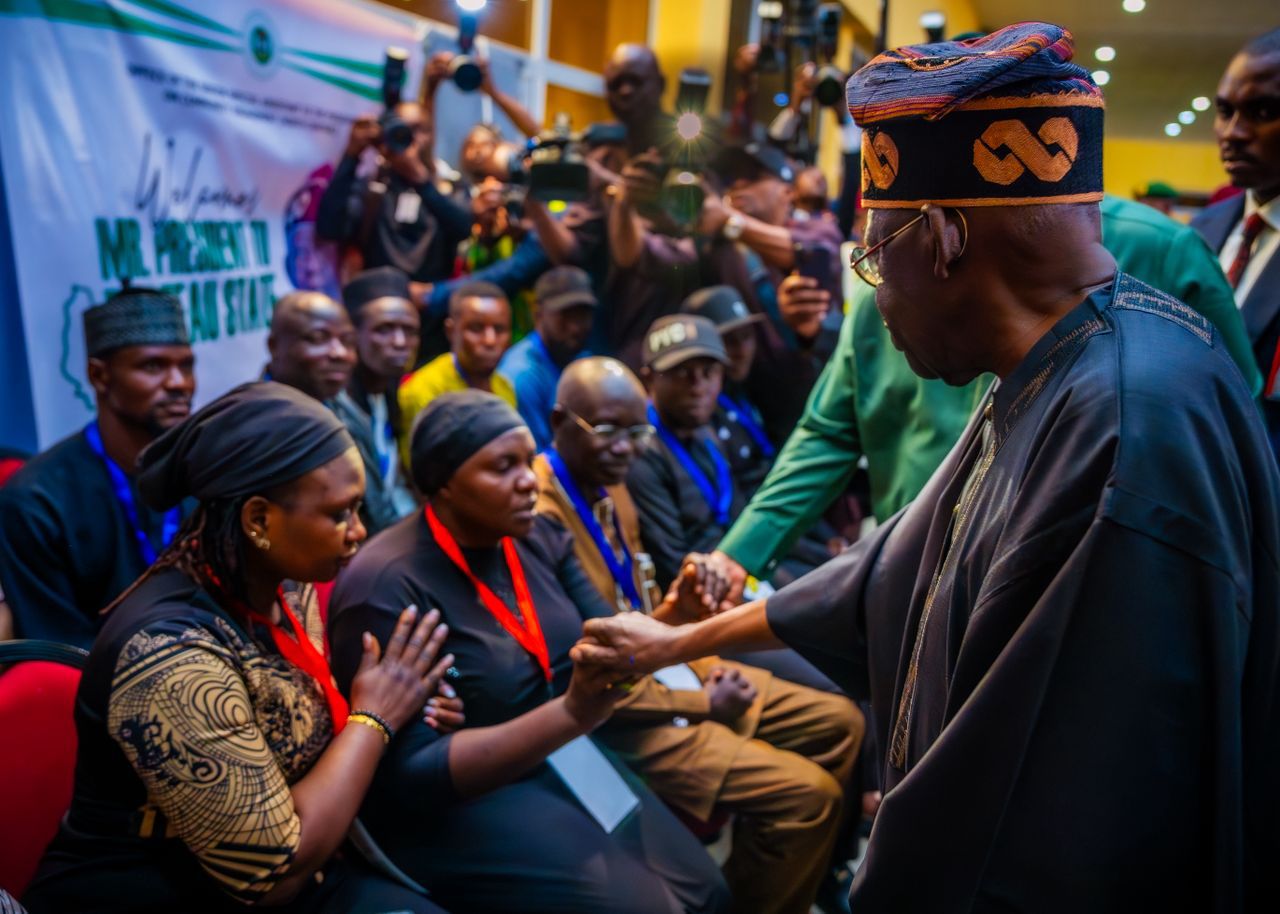
There is a new dawn breaking over Nigeria. Across the 8,809 wards of the federation, from the bustling streets of Lagos to the farmlands of Borno, a quiet but profound transformation is underway. The Renewed Hope National Development Plan (2026–2030) —the most ambitious blueprint in Nigeria’s recent history—is not merely a policy document.
It is a covenant between the government and the people. It is evidence-based, realistic, and anchored on inclusive, balanced and environmentally sustainable growth.
Please note that this write-up is not anchored on praise-singing or rabble-rousing jamboree but carefully coined on fact-finding mission, in-depth analysis and thorough scrutiny of Renewed Hope National Development Blueprint.
As President Bola Ahmed Tinubu declared at the unveiling of the plan: “The Renewed Hope National Development Plan 2026–2030 marks the next phase of our national journey.” That journey is one of total transformation—moving Nigeria from economic recovery to shared prosperity.
A $1 Trillion Economy Within Reach
At the heart of this blueprint lies an audacious yet achievable goal: building a $1 trillion economy by 2030. This is not rhetoric; it is a calculated strategy anchored on economic diversification, human capital development, and stronger states. The plan serves as a bridge between current reform momentum and the long-term aspirations of Nigeria Agenda 2050.
The numbers already tell a compelling story of recovery. Real GDP grew by 11.2% last year, with nearly 10% per capita income growth in US dollar terms. Foreign reserves have surpassed $50 billion, and inflation has fallen sharply from its 2024 peak. Through expanded cash transfers, the government has already reached 15 million vulnerable households, lifting an estimated 7.5 million people out of poverty.
These are not abstract figures. They are the foundation upon which a new Nigeria is being built.
From Abuja to Every Ward: Grassroots Development
Perhaps the most revolutionary aspect of this blueprint is its ward-based approach to development. For the first time in Nigeria’s history, the 2026 budget prioritises development at the most local level—each of the 8,809 wards will have programmes designed specifically to enhance economic prosperity in that community.
President Tinubu has approved a ₦17 billion Community-Led Development Fund across all wards, ensuring that communities themselves identify, rank, and implement their most pressing projects—from feeder roads and water schemes to health facilities and security infrastructure. This is democracy in action: power devolved, voices heard, and prosperity shared.
As Vice President Kashim Shettima declared: “This plan will not be drawn from the ivory towers of Abuja alone. It will be participatory… engaging state governments, local governments, organised private sector, civil society, labour, youth, and traditional institutions.”
Building the Nigeria of Tomorrow: Infrastructure Renaissance
Across the length and breadth of Nigeria, cranes are rising and roads are being laid. The administration is executing four legacy superhighways simultaneously: the Lagos–Calabar Coastal Highway, the Sokoto–Badagry Superhighway, the Calabar–Abuja Trans Sahara route, and the 700-kilometre Akwanga–Jos–Bauchi–Gombe–Biu–Maiduguri Superhighway.
The Federal Executive Council has approved approximately ₦2.078 trillion for road infrastructure across 10 states. The government is also developing five new deep seaports in Badagry, Olokola, Ibom, Bakassi and Bonny, expanding Nigeria’s cargo handling capacity and attracting private investment.
On energy, projects are strengthening electricity supply across Northern Nigeria—including the Kaduna Power Station, the 40-megawatt Kumbotso High Voltage Power Project, and the revitalisation of the 215-megawatt Kaduna Power Plant. Work is also progressing on the 1,350-megawatt Gwagwalada Independent Power Plant.
Rail transport is being transformed, with the Kaduna-Kano Rail Line and Kano-Maradi Rail Project advancing steadily. These are not just infrastructure projects; they are the arteries through which the lifeblood of Nigeria’s economy will flow.
Housing: From Social Service to Economic Driver
The administration has repositioned housing from a mere social service into a strategic driver of economic growth, employment generation, and industrialisation. The Renewed Hope Housing Programme is one of the largest housing interventions in Nigeria’s history, with 14 flagship projects providing 10,112 housing units in the first phase.
President Tinubu recently announced a federal initiative to deliver more than 10,000 housing units across 14 states and the FCT, a programme that will generate over 300,000 jobs. Major Renewed Hope Cities are rising in Karsana, Abuja (2,888 units), Ibeju-Lekki, Lagos (2,084 units), and Lambu, Kano (2,207 units).
The long-term objective is ambitious but achievable: delivering 100,000 affordable housing units through outright purchase, mortgage financing, and rent-to-own options for low- and middle-income Nigerians.
Investing in Nigeria’s Greatest Asset: The People
No blueprint for a new Nigeria would be complete without investing in its people. The President has declared 2026 as the “Year of Social Development and Families in Nigeria” , and the government has backed this declaration with action.
In July 2026, President Tinubu unveiled $3.05 billion in World Bank-funded programmes aimed at reducing poverty, strengthening healthcare and education, and improving the livelihoods of vulnerable Nigerians. These programmes—NG-CARES AF ($1.25 billion), SOLID ($300 million for internally displaced persons and host communities), and the HOPE package ($1.5 billion)—represent one coordinated national strategy for poverty reduction.
Through HOPE-GOV, HOPE-PHC, and HOPE-EDU, the government is strengthening primary healthcare, improving foundational learning in public schools, supporting teachers, and building more transparent governance at the ward level. The programme will benefit 30 million pupils across 65,000 public primary schools nationwide.
The Renewed Hope Employment Initiative (RHEI) Phase III will train 26,961 unemployed Nigerians across all 36 states and the FCT in 70 market-driven vocational skills. As the Minister of Labour declared: “We are moving from palliatives to pathways by equipping Nigerians with practical skills that create opportunities, restore dignity, and build lasting prosperity.”
The Nigerian Education Loan Fund (NELFUND) has already benefited over one million students, expanding access to higher education.
Securing the Nation: Peace as a Prerequisite for Prosperity
President Tinubu has declared a decisive war on insecurity, describing terrorism and banditry as “alien” threats that have kept the leadership “sleepless at night”. The government is recruiting and retraining more security personnel, recognising that current security forces are insufficient for Nigeria’s population and land mass.
New recruits will be deployed as forest guards to flush out terrorists and criminal gangs operating from forests. The police, military, and State Security Service are being expanded, alongside marine security operations. Drones and interception systems are being deployed for round-the-clock surveillance.
For the first time in Nigeria’s history, the country has extended a joint military partnership with the United States and is partnering with Sahel neighbours on counterterrorism. The NIMC Act 2026 has strengthened Nigeria’s digital identity system, boosting capacity to combat identity theft, terrorism, and financial crimes.
A New Nigeria Rising
The blueprint for an emerging Nigeria is not a dream—it is a reality taking shape before our eyes. The Renewed Hope Development Plan has already attracted $10.37 billion in capital importation in the first quarter of 2026 alone—an 83.8% increase from the previous year. The diplomatic community has thrown its weight behind the agenda, describing it as a strategic blueprint for tackling Nigeria’s economic and security challenges.
“Real prosperity means no Nigerian is left behind on our journey to a $1 trillion economy by 2030,” the President has declared. This is the promise of the Renewed Hope Agenda: a Nigeria where extreme poverty is banished, where every child has access to quality education and healthcare, and where every community can withstand adversity and recover stronger.
The road ahead is long, but the direction is clear. From the wards to the states, from the farms to the factories, from the classrooms to the boardrooms—hope is rising. A new Nigeria is emerging. And it is being built not by government alone, but by every Nigerian, working together toward a shared destiny of prosperity, peace, and progress.
The future is not just coming. It is already here. And it belongs to Nigerians. Grab it and let’s utilize it altogether to the fullest. May God bless Nigeria (Amen)!!
‘NIYI ADELEKE
Proclaimed Media House