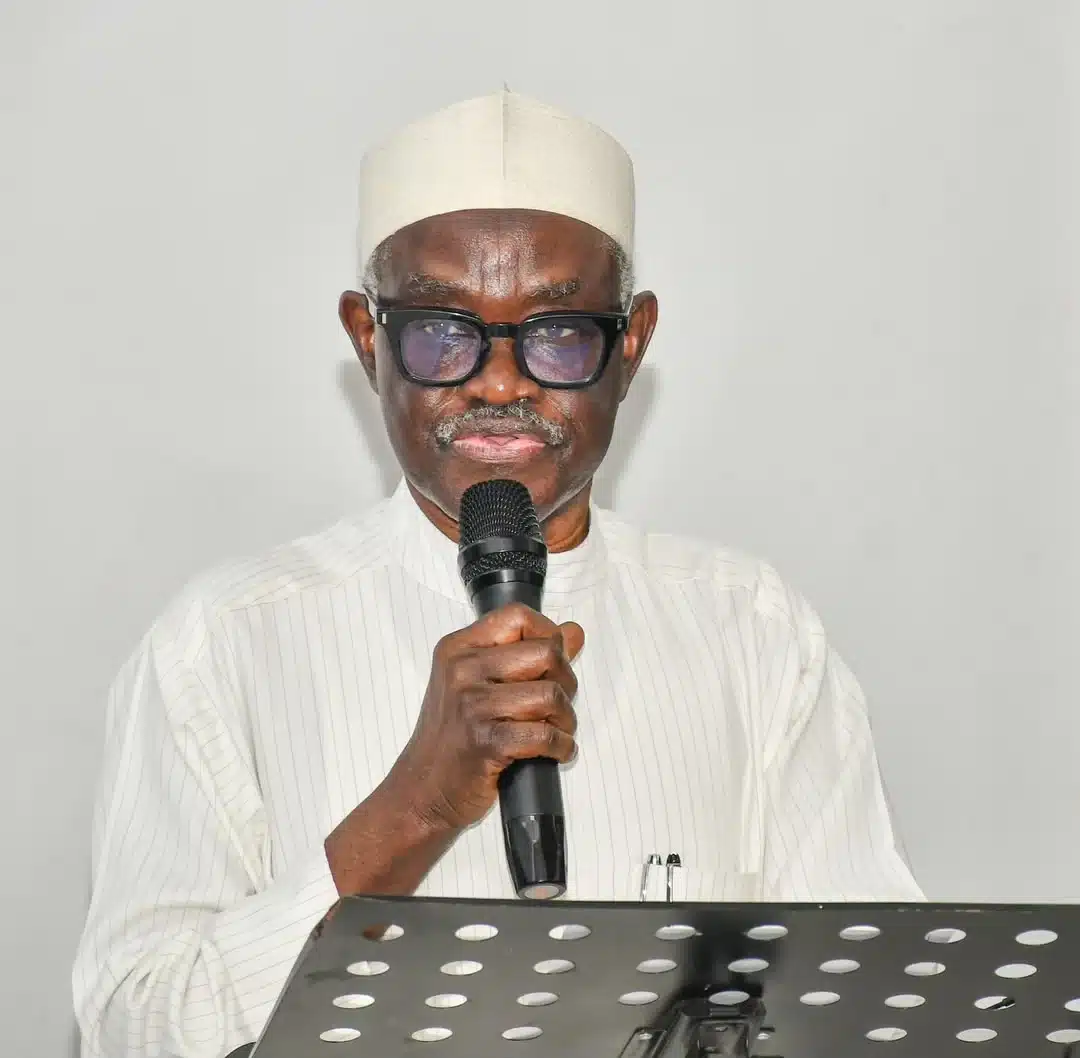
INEC National Commissioner and Chairman of the Information and Voter Education Committee, Mohammed Kudu Haruna. Photo: INEC
The Independent National Electoral Commission (INEC) has removed artificial intelligence-generated photographs from the national register of voters and identified officials involved in the practice across 10 states for disciplinary action.
INEC National Commissioner, Mohammed Haruna, disclosed this on Wednesday during a webinar organised by the PUNCH Media Foundation, titled ‘AI, Misinformation and Nigeria’s 2027 Elections: Safeguarding the Truth, Protecting the Vote’.
Haruna, who chairs the commission’s Information and Voter Education Committee, described the development as a major challenge, noting that INEC faced difficulties in preventing individuals from digitally manipulating their photographs before uploading them to the voters’ register.
He, however, said the commission had identified cases involving its own personnel and was taking steps to address the violations.
“We have already seen one of the challenges, which is that a lot of AI-generated photographs were posted onto the voters’ register, which, as we have said, we have had to take down,” he said.
The commissioner explained that although preventing members of the public from manipulating their photographs before submission could be difficult, the commission had greater control over cases involving its staff.
“But the ones involving our own staff, where it is our own staff that did so, that one is within our control. We are in the process of addressing it. They have been flagged,” he added.
Haruna disclosed that the affected officials had been identified in about 10 states and would face disciplinary action.
“We have their names across about 10 states, and obviously, they are going to face disciplinary action,” he said.
On INEC’s preparedness to regulate the use of artificial intelligence in the electoral process ahead of the 2027 general elections, Haruna revealed that the commission had developed an AI policy but was still working to finalise it.
He noted that artificial intelligence presented emerging challenges that were constantly evolving, making it difficult for countries, including advanced democracies, to establish comprehensive regulatory frameworks.
“As you know very well, it is new territory out there. Even the most advanced countries don’t have what you might call concrete, specific policies about AI because these things are evolving,” he said.
Haruna, however, assured that INEC had outlined its proposed approach to deploying the technology and would soon finalise the policy for public consideration.
“But we have at least some ideas of what we want to do and how we want to use that. We have that policy. Very soon, we will concretise it, and we will be able to share it with the media,” he said.