



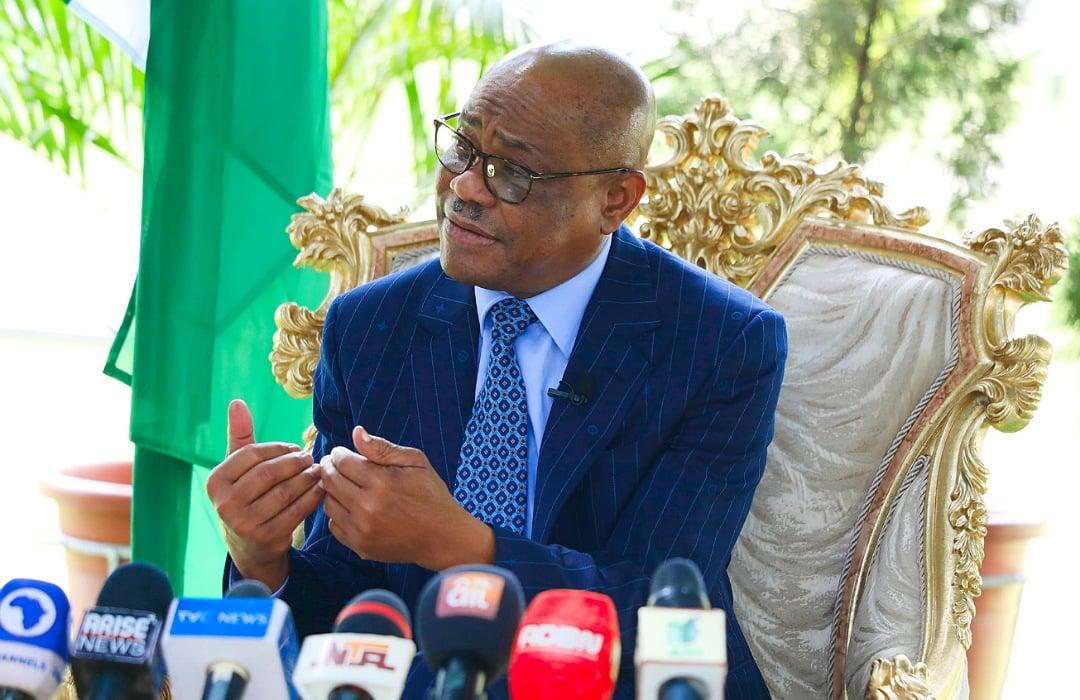



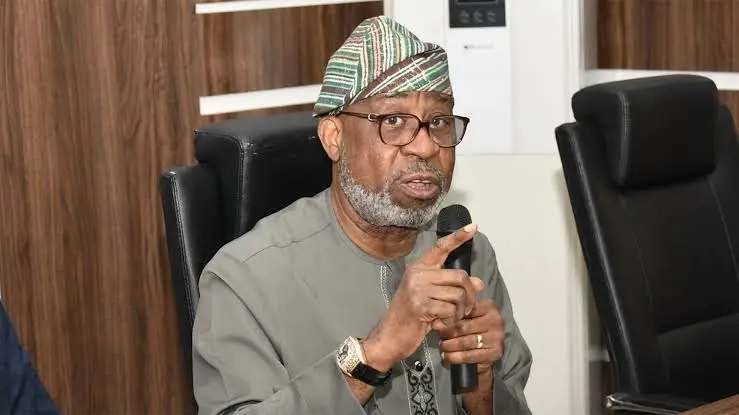
File photo: Minister of Solid Minerals Development, Dele Alake.
The Federal Government has announced the discovery of a world-class polymetallic mineral province in Kaduna State, containing significant deposits of platinum group metals, gold, nickel, copper, lithium, and rare earth elements.
The Minister of Solid Minerals Development, Dele Alake, disclosed the breakthrough on Wednesday during the opening of the African Natural Resources and Energy Investment Summit 2026 in Abuja, themed “One Africa, One Resource Vision.”
According to the minister, the discovery was verified by the Nigerian Geological Survey Agency (NGSA) and is considered one of the most important developments in Nigeria’s mining sector in recent years. He noted that the find could strengthen Nigeria’s position as a key destination for critical mineral investments globally.
Alake revealed that the mineral province was discovered by a private company working in collaboration with the NGSA. He described the deposits as exceptionally high-grade and strategically important for clean energy technologies and advanced manufacturing.
“This is the first time I am announcing this publicly. Recent exploration breakthroughs verified by our Nigerian Geological Survey Agency have unveiled a world-class polymetallic mineral province in Kaduna State, containing platinum group metals and other critical mineral deposits,” he said.
He added that the province hosts substantial quantities of gold, nickel, copper, lithium, and rare earth elements, positioning Nigeria among emerging global suppliers of strategic minerals.
The announcement coincided with the unveiling of an estimated 3.3 million metric tonnes of lithium reserves by Steron Mining and Company Limited at its Abuja mining site. The development underscores growing exploration activities and Nigeria’s drive to transition from exporting raw minerals to local processing and manufacturing.
Alake said the Tinubu administration has prioritised the solid minerals sector as a key component of its economic diversification strategy. He highlighted reforms aimed at attracting investment, strengthening regulatory compliance, improving transparency, and promoting value addition within the mining industry.
As part of efforts to sanitise the sector, the minister disclosed that more than 3,000 dormant and non-compliant mining licences had been revoked to curb speculation and ensure mineral assets are developed by serious investors.
He reiterated that the government is moving away from the traditional export of raw minerals, insisting that mining investments must support local processing, refinery development, job creation, technology transfer, and industrial growth.
According to him, the policy is already attracting significant investments in lithium processing and mineral refining projects, with investors committing billions of dollars to facilities expected to boost Nigeria’s industrial capacity and economic transformation.