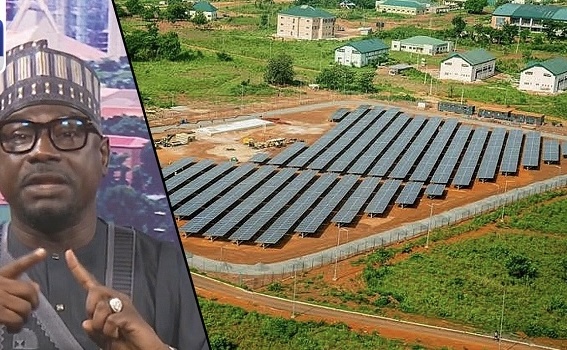









The Rural Electrification Agency (REA) has announced that 15 universities across Nigeria have been fully connected to solar farms under its renewable energy intervention programmes.
The Managing Director and Chief Executive Officer of the agency, Abba Aliyu, disclosed this during an interview on The Morning Brief on Channels Television on Monday.
According to Aliyu, the initiative is part of the Distributed Access through Renewable Energy Scale-up (DARES) project, which is designed to expand electricity access nationwide through renewable energy solutions.
“We have completed our interventions in 15 universities, and all these institutions are now fully connected to solar farms,” he said.
Aliyu described the DARES project as the world’s largest publicly funded renewable energy access initiative, noting that it is expected to provide electricity to about 17.5 million Nigerians.
He said the programme has attracted strong private-sector participation, helping to accelerate the deployment of renewable energy infrastructure across the country.
“Today, for the first time in Nigeria, we are deploying more than 1,000 mini-grids nationwide. These include isolated mini-grids, while we have also been aggressive in deploying interconnected mini-grids,” he said.
The REA boss disclosed that the agency is currently implementing 48 interconnected mini-grid projects in partnership with electricity distribution companies.
“We have been moving across the country conducting groundbreaking ceremonies and setting deployment timelines of between six and eight months for all the interconnected mini-grids,” he added.
Aliyu also highlighted efforts to attract private-sector investment into Nigeria’s renewable energy sector, saying the agency had secured the support of several financial institutions.
“We have convinced a number of Nigerian banks to support the sector, and we have signed several memoranda of understanding covering equipment financing, debt financing and bridge financing for private-sector operators,” he said.
On project planning, Aliyu revealed that the agency had completed what he described as Nigeria’s first nationwide energy access mapping exercise to guide future interventions.
According to him, the exercise identified more than 750,000 communities across the country, providing critical data to support the expansion of electricity access through renewable energy projects.