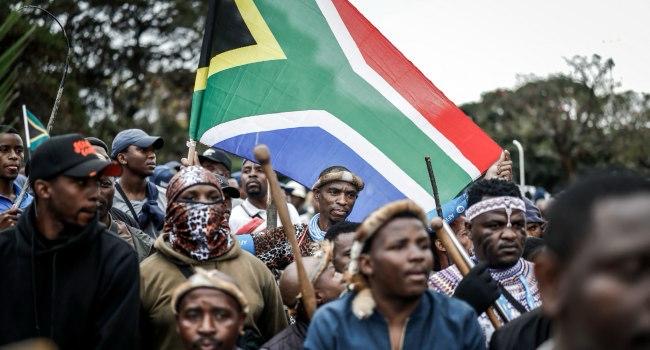






Members of the Zulu regiment known as the ‘Amabutho’ hold a South African flag as they march during a demonstration by the “March and March” movement marking an unofficial deadline set by citizen-led groups for undocumented foreign nationals to leave South Africa, in Durban, on June 30, 2026.
The Federal Government has condemned the killing of two Nigerian nationals in South Africa amid renewed anti-foreigner protests, warning that it may take further measures if attacks on Nigerians continue.
In a statement issued on Sunday, the spokesperson for the Ministry of Foreign Affairs, Kimiebi Ebienfa, identified the victims as Emeka Charles Iroegbu and Musa Yunana Joe.
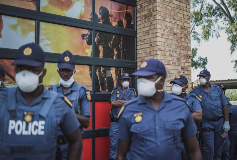
According to the ministry, Iroegbu was allegedly killed by officers of the Tshwane Metro Police on June 28, 2026, in Sunnyside, Pretoria, during what it described as a brutal interrogation. Yunana Joe, popularly known as Big Joe, was reportedly shot dead outside his shop later the same day in Witbank, Mpumalanga.
The ministry further alleged that the same Tshwane Metro Police officers implicated in Iroegbu’s death were also responsible for the extrajudicial killing of another Nigerian, Nnaemeka Mathew Andrew Ekpenyong, in April.
It expressed concern that no arrests have been made in Ekpenyong’s case despite the identities of the four officers allegedly involved being known to the South African Police Service.
The government said the latest incidents occurred amid increasing attacks on foreign nationals in South Africa, raising fears that law-abiding Nigerians were being unfairly profiled and portrayed as criminals.
It also questioned the safety of Nigerians and other foreign nationals living in the country.
According to the ministry, the repeated incidents suggest possible complicity by some security personnel, particularly officers of the Tshwane Metro Police, adding that the pattern raises concerns about state responsibility under international law.
The statement also noted that South Africa continues to experience high levels of violent crime, arguing that it was unjust to make foreigners scapegoats for the country’s socio-economic challenges.
The Federal Government further condemned remarks reportedly made by a South African government spokesperson during a televised broadcast, in which Nigerians leaving the country amid xenophobic protests were allegedly asked to disclose where they hid illegal drugs.
It described the comments as inflammatory, unacceptable and capable of inciting hatred against Nigerians.
According to the ministry, such generalised statements by senior government officials amount to hate speech and could encourage violence against members of the Nigerian community.
The government also accused groups such as March on March and Operation Dudula of promoting violence and hatred against fellow Africans, warning that those responsible could face regional and international criminal liability.
Nigeria called on South African authorities to conduct thorough investigations into the latest killings and other unresolved cases involving the deaths of Nigerians, insisting that all those responsible should be prosecuted without delay.
The ministry stressed that anyone accused of wrongdoing is entitled to due process and a fair hearing in accordance with the rule of law.
The Federal Government expressed condolences to the families of the victims and pledged to continue engaging South African authorities until justice is achieved.
It also urged Nigerians residing in South Africa to remain calm, law-abiding and vigilant, advising them to relocate to safer areas and avoid locations where xenophobic violence is likely to occur.
The government reiterated that South African citizens and businesses operate freely and safely in Nigeria, stressing that South Africa has a reciprocal obligation to protect the lives and property of Nigerians and other foreigners legally residing within its borders.
It warned that the continued targeting of Nigerians was unacceptable and declared that “all options remain on the table” should what it described as South Africa’s “provocative trend of intolerance and apartheid-style behaviour against foreigners” persist.
At the same time, the Federal Government appealed to Nigerians at home not to engage in retaliatory actions, reaffirming its commitment to resolving the crisis through dialogue, diplomacy and the principles of African unity and solidarity.
The ministry added that the ongoing evacuation of registered Nigerians from South Africa continues, with additional returnees arriving safely in Lagos as efforts to assist affected citizens gather pace.