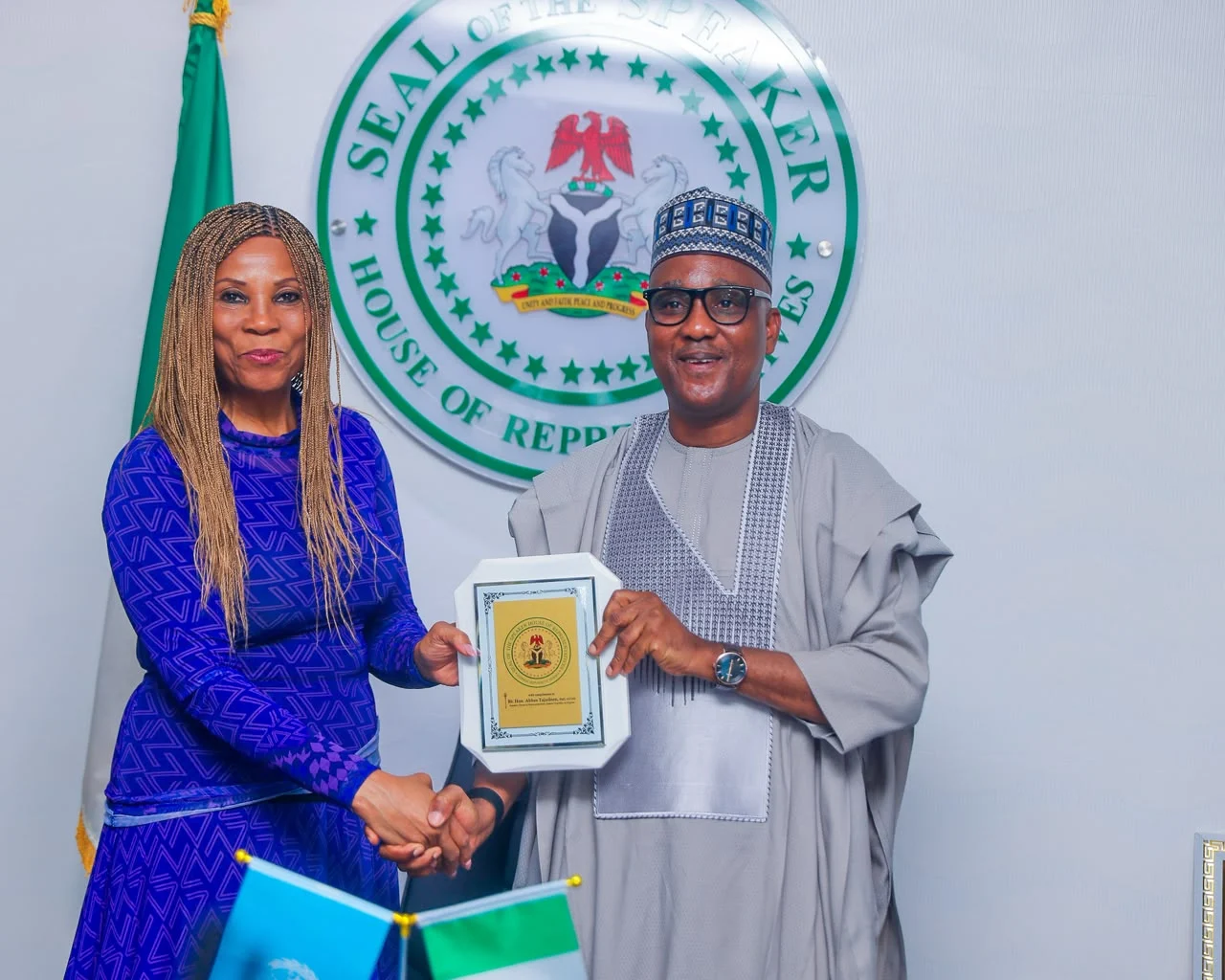


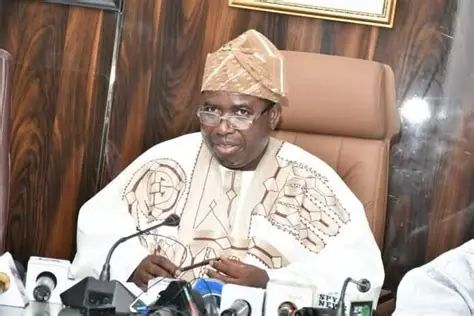

Speaker of the House of Representatives Rt. Hon. Abbas Tajudeen, (right) and the UN Assistant Secretary-General and UNDP Regional Director for Africa, Ms Ahunna Eziakonwa (left) in an exchange during a courtesy call on the Speaker on Thursday. Photo: Speaker’s Office
The House of Representatives will move to secure reserved parliamentary seats for persons with disabilities (PWDs) once work on the proposed constitutional amendment creating special seats for women is concluded, Speaker Tajudeen Abbas has said.
Abbas made this known on Thursday in Abuja while receiving a delegation from the United Nations Development Programme (UNDP), led by the UN Assistant Secretary-General and UNDP Regional Director for Africa, Ahunna Eziakonwa, alongside the UNDP Resident Representative in Nigeria, Elsie Attafuah.
The Speaker said the House remained committed to broadening political inclusion by ensuring greater representation for persons with disabilities in elective offices.
“After addressing the reserved seats for women, our next focus, in collaboration with the UNDP, will be on persons with disabilities,” Abbas said in a statement issued by his Special Adviser on Media and Publicity, Musa Krishi.
He noted that persons with disabilities had long been excluded from governance, not only in Nigeria but across the African continent, stressing the need to create opportunities for them to participate in leadership and contribute to national development.
“These are people who have been neglected in this country—not just in Nigeria, but across Africa. We need to step up and ensure that they are given more visibility, particularly in elective positions, so that they can contribute their quota to the socio-economic development of our country and Africa,” he said.
Abbas expressed confidence that Nigeria could become a model for other African countries by institutionalising reserved legislative seats for persons with disabilities.
“What we do in Nigeria can resonate throughout Africa. We believe that if this initiative succeeds, it will open doors across the continent, with other countries emulating us by creating special seats for persons with disabilities,” he added.
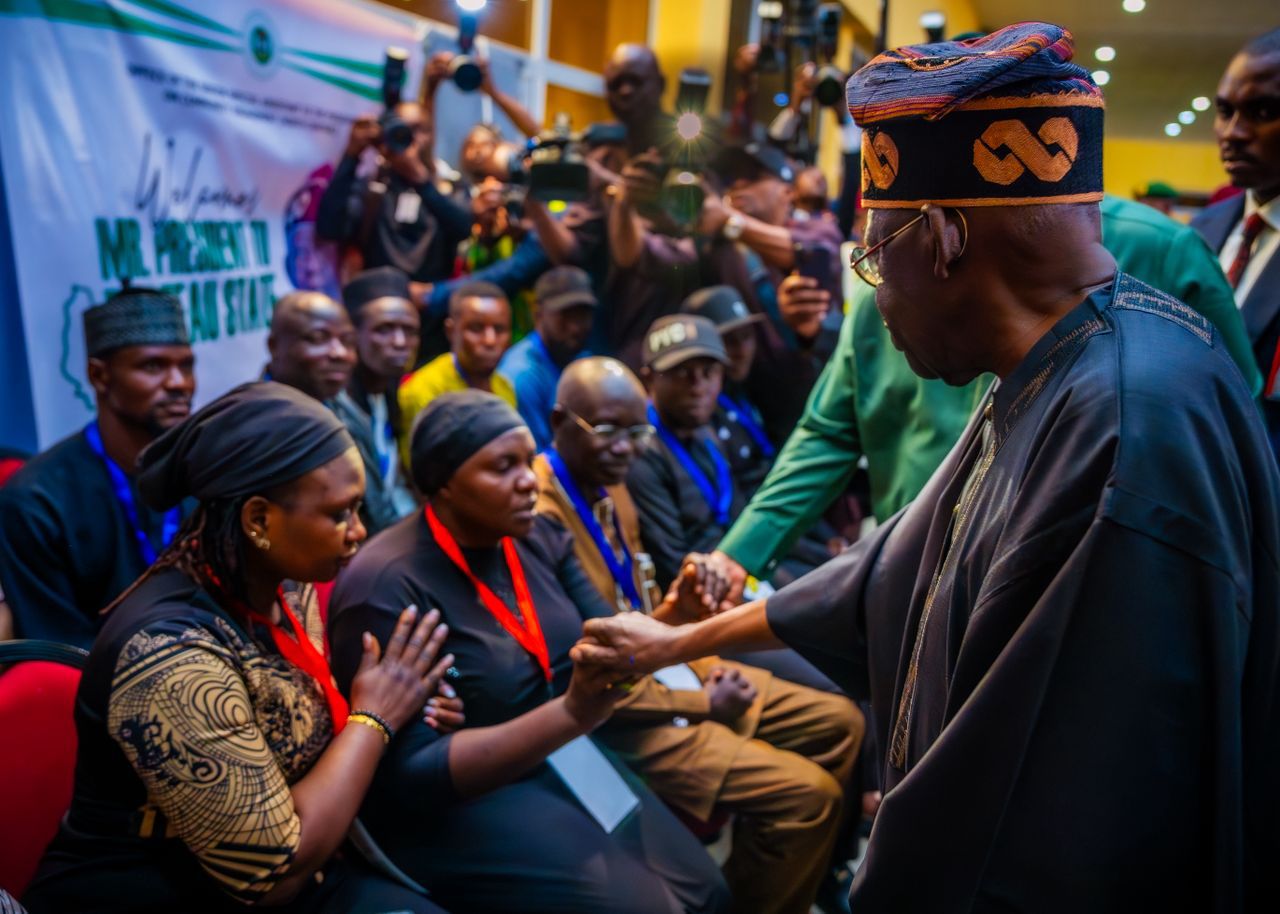
The Speaker also reaffirmed President Bola Tinubu’s support for the bill seeking reserved seats for women in the National Assembly and the 36 state Houses of Assembly, describing the proposal as a key part of the ongoing review of the 1999 Constitution.
According to Abbas, both President Tinubu and the First Lady, Senator Oluremi Tinubu, have fully endorsed the initiative.
“I can confidently tell you that Mr President and the First Lady are 100 per cent on board on this matter,” he said.
He disclosed that the Presidency and the leadership of the National Assembly had recently held consultations on strategies to secure the support of state legislatures, whose approval is required for the constitutional amendment.
Abbas further revealed that lawmakers were considering the creation of an electoral college made up of elected public office holders to elect occupants of the proposed reserved seats, a model he said would reduce the financial and logistical burden of conducting separate elections.
The proposed amendment aims to tackle the persistent under-representation of women in Nigeria’s legislatures by creating additional seats exclusively for female lawmakers in the National Assembly and state Houses of Assembly.
Nigeria currently has one of the lowest rates of female parliamentary representation in Africa, with women making up fewer than five per cent of members of the National Assembly. For the amendment to become law, it must secure the approval of two-thirds of the National Assembly and be endorsed by at least 24 state Houses of Assembly.