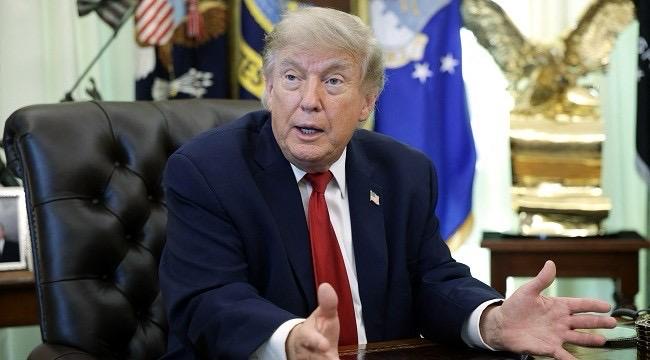







The US Supreme Court on Tuesday dealt President Donald Trump a major legal setback, ruling that his administration cannot restrict birthright citizenship and reaffirming that nearly everyone born on American soil is entitled to US citizenship under the Constitution.
In a 6-3 decision delivered on the final day of its term, the court upheld lower court rulings blocking Trump’s executive order, which sought to deny automatic citizenship to children born in the United States to parents who are in the country illegally or on temporary visas.
Writing for the majority, Chief Justice John Roberts said children born in the United States to parents who are unlawfully or temporarily present are “subject to the jurisdiction” of the country and are therefore citizens at birth under the Citizenship Clause of the 14th Amendment.
Trump signed the executive order on his first day back in office as part of his broader immigration crackdown. The measure was immediately challenged in court, with lower courts ruling that it conflicted with the Constitution’s longstanding guarantee of birthright citizenship.
In April, Trump made the unusual move of personally attending oral arguments before the Supreme Court. He remained for the presentation by Solicitor General John Sauer but left before arguments by American Civil Liberties Union (ACLU) lawyer Cecillia Wang, who defended the constitutional right to birthright citizenship.
During the hearing, Sauer argued that unrestricted birthright citizenship encourages illegal immigration and “birth tourism,” in which foreign nationals travel to the United States primarily to give birth so their children can obtain US citizenship.
The 14th Amendment states that “all persons born or naturalized in the United States, and subject to the jurisdiction thereof, are citizens of the United States,” with limited exceptions such as children of foreign diplomats.
The Trump administration maintained that the amendment, adopted after the Civil War to guarantee citizenship for formerly enslaved people, was never intended to cover children of undocumented migrants or temporary visitors. It also argued that people in the country unlawfully or on temporary visas are not fully “subject to the jurisdiction” of the United States.
The Supreme Court rejected that interpretation, relying on its landmark 1898 ruling in the case of Wong Kim Ark, who was born in San Francisco to Chinese immigrant parents. Despite being denied re-entry into the United States after a trip to China, the court ruled that Wong was a US citizen because he had been born on American soil—a precedent that has shaped birthright citizenship for more than a century.
The decision marks another significant legal defeat for Trump during the court’s current term. Earlier this year, the justices struck down most of his global tariff policy, and on Monday they also blocked his attempt to remove Federal Reserve Governor Lisa Cook from office.