

Opposition parties across Nigeria have declared their determination to challenge the dominance of the ruling All Progressives Congress (APC), warning of threats to democratic governance ahead of the 2027 general elections.
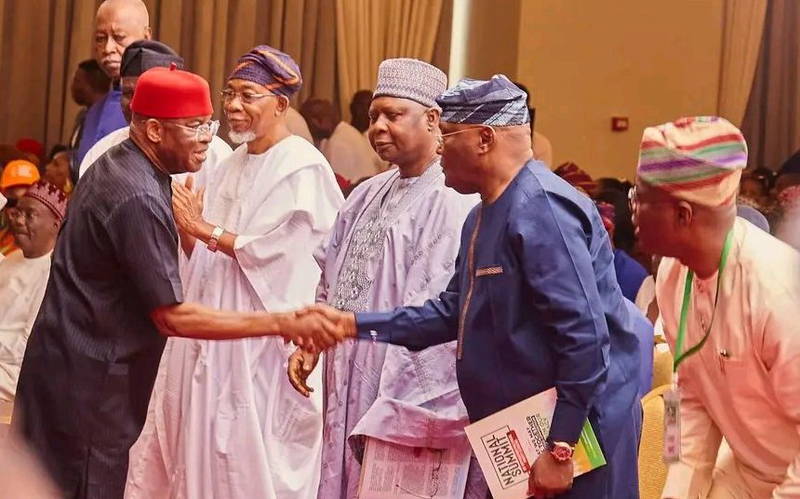
The declaration was made in a communiqué issued after a national summit held in Ibadan on Saturday, where key opposition figures, including Atiku Abubakar, Rabiu Musa Kwankwaso, Rotimi Amaechi, Peter Obi and Rauf Aregbesola, met to chart a common strategy.
Reading the communiqué, the factional chairman of the Peoples Democratic Party (PDP), Taminu Turaki, said: “We shall resist all machinations by the APC to foist a one-party State on Nigeria and fight for the survival of multi-party democracy in our country.”
On the 2027 elections, the opposition dismissed claims of a predetermined outcome, stating: “Despite the onslaughts and manoeuvrings of the ruling party… we shall field candidates and contest the 2027 Presidential and other elections.”
The parties also signalled plans for a united ticket, declaring: “We shall work towards fielding one Presidential Candidate for the 2027 elections, which shall be agreed and supported by all participating opposition parties to rescue our nation and her long suffering masses.”
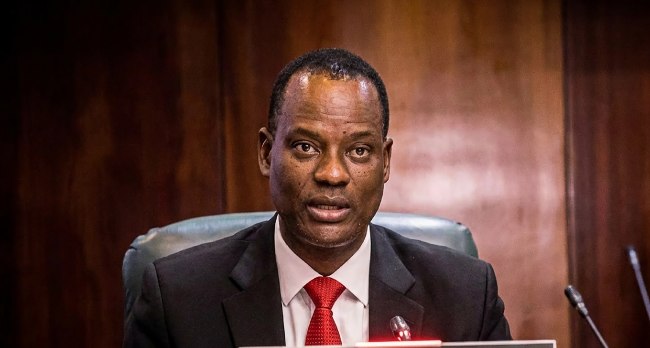
Raising concerns about the electoral umpire, the communiqué stated: “The INEC Chairman, Joash Ojo Amupitan, having shown bias and partisanship in favour of the ruling APC, should not conduct the 2027 general elections.”
It further warned: “His continuous stay in office is vexatious and capable of triggering widespread crisis in our nation.”
On electoral reforms, the opposition urged lawmakers to act swiftly, saying: “The National Assembly should immediately review the Electoral Act, 2026 to remove all sections that threaten the sanctity and integrity of the elections.”
The communiqué also addressed alleged political repression, stating: “All leading politicians that are being detained or harassed on bailable offences be released with immediate effect and allowed to exercise their fundamental rights of participation and inclusivity as Nigerians.”
Criticising recent electoral guidelines, the parties said: “We consider the recent guidelines released by INEC as obstacles, deliberately engineered to impose conditions and deadlines on the opposition parties,” adding, “INEC [should] extend the deadline for primaries till the end of July, 2026.”
In his intervention, political economist and strategist, Pat Utomi, painted a stark picture of the country’s economic hardship, using a personal experience to illustrate the widening gap between living costs and citizens’ income.
He said: “Let me begin with a simple experience from yesterday. I set out to buy fuel, and by the time I was done, I had spent nearly 250,000 naira just to fill my tank.“
“At the same time, I came across a report showing that a large percentage of Nigerians live on less than 100,000 naira a month. That contrast is not just troubling, it is absurd. If that doesn’t reveal something fundamentally broken in our system, then nothing will.”
Utomi noted that the crisis extended beyond fuel prices, stressing: “Food prices are rising, insecurity continues to disrupt agriculture, and ordinary people are struggling to survive.“
“Yet we are often told to ‘be patient,’ that things will improve with time. But patience means very little to those who are hungry today.”
Reflecting on Nigeria’s past, he added: “In the years leading up to independence, Nigeria was not industrialised, but there was a clear vision. Within a few years, manufacturing began to grow significantly. There was direction, there was purpose.”
He argued that the country’s challenges were not only economic but moral, stating: “Leadership without character cannot build a nation. The crisis we face today is not only economic—it is moral.”
Also addressing the summit, the National Chairman of the African Democratic Congress (ADC), David Mark, described the gathering as a critical moment in Nigeria’s history, calling it “an urgent response to our nation’s call to patriotic duty.”
He said: “My prayer is that history will remember us, that when the nation cried out to be rescued, we answered. When children went to bed hungry, we answered, when proud, hardworking citizens were turned to beggars; we answered.”
Raising alarm over insecurity, Mark stated: “Across the length and breadth of our country, insecurity has become a defining feature of daily life. Nigeria faces a historic challenge.”
Citing grim statistics, he added: “In 2025 alone, Nigeria recorded more than 12,000 conflict-related deaths. Nigeria is now ranked 4th in global terrorism index. At least 15 Nigerians are killed daily, while about 19 people are abducted.”
He criticised the government’s response, saying: “We are a nation that is constantly in mourning, yet the APC-led government is behaving as if all is well,” accusing it of being “preoccupied with election matters and politics of self-succession.”
On democracy, Mark warned: “The essence of democracy is to provide the people with a choice… however, the ruling party has done everything to deny the people of Nigeria this very right to seek an alternative.”
He described the opposition’s task as a “national rescue mission,” stressing: “No single opposition political party, can confront a system so entrenched. We must be united to salvage our nation.”