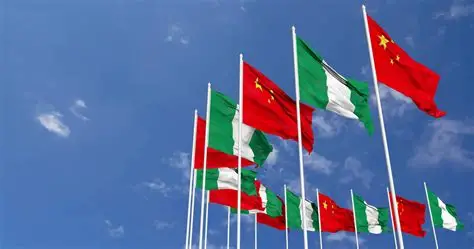
Trade between Nigeria and China increased by 35 per cent to $17.4bn in the first half of 2026, while Nigeria’s exports to the Asian country surged by 81 per cent to $2.25bn.
The Director of the China Cultural Centre in Nigeria, Yang Jianxing, disclosed the figures on Thursday at the launch of the Mandarin Service of the Voice of Nigeria (VON) and the celebration of the China-Nigeria Bridge Chinese Radio Programme in Abuja.
Yang said the figures reflected growing economic cooperation between the two countries, noting that China’s zero-tariff policy for 53 African countries, including Nigeria, had opened up new opportunities for African exports to the Chinese market.
He disclosed that China-Africa trade exceeded $207.4bn in the first half of 2026, setting a record for the period.
He added that China’s imports from Africa reached $28.5bn between May and June, representing a 23.5 per cent year-on-year increase.
According to him, imports of African aquatic products, textile raw materials and specialty fruits recorded double-digit growth, while the zero-tariff policy contributed to an estimated six per cent increase in overall African exports to China.
Yang said Nigeria’s performance was particularly impressive, with bilateral trade reaching $17.4bn in the first six months of the year.
“China’s imports from Nigeria amounted to 2.25 billion US dollars, representing a remarkable increase of 81 percent,” he said.
The China Cultural Centre director further disclosed that imports from Nigeria recorded year-on-year growth of more than 40 per cent in May and June.
He said the development presented significant opportunities for Nigeria and other African countries to expand exports, particularly agricultural produce, raw materials and specialised products.
On cooperation in the mining sector, Yang highlighted China’s proposed principles for engagement with African countries, including respect for their sovereignty over natural resources, mutual benefits, high-quality development and the creation of a fair and open investment environment.
Addressing security challenges in Africa, he said Chinese President Xi Jinping had outlined four principles for resolving regional conflicts.
These include an African-led approach, fairness and justice, ending hostilities and pursuing peace, as well as addressing both the immediate manifestations and underlying causes of conflicts.
Yang said the principles reflected China’s commitment to respecting African countries’ right to determine their development priorities.
Speaking on the China-Nigeria Bridge radio programme, he disclosed that the initiative, launched on September 2, had broadcast 10 episodes and received positive feedback from listeners across Africa.
The programme, jointly initiated by the Chinese Embassy, Xinhua News Agency Africa Regional Bureau and VON, with the China Cultural Centre as a supporting partner, combines Mandarin language lessons with reports on China-Africa cooperation.
He described the programme as an important platform for promoting cultural understanding and strengthening people-to-people relations between China and African countries.
VON Launches Ninth Broadcasting Language
Speaking at the event, the Director-General of the Voice of Nigeria, Jibrin Baba Ndace, represented by Danladi Abdulkarim, said the Mandarin Service had become the organisation’s ninth broadcasting language.
He said the addition would strengthen Nigeria’s international communication capacity and provide an avenue for projecting the country’s culture, economic opportunities and national interests to Mandarin-speaking audiences.
“Today, we take a bold step to change that. From today, Voice of Nigeria will broadcast in English, French, Arabic, Hausa, Igbo, Yoruba, Fulfulde, Kiswahili, and now, Mandarin,” he said.
Ndace disclosed that 26 Nigerian journalists, including five from VON, underwent training in Beijing in April 2026 at the National Radio and Television Administration Research Institute.
He also revealed that VON signed a Memorandum of Understanding with Xinhua News Agency on April 24, 2026, covering content sharing and news exchange.
According to him, another strategic agreement signed with the Chinese Embassy on May 18, 2026, provides for Mandarin language training, broadcasting capacity development, content production and exchange, as well as collaboration to combat misinformation.
He said the new Mandarin Service would help promote Nigeria’s international image, deepen mutual understanding, strengthen the comprehensive strategic partnership between both countries and support efforts to combat fake news.