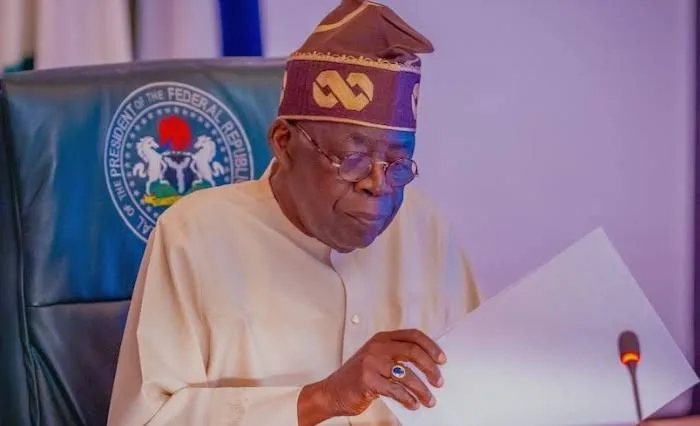
The Presidency has dismissed claims that President Bola Tinubu borrowed ₦120 trillion within three years of assuming office while also removing the fuel subsidy, describing the figures as misleading.
Special Assistant to the President on Social Media, Dada Olusegun, rejected the claims in a statement posted on X on Sunday, accusing opposition groups of using distorted figures to misrepresent the administration’s borrowing record.
Olusegun argued that the comparison suggesting that 16 previous Nigerian leaders borrowed a combined ₦46 trillion over 63 years, while Tinubu accumulated ₦120 trillion in just three years, failed to account for important financial developments.
He explained that the ₦46 trillion figure, which represented Nigeria’s public debt as of late 2022, excluded ₦22.7 trillion in Central Bank of Nigeria (CBN) Ways and Means advances that were formally recognised in May 2023.
“Opposition’s propaganda machines claim that in 63 years, 16 past Nigerian leaders borrowed ₦46 trillion combined, while President Tinubu borrowed ₦120 trillion in just three years and still removed the fuel subsidy.
“But in reality, the ₦46 trillion figure from late 2022 hid ₦22.7 trillion in Central Bank ‘Ways and Means’ overdrafts that weren’t officially put on the books until May 2023,” he stated.
The presidential aide also attributed part of the increase in the naira value of Nigeria’s debt to exchange-rate adjustments.
According to him, previous calculations converted foreign debt at an exchange rate of ₦448 to the dollar, despite the parallel market rate exceeding ₦700 at the time.
He said the unification of the exchange rate in June 2023 immediately increased the naira value of the country’s existing dollar-denominated debt by ₦13.4 trillion on paper, without any additional foreign borrowing.
Olusegun maintained that Nigeria’s public debt increased from $113.4 billion in June 2023 to approximately $120.9 billion by June 2026, representing an increase of $7.5 billion in dollar terms.
On the removal of the petrol subsidy, he argued that the policy had significantly increased monthly allocations from the Federation Account Allocation Committee (FAAC) to state and local governments.
He said monthly FAAC distributions rose from ₦656 billion in April 2023 to approximately ₦2.4 trillion by September 2026.
The Presidency’s response followed the circulation of a viral social media graphic comparing the cumulative borrowing of previous administrations with the Tinubu government’s debt profile while highlighting the removal of the fuel subsidy.
However, fact-checkers have described the comparison as misleading, arguing that the ₦46 trillion figure represented outstanding public debt at the end of 2022 rather than the cumulative amount borrowed by 16 leaders over 63 years.
They also pointed to the failure to account adequately for exchange-rate adjustments and the formal recognition of previously unrecorded financial obligations.
According to Debt Management Office figures, Nigeria’s public debt stood at approximately ₦87.38 trillion, equivalent to $113.4 billion, in June 2023, shortly after Tinubu assumed office.
By June 2026, the figure had increased to approximately ₦166.79 trillion, or $120.93 billion.
A significant portion of the increase in the naira-denominated debt stock was attributed to the 2023 exchange-rate adjustment and the securitisation of Ways and Means advances inherited from the previous administration.
The Presidency’s latest clarification comes amid renewed debate over the country’s borrowing plans after President Tinubu asked the Senate to approve a $7.7 billion external borrowing programme to partly finance the 2026 budget deficit.
The request, equivalent to approximately ₦10.79 trillion at the budget exchange rate of ₦1,400 to the dollar, was conveyed in a letter read by Senate President Godswill Akpabio during Wednesday’s plenary.
The latest request replaced an earlier proposal seeking legislative approval for external borrowings of $20.52 billion and €1.045 billion, which the President had submitted to the National Assembly a week earlier.
However, opposition parties, including the Nigeria Democratic Congress (NDC), have criticised the government’s borrowing plans, expressing concerns over the country’s rising debt burden and its potential implications for future generations.