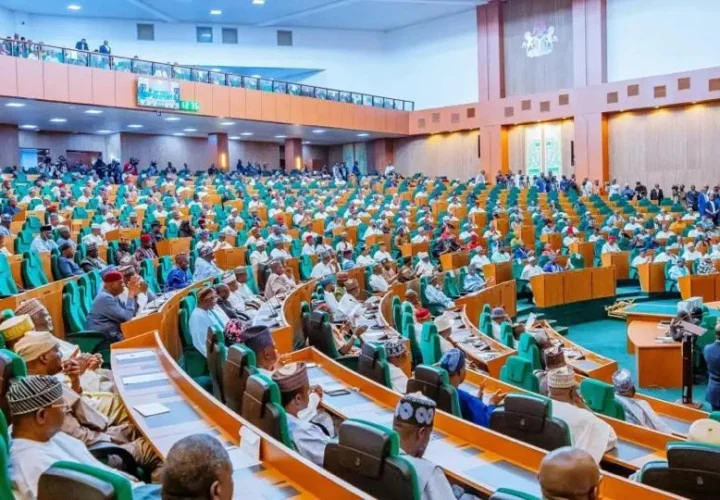
The House of Representatives has called for the establishment of a comprehensive regulatory framework for Nigeria’s real estate sector to tackle fraudulent practices, protect property buyers and attract investment into the housing market.
The Chairman of the House Committee on Housing and Habitat, Abdulmumini Jibrin, said the proposed National Real Estate Regulatory Authority would address institutional gaps, overlapping responsibilities and inadequate consumer protection that have hindered the sector’s development.
Jibrin made the call on Monday in Abuja at a stakeholder conference on the proposed authority, themed, “One Vision, One Ecosystem, One National Housing and Real Estate Plan.”
He said an assessment of the sector since he assumed office had revealed that Nigeria was yet to fully harness its vast housing and real estate potential, largely due to weak regulation and the absence of a coordinated national framework.
According to him, although the Minister of Housing and Urban Development is responsible for implementing government policies in the sector, several agencies and institutions within the housing ecosystem operate outside the ministry’s direct jurisdiction, creating gaps and duplication of responsibilities.
“There are enormous challenges. We have a wonderful Minister of Housing. But as the Minister of Housing of the Federal Republic of Nigeria, he does not have jurisdiction over all the agencies and institutions that have to do with housing. There is a link; there is a gap. So, there is duplication of functions,” he said.
Jibrin stressed that the challenges in the sector were not limited to property developers, adding that prospective homeowners also needed adequate protection, reliable information and financial awareness before entering into property transactions.
He noted that some prospective buyers entered into housing agreements beyond their financial capacity, while others failed to consider the effects of inflation, prevailing economic conditions and government policy changes on developers’ ability to complete projects as initially agreed.
He said effective regulation would require clearly defined responsibilities for developers and consumers, functional dispute-resolution mechanisms and established operational standards for all stakeholders.
The lawmaker described the real estate sector as a significant contributor to Nigeria’s Gross Domestic Product, noting that its contribution could increase considerably if the sector’s potential was properly harnessed.
He observed that, unlike sectors such as oil and gas, electricity and telecommunications, Nigeria’s real estate industry continued to operate with considerable regulatory gaps, allowing individuals to engage in property development without adequate oversight or accountability.
Jibrin further expressed concern that some individuals could distribute property brochures to unsuspecting Nigerians and collect payments without any effective institutional mechanism to verify their credentials, business operations or capacity to deliver on their promises.