The Africa Centres for Disease Control and Prevention (Africa CDC) has disclosed that the index patient diagnosed with the Bundibugyo strain of Ebola virus in Nigeria was born in Uganda and arrived in Abuja with her husband on October 3, 2026.
The Director-General of Africa CDC, Dr. Jean Kaseya, disclosed this on Channels Television’s The Morning Brief on Thursday, adding that the agency was engaging authorities in Nigeria, Uganda and the Democratic Republic of the Congo (DRC) to coordinate efforts to contain the outbreak.
Kaseya stressed the need for the patient to provide relevant information about her travel history and possible exposure to the virus, saying such details were crucial to preventing diplomatic tensions among African countries.
“I am talking to all authorities — with Nigerian authorities, with Ugandan authorities, even to DRC authorities. But we are lucky that this person we know today, without any doubt, is a Ugandan-born person who went to Uganda and she was there for some days. Then the husband flew to join her in Uganda, then they came back to Abuja on October 3. This is a fact,” he said.
He urged the patient to cooperate with health authorities by disclosing whether she had travelled to the DRC, visited locations outside Kampala or had contact with anyone arriving from the neighbouring country.
“Now, what we want is collaboration from this person, the lady. She has to disclose to the authorities. I need this information as Nigeria needs this information because we need also to support Uganda,” Kaseya said.
He added that establishing the patient’s movements and possible contacts would help health officials trace the source of infection and coordinate an effective response.
“I think this is the information we are looking for. It will help all of us to avoid crisis between African countries,” he said.
Africa CDC Says Continent Is Prepared
Kaseya dismissed suggestions that the continent was in a state of panic over the outbreak, insisting that Africa was better prepared to respond to public health emergencies.
He also challenged the perception that Ebola was exclusively an African problem, warning that no country or region should consider itself immune to infectious disease outbreaks.
According to him, the Bundibugyo strain is geographically widespread, with outbreaks affecting parts of West, Southern and East Africa.
The Africa CDC chief maintained that the continent had acquired the experience and capacity needed to respond effectively to the outbreak.
No Approved Vaccine Yet for Bundibugyo Strain
Kaseya expressed concern over the lack of an available vaccine specifically for the Bundibugyo strain, suggesting that the international response to Ebola might differ if an outbreak occurred in Western countries.
He said the agency had initiated clinical trials of new vaccine candidates, including a vaccine against the Bundibugyo strain manufactured in Egypt.
His comments highlighted the need for increased international support for vaccine development and preparedness against emerging infectious diseases.
Nigeria Intensifies Contact Tracing and Surveillance
Meanwhile, the Coordinating Minister of Health and Social Welfare, Muhammad Pate, told journalists in Abuja that the patient had been isolated and was receiving medical care.
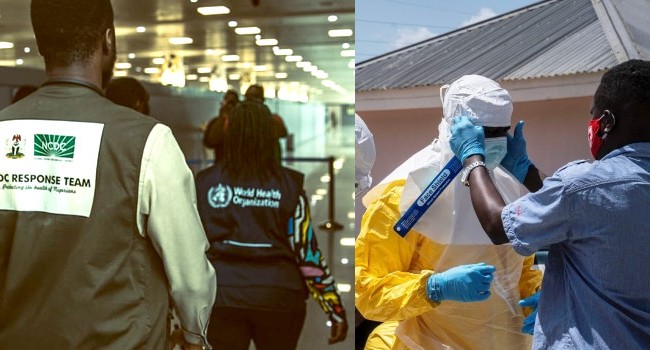
He said contact tracing had commenced, with 44 contacts already identified, while surveillance had been strengthened at Nigeria’s points of entry to minimise the risk of further transmission.
The National Assembly has also called on the Federal Government to take urgent measures to contain the outbreak.
On Wednesday, the Senate urged the government to release emergency funding from the service-wide vote to strengthen disease surveillance and enforce mandatory health screening at international airports, seaports and designated land borders.
The Senate said the measures were necessary to prevent the spread of Ebola and other epidemic-prone diseases.
Similarly, the House of Representatives called for intensified public awareness campaigns and early preparations of isolation facilities following confirmation of the outbreak in the Federal Capital Territory.
FAAN Places 46 Contacts on No-Fly List
In a related development, the Federal Government, through the Federal Ministry of Aviation and Aerospace Development, has directed the Federal Airports Authority of Nigeria (FAAN) to place 46 people identified as contacts of an Ebola-affected patient on a no-fly list for at least 21 days.
The restriction is intended to limit the risk of further transmission while health authorities monitor individuals who may have been exposed to the virus.
The government’s response includes isolation, contact tracing, enhanced screening and public health surveillance as authorities work to contain the outbreak.