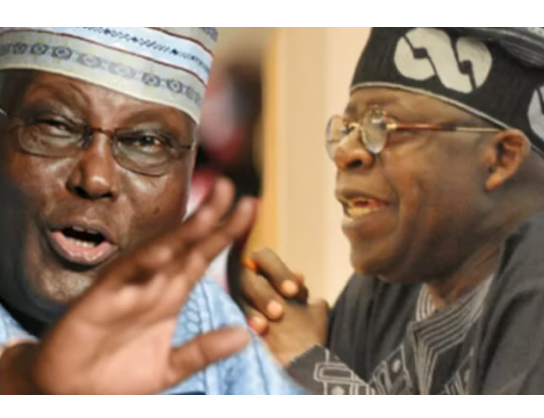
The Presidency has criticised former Vice President Atiku Abubakar over his recent comments on the Federal Government’s fuel pricing measures, accusing him of exploiting Nigerians’ economic difficulties for political gain ahead of the 2027 presidential election.
The Presidency argued that Nigerians would not exchange long-term economic stability for what it described as Atiku’s short-term political promises.
It maintained that President Bola Tinubu’s administration was pursuing a combination of market deregulation, temporary fuel price relief, strategic energy reserves, Compressed Natural Gas (CNG) expansion and fiscal reforms to stabilise the economy and promote sustainable growth.
The reaction followed a press conference in Abuja by Atiku, the African Democratic Congress (ADC) presidential candidate for the 2027 election, where he reportedly criticised the Nigerian National Petroleum Company Limited (NNPC Ltd.) Retail’s 30-day petrol discount and the government’s proposed price modulation framework.
In a statement titled “Atiku’s Demagoguery in the Face of Tinubu’s Logical Policies,” issued by the Special Adviser to the President on Media and Public Communication, Dr Sunday Dare, the Presidency described Atiku’s position as an example of what it called election-driven political rhetoric.
It said the administration had deliberately chosen difficult but necessary economic reforms, arguing that its current interventions were designed to cushion the impact of global oil market fluctuations without returning the country to the previous fuel subsidy regime.
“The Nigerian electorate is far too sophisticated to trade long-term national economic security for Atiku’s shallow, short-term demagoguery,” the statement said.
Presidency Defends Fuel Price Intervention
The Presidency cited developments in other countries to defend the government’s decision to introduce temporary measures aimed at easing the pressure of rising fuel prices.
It referenced initiatives in the United Kingdom and the United States, arguing that governments elsewhere were also exploring ways to cushion citizens against fluctuations in global energy prices.
According to the statement, several other countries were adopting different approaches to provide relief to their populations, while Atiku had chosen to turn Nigeria’s economic challenges into a political campaign issue.
The Presidency argued that describing the administration’s measures as a panic-driven gimmick demonstrated, in its view, a misunderstanding of global energy markets, public finance and Nigeria’s economic circumstances.
It accused the former vice president of focusing on political sound bites while overlooking what it described as the structural problems the Tinubu administration had been addressing since taking office in May 2023.
Presidency Rejects Atiku’s Production Subsidy Proposal
The Presidency also challenged Atiku’s reported proposal for a production subsidy, arguing that Nigeria lacked sufficient uncommitted crude oil supplies to sustain such an arrangement without placing additional pressure on government revenue.
It said Nigeria produces approximately 1.8 million barrels of crude oil daily, but contractual obligations under Joint Ventures and Production Sharing Contracts significantly reduce the volume available to the government.
Citing figures attributed to the Minister of Finance and Coordinating Minister of the Economy, Taiwo Oyedele, the Presidency said the country’s freely available crude oil was below 700,000 barrels per day after accounting for contractual and statutory commitments.
It argued that domestic refineries, including the Dangote Petroleum Refinery, required substantial volumes of crude oil, making it necessary for refiners to supplement local supplies with purchases from international markets.
The statement maintained that a production subsidy introduced without sufficient crude oil volumes to support it could recreate the financial and administrative problems associated with the former fuel subsidy regime.
It also rejected comparisons between crude oil allocation and locally produced agricultural commodities, such as garri and cassava, describing such comparisons as an inadequate reflection of the complexities of international commodity markets and petroleum supply contracts.
The Presidency further argued that even major oil-producing countries, including the United States and Qatar, had adjusted their energy policies to address market realities and maintain fiscal sustainability.
Why NNPC’s 30-Day Discount Is Not a Return to Subsidy — Presidency
The Presidency rejected Atiku’s reported description of NNPC Retail’s decision to extend its petrol discount as a return to fuel subsidy.
It explained that the initial discount was introduced as part of activities marking Nigeria’s 66th Independence anniversary, with the company subsequently agreeing to extend the arrangement for another 30 days.
According to the statement, the intervention was a temporary price modulation measure rather than a return to government-funded subsidies.
It argued that NNPC Retail’s decision to sell petrol at landing cost during a period of rising international crude oil prices amounted to the company absorbing short-term market pressures through its corporate balance sheet.
The Presidency also cited the Federal Government’s reported negotiations for an interim ceiling of ₦1,350 per litre on ex-gantry costs, describing the arrangement as a mechanism for cushioning sudden increases in fuel prices.
Under the proposed framework, refiners and importers would absorb costs exceeding the ceiling in the short term and recover them subsequently when international crude oil prices or domestic exchange rates became more favourable.
The Presidency said the arrangement was intended to reduce sharp price fluctuations that could trigger increases in commercial transport fares, which often remain high even after petrol prices decline.
It added that the ceiling would be reviewed monthly using published cost audits to prevent the accumulation of hidden government liabilities.
Government Highlights Alternative Energy Measures
Beyond the temporary fuel price intervention, the Presidency said the Tinubu administration was implementing a range of policies to address Nigeria’s energy challenges.
Among the measures highlighted were the establishment of a strategic energy reserve to help manage supply disruptions, expansion of CNG infrastructure in partnership with state governments and the promotion of domestic refining through naira-for-crude arrangements.
The statement said CNG, which it estimated to be 60 to 70 per cent cheaper than Premium Motor Spirit, offered a longer-term alternative for commercial transport operators seeking to reduce operating costs.
It also cited proposed windfall taxes on energy operators during periods of exceptional profits, with the revenue intended to support transport vouchers and minimum-wage assistance.
Other measures highlighted included the implementation of the 2025 tax reform laws, efforts to eliminate illegal road levies and the use of NIPOST digital address codes to reduce freight and food distribution costs.
The Presidency maintained that the combination of these policies was intended to address both immediate fuel price pressures and the structural weaknesses affecting the wider economy.
Presidency Lists Benefits of Tinubu’s Economic Reforms
Defending the administration’s record since May 2023, the Presidency said the removal of the petrol subsidy and the unification of the foreign exchange market were necessary interventions to address longstanding fiscal and monetary distortions.
It argued that ending the subsidy had freed up public resources previously spent on fuel price support, allowing more funds to be distributed to state and local governments through the Federation Account Allocation Committee (FAAC).
The statement also said the reforms had helped eliminate the prolonged fuel queues that characterised previous periods of scarcity, attributing improved supply conditions to changes in market operations.
On foreign exchange, the Presidency argued that unifying the official and parallel markets had reduced opportunities for arbitrage and improved transparency in currency transactions.
It further said the administration had redirected resources towards social intervention programmes, including cash transfers for vulnerable households, subsidised credit for micro and small businesses and wage support for public servants.
The statement also highlighted major infrastructure projects, including the Lagos-Calabar Coastal Highway, the Sokoto-Badagry Superhighway and railway development, describing them as investments intended to strengthen transportation networks and support long-term economic growth.
However, the Presidency did not provide detailed figures in the statement to quantify the specific economic impact of each measure.
Presidency Says Nigerians Need Long-Term Solutions
The Presidency concluded that Nigeria’s economic challenges could not be resolved through short-term promises or temporary relief measures alone.
It argued that Atiku’s proposed production subsidy would require a clear funding mechanism and sufficient crude oil supplies to avoid recreating the financial pressures associated with the previous subsidy system.
The administration maintained that its approach was focused on combining market-based pricing with targeted interventions to protect households and businesses from sudden economic shocks.
It also defended the broader reform programme as necessary to improve public revenue, strengthen energy security and create conditions for sustainable economic growth.
The Presidency insisted that the debate over fuel prices should focus on the long-term viability of competing policy proposals, rather than political accusations and campaign rhetoric ahead of the 2027 general election.